Blog

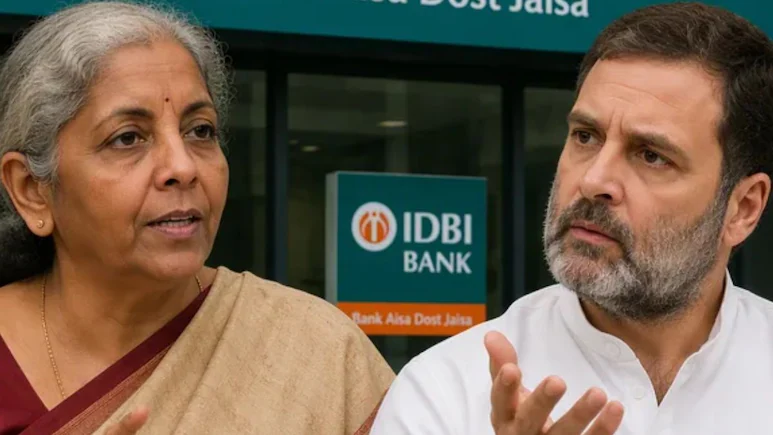
  • “IDBI Bank Handed To Us In Bad Shape”: Nirmala Sitharaman Hits Back At Rahul Gandhi

    “IDBI Bank Handed To Us In Bad Shape”: Nirmala Sitharaman Hits Back At Rahul Gandhi

    New Delhi:

    Finance Minister Nirmala Sitharaman on Friday hit back at Leader of Opposition Rahul Gandhi over the proposed sale of IDBI Bank, accusing successive Congress governments of using public sector banks to extend loans to politically connected businesses. She argued that the Narendra Modi government had revived the lender through recapitalisation and professional management.

    The exchange came a day after Gandhi opposed the government’s decision to sell IDBI Bank to Canadian company Fairfax and expressed support for the bank’s employees.

    The Congress leader questioned the rationale for selling a lender that had returned to profitability, while raising concerns over employee protections, reservations and the government’s reduced stake following the transaction.

    Responding to Gandhi’s criticism in a post on X, Sitharaman said IDBI Bank had been handed over to the NDA government in poor condition after being forced to lend to large business groups with close links to Congress leaders.

    “IDBI Bank was handed over to us in poor shape,” Sitharaman said, naming Videocon, Winsome, ABG Shipyard and Kingfisher among the companies whose loans had turned into bad debts and caused substantial losses to the lender.

    She said the NDA government had revived the bank through professional management, prudent lending practices and recapitalisation of more than Rs 25,000 crore.

    “IDBI Bank is now poised for its next phase of growth,” she said.

    Sitharaman also accused the Congress of exerting political pressure on banks and financial institutions to extend loans without following prudent lending practices.

    Gandhi, in a post on X on Thursday, said the Congress had established IDBI to support the country’s industrial development, while the Modi government was now selling banks.

    “During Congress’s time, banks were being created. During Modi’s time, they are being sold,” he said.

    He also shared a letter addressed to IDBI Bank employees, in which he said the lender’s turnaround was the result of their efforts.

    The Finance Minister’s minister’s latest face-off with the Leader of Opposition has come two days after she had hit back at Gandhi over his comments on the Tata Group issue. Sitharaman had on Wednesday accused Rahul Gandhi of politicising issues and casting baseless aspersions on Indian industry following his remark that the Tata Group was being “criminally destroyed”.Being the Leader of the Opposition, I suggest you refrain from politicising every issue. Also, casually labelling commercial and legal matters as criminal is unacceptable,” the Finance Minister said in a post on XBeing the Leader of the Opposition, I suggest you refrain from politicising every issue. Also, casually labelling commercial and legal matters as criminal is unacceptable,” the Finance Minister said in a post on X.

    Gandhi had alleged that Indian businesses were being treated as the “plaything” of Prime Minister Narendra Modi and Home Minister Amit Shah. “Tata is being criminally destroyed, and no business leader dares say a word. How long will you stay silent? Until they own you?” the Congress leader had said.

    He also claimed that the business leaders lack courage.

    In her riposte, the Finance Minister said, “You have repeatedly decried the successes of Indian industry and our entrepreneurs. Now, are you trying to incite our business leaders to join you in spreading distrust and toxicity?”

  • “Terrified”: Woman Alleges Harassment By Man, Woman In Scorpio In Gurugram

    “Terrified”: Woman Alleges Harassment By Man, Woman In Scorpio In Gurugram

    Gurugram:

    A woman has alleged that she and her roommate were harassed and chased through multiple lanes by a man and a woman in a Mahindra Scorpio in Gurugram, and had to enter a paying guest accommodation to save themselves.

    In a post on X, one of the women, Sonica, said the incident took place when she and her roommate stepped out for a walk after dinner on Tuesday night.

    She said they left their PG around 8.45 pm, walked through a market and reached a “famous” mall in Gurugram and sat there for some time to enjoy the weather. She said they decided to return to their accommodation around 10.10 pm.

    “We had no idea what was coming next,” she said as she recounted the harrowing experience in a long post.

    She said while walking back, a Scorpio with a woman in her mid-20s and a man aged around 45 or older stopped beside them.

    The woman asked them for directions, saying she was looking for a luxury PG and money was not an issue.

    “My roommate started helping her and even shared a broker’s number. We genuinely thought we were just helping someone,” she said.

    She said the man then started asking personal questions.

    “Aap kahan se ho? Gurgaon mein kya karte ho? Expenses kaise manage hote hain? (Where are you from? What do you do in Gurgaon. How do you manage your expenses). He started talking about getting us jobs and giving us money. Then he started taking names of politicians,” she said, adding that it felt like he was trying to show his influence and make them believe he was a powerful person.

    “At that point we were still talking normally,” she told her over 18,000 followers on X.

    She said that while her roommate continued speaking to the woman about PG accommodation, the man, who appeared to be drunk, asked her to come closer. She said she maintained her distance as she began feeling uncomfortable.

    “He noticed and said something like, ‘Bahut chalak ho. Door khadi ho. Lag raha hai main kuch kar dunga’ (You are very clever. You are standing far away. It seems I will do something),” she said.

    “Imagine a stranger saying this to two girls at night when they are already feeling uncomfortable,” she said.

    She said most of the nearby shops had shut by then.

    The man then took out two Rs 500 notes and offered them as a “Diwali gift”, the woman recounted, adding that they refused the money.

    “He kept saying that there was a whole bag full of money in the back of his car. I started feeling that something was wrong,” she said.

    She said she then told him that “Uncle, we will leave now”.

    “The moment I called him uncle he got angry. He said: “Main uncle lagta hoon?” (Do I look like uncle). The woman also became angry,” she recalled.

    She said when they started walking away, the woman in the Scorpio suddenly began vomiting.

    The man asked the two women to stay with her while he went to get water.

    She said that as the nearby shop was shut, she asked a person walking nearby to fetch water.

    He brought it, and she paid him Rs 30.

    “The Scorpio man saw this and started abusing him. He asked him why he was taking money from me. Then he forcibly put Rs 500 into our pocket even though we kept refusing,” she said.

    She said the woman then drank water and both of them got out of the car.

    “They started pressuring us to sit in their car and eat something. We were scared but trying to act normal,” she said.

    She also flagged that there were no streetlights and they had “no idea” what to do.

    “We told them there was a Momos shop around 100 metres away and they could eat there because we had already had dinner. Eventually we got into the car because we were trying to handle the situation without making them angrier. I kept the window partly open because I was scared they might lock us inside. We decided that if they didn’t stop near the shop we would jump out,” she wrote.

    She said they then stopped near the shop and told them to eat.

    “I said we would eat outside. They said they wouldn’t get out of the car. The man asked for the menu but we kept saying we didn’t want anything. Then the woman said let’s go shopping. By this time we knew something was seriously wrong. I messaged some friends and then messaged my roommate to call me. I pretended to receive a phone call and opened the car door. I got out and returned his Rs 500,” she added.

    She claimed the moment she returned his money, his “male ego got hurt”.

    He started abusing me and saying horrible things about me, she alleged.

    “My roommate and I ran away,” she said.

    The two women then reached near Tulip Society and waited for around 15 minutes, hoping the man and woman had left.

    When they resumed walking, however, the same Scorpio suddenly appeared from behind, she said.

    She said they ran towards food stalls near Avenue 69, but the SUV kept following them. The duo managed to escape through a back entrance, but the car occupants spotted them entering the lane and followed them again.

    She said she then ran into a PG, but her roommate could not get inside as quickly.

    She said she was terrified and asked two or three men staying at the accommodation to help bring her inside.

    “They helped us,” she said.

    But the Scorpio remained parked outside the PG for at least 30 minutes, she alleged.

    She said that one of the men then escort them to their room.

    She further alleged that since the woman had their phone numbers, they received a call and a message from unknown numbers.

    “I told one of my colleagues what happened. He is local to Gurgaon and confronted the man about his behaviour. After that the man reportedly apologised and said he wouldn’t message me again,” she said.

    The Gurugram Police responded to her post, asking her to share her contact number so that necessary action could be initiated.

  • Like Hema Malini In Mathura, US Has A Dummy Poll Candidate. Trump Isn’t Happy

    Like Hema Malini In Mathura, US Has A Dummy Poll Candidate. Trump Isn’t Happy

    Few people in India will recall that in the 2014 Lok Sabha elections Hema Malini contested against Hema Malini in Mathura. Or that in 2019, Rahul Gandhi was pitted against another Rahul Gandhi, and even a Raghul Gandhi, in Wayanad.

    These dummy candidates might be commonplace in India and might even provide comic relief to our gruelling electoral drama. But thousands of miles away, a similar dummy candidate in a remote part of the United States – in Alaska – has triggered a political firestorm ahead of the crucial mid-term elections that will virtually be a referendum on President Donald Trump’s policies and popularity.

    And Trump is milking the controversy, apparently triggered by the Democrats’ dirty tricks department, to his maximum advantage.

    According to almost all opinion polls, Trump’s Republican Party is trailing nationwide in the November 3 elections for the House of Representatives and the Senate, the two chambers of Congress or parliament, including in Republican strongholds like Alaska. In that detached-from-the-mainland state, Republican candidate for Senate, incumbent Daniel Sullivan, is facing a tough fight against Democrat candidate Mary Peltola.

    As if that was not enough, a third candidate on the ballot is also named Daniel Sullivan, a retired schoolteacher. That in itself was not a big deal until the New York Times reported on Wednesday that the teacher Sullivan’s candidature was the result of a coordinated effort by Peltola’s team.

    Immediately, Trump cried foul and ordered a Justice Department investigation into alleged voter fraud. The Trump administration’s contention is that the Alaska Democrats sought to confuse voters by recruiting a dummy candidate to siphon votes from the Republican Sullivan.

    “This is Voter Fraud at the Highest Level … this behavior in our Elections cannot be allowed to continue,” Trump wrote on Truth Social, and called for Peltola to be “removed from the ballot and prosecuted.”

    On Thursday, CNN reported that the Justice Department “has dramatically accelerated a criminal probe” into the case, issuing dozens of new grand jury subpoenas and homing in on new potential charges.

    On the face of it, there is nothing illegal about a candidate of the same name entering the ballot. The ballot paper itself identifies the two Sullivans clearly – one as the incumbent and the other with no party affiliation.

    “But Trump has spent years spinning false conspiracies about Democratic cheating and non-existent electoral fraud. Now, at last he has a data point to sculpt into a suggestive narrative,” wrote CNN’s political analyst Stephen Collinson.

    “And whether the OG (original) Dan Sullivan wins or loses, the president will be sure to highlight shenanigans in Alaska to claim Democrats everywhere are corrupt – especially if the GOP bombs on Tuesday (November 3),” he wrote.

    However, under US laws, elections are a state matter and it is up to the state to decide who enters the ballot and the Federal government has no say in it. The Justice Department probe therefore may not stand up in court.

    “But in politics, as opposed to the law, perception has long been as important as reality. Trump understands this more instinctively than any modern president,” wrote Collinson.

    If Trump appears desperate to mount what could be a frivolous legal challenge, he has good reason to: it would be disastrous for him if the Republicans lose control of the 100-member Senate on top of a most likely loss in the House of Representatives. The Senate is hanging in the balance and a handful of states, including Alaska, will decide the outcome.

    A New York Times Sienna poll gave the Democrats a 51 to 45 per cent lead over Sullivan. If Alaska ends up deciding which party controls the Senate, expect major chaos as Trump will not give up without a massive fight.

    In India too, a legal challenge was mounted in 2024 against double/duplicate/namesake/impostor/dupe candidates in the form of a public interest litigation. But the learned judges of the Supreme Court gave it a short shrift, saying somebody’s name, whether Rahul Gandhi or Lalu Prasad Yadav, cannot come in the way of their right to contest elections.

    The master of dummy candidates in India was Ajit Jogi of the Congress party. In 2014, faced against BJP’s Chandulal Sahu in Mahsamund in Chhattisgarh, Jogi managed to gather at least seven other Chandulals to contest against the real Sahu. Three more were Chandurams. Still, the BJP’s Sahu won by a narrow margin even though the others also got a sizeable number of votes.

    For the record, Hema Malini lost the 2014 elections. Not the actress; the other one.

  • 3 Killed As 2 Helicopters Collide Mid-Air Near Oregon Airport In US

    3 Killed As 2 Helicopters Collide Mid-Air Near Oregon Airport In US

    Washington:

    Two helicopters collided and crashed into a farm field Thursday near a small airport southwest of Portland, Oregon, killing all three people on board and forcing the closure of a key highway, authorities said.

    The crash killed 22-year-old Maddie Aasbo, a Texas flight instructor, 38-year-old Tyler Sturdevant, a pilot from Oregon, and a student pilot from the United Kingdom, whose name has not been released, Yamhill County Sheriff Sam Elliott said during a news conference.

    Emergency crews responded around 2:15 pm following reports of a crash a few miles east of the McMinnville Airport, according to the sheriff’s office. By Thursday evening, officials were continuing their recovery efforts.

    Photos posted by the sheriff’s department show a green helicopter smashed upside down in a field, while a red helicopter lies crumpled and in pieces.

    One of the aircraft came from the aviation school Jerry Trimble Helicopters, which is located at the airport.

    “Our hearts and thoughts are with the individuals involved, their families, and everyone affected by this event,” the school said in a statement posted on social media.

    The school, which offers everything from demo flights for first-time flyers to advanced training, said it is cooperating with law enforcement along with the Federal Aviation Administration and National Transportation Safety Board to secure the site and determine the cause of the collision.

    The FAA said the collision was between a Robinson R22 and an Airbus H125.

    Two people were on board the Robinson and the Airbus was carrying just the pilot, according to the sheriff.

    The Oregon Department of Transportation said Highway 233 is closed 1 mile (1.6 kilometres) west of Dayton because of the crash. There was no estimate for reopening.

    Local roads were also closed. The sheriff’s office urged the public to stay clear of the area.

    The FAA and NTSB will investigate.

    The R22 is a two-seat aircraft and the H125 can carry up to six passengers, depending on the configuration.

    McMinnville, about 35 miles (56 kilometres) southwest of Portland, is home to about 34,000 people.

    The small airport situated on 650 acres (263 hectares) has two paved runways and remained open Thursday, according to its website. It’s partially bordered by homes and near the North American Aerospace Museum.


  • Bodies Of 2 Colorado Students, Who Went Missing During Mountain Hike, Found

    Bodies Of 2 Colorado Students, Who Went Missing During Mountain Hike, Found

    Washington:

    The bodies of two Colorado college students who died during a weekend hiking trip were recovered by helicopter Thursday after gusty winds delayed efforts to bring them down, police said.

    Kaden Matsuda, 19, and Jackson Donlon, 20, were found Wednesday in a snow-filled basin of West Apostle Mountain. Ground crews helped recover their bodies around 1 pm the following day, the Chaffee County Sheriff’s Office reported.

    Matsuda and Donlon set out last Friday from Colorado Mountain College’s Leadville campus for what was supposed to be a weekend trip to Ice Mountain, a 13,958-foot (4,254-metre) peak, and went missing.

    It was raining when they started hiking, according to the Chaffee County Sheriff’s Office, and despite a break in the weather Saturday morning, a severe storm arrived that afternoon, dumping up to 2 feet (0.6 metres) of snow.

    They were expected back by Sunday, but college staff reported them missing Monday morning, and their bodies were ultimately located in a basin of West Apostle Mountain, about 100 miles (160 kilometres) southeast of Aspen.

    The bodies were taken to the coroner’s office, with autopsies scheduled for Monday.

    “They came here to learn, to explore and to build their futures,” Ben Cairns, the school’s campus dean, said in a statement. “Their lives were full of promise, and their loss is felt deeply by the students, faculty and staff who knew them.”

    Colorado Mountain College, which has campuses throughout the Colorado Rockies, is known for its programs focusing on the state’s robust outdoor recreation economy, including mountaineering, ski patrol and guiding careers.

    Matsuda, of Ridgway, Colorado, and Donlon, of Queensbury, New York, became fast friends at the small campus in Leadville, which bills itself as America’s highest city at 10,119 feet (3,084 metres) above sea level. Located about 100 miles (160 kilometres) west of Denver, the city is home to about 2,600 people and is flanked by some of Colorado’s tallest mountains.

    Matsuda was studying to be a wildland firefighter. Classmates and faculty members described him as kind, intelligent and welcoming, the statement from the college said. Donlon, an avid climber and skier, was studying outdoor recreation leadership and had come to Colorado to pursue his love of the mountains.

    Ski or Die NY, a group of upstate New York skiers, called Donlon “one of the most ambitious skiers on the East Coast.” It said on its website that he became the youngest person to complete a strenuous 28-mile (45-kilometre) ski tour in the area’s High Peaks last December.

    “He lived life with a passion that was contagious, embodying everything we love about skiing in New York,” the group posted on social media. “He was a friend, an adventurer, and someone who was always hungry for what was next.”

    Chaffee County Sheriff Andy Rohrich credited Matsuda and Donlon with being capable, strong and prepared, saying in a social media post, “Almost all the safety measures we tell backcountry explorers to use, these men did.”

    “We are proud of these young men concerning how prepared they were, but sometimes mother nature throws you a curveball,” he said.

    Jason Marsteiner, the founder of The Survival University, a Colorado company that teaches wilderness skills, noted how quickly the weather can turn in the state’s high mountains.

    “The weather rolls in fast and the mountains are steep,” he said. “It’s an unforgiving environment.”

    About 60 search and rescue volunteers, aided by helicopters, drones and dogs, searched for the two men.

    The helicopter crew discovered a tent collapsed under the snow Tuesday with their sleeping bags, a stove and clothing near a lake northwest of Ice Mountain – but the students were nowhere to be found.

    Based on the tent’s location, Rohrich said it appeared Matsuda and Donlon changed plans and were aiming for the 13,597-foot (4,144-metre) West Apostle Mountain, instead of Ice Mountain. He said the location of the bodies, about a mile from their tent, indicated that they were well into a hike when they died.

    The sheriff’s office said their climbing equipment was not in their dorms, tent or vehicle, suggesting that they left their tent prepared for a technical climb. Trash inside the tent indicated that they ate before starting their hike, officials said.

    Authorities had been concerned that aerial searches could be limited in upcoming days because of poor weather that was expected to begin Friday.


  • ‘Dixie’ Map That Divided US Into North, South Sold For Nearly $1 Million

    ‘Dixie’ Map That Divided US Into North, South Sold For Nearly $1 Million

    Washington:

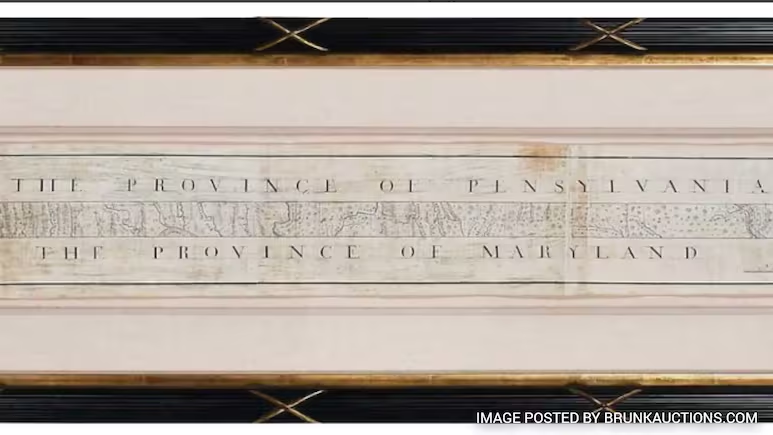
    The hand-drawn map showing the Mason-Dixon Line that eventually divided free from slave states in the US sold Thursday for $950,000.

    Forty-five bidders battled for just under three minutes for ownership of what is perhaps the most consequential map in American history.

    Bidding started at $400,000 for the survey of states divided by the Mason-Dixon Line, finished in 1768 by Charles Mason and Jeremiah Dixon. The sale was held online and in person at Brunk Auctions in Asheville, North Carolina.

    While it didn’t fetch the hoped-for $1.2 million high estimate, auction house Vice President Lauren Brunk said she was pleased.

    “It’s a very high price for a map,” she said.

    Brunk said the buyer asked to remain anonymous, at least for the time being.

    The survey was originally commissioned to settle a border dispute between what were then the colonies of Maryland and Pennsylvania. It was used in the 1820 Missouri Compromise to establish the limits of human bondage in the still adolescent United States and became synonymous with the fundamental divisions that exploded into the Civil War four decades later.

    The late publisher Malcolm Forbes bought the map in 1982 for $360,000, beating out the Library of Congress. The document was resold in 2002 for $556,000.

    Brunk said the Library of Congress was not among Thursday’s bidders.

    “I would like to say I’m thrilled that this is going to a good home and we are so happy to have had it in our presence for these last months,” Brunk said. “It also feels like a privilege to have been entrusted to steward this from one owner to the next.”

    A vertical section of the map showing the Delaware-Maryland border is housed at Princeton University.

  • Inside Iran’s Secret $2 Billion Military Supply Web Operating Under US’ Nose

    Inside Iran’s Secret $2 Billion Military Supply Web Operating Under US’ Nose

    Tehran:

    Iran has reportedly built a secret network of more than 5,000 military agencies, all operating under names starting with “MOD, to import at least $2 billion in hardware, explosives and heavy-duty trucks since January 2025. This has continued despite the US naval blockade and Western sanctions, a Reuters investigation has found.

    The findings offer a window into how Iran has been able to replenish its missile and drone arsenals while firing thousands of them during the conflict that started with the American and Israeli strikes on February 28.

    The investigation found the sophisticated apparatus was linked to the Islamic Revolutionary Guard Corps and to business conglomerates known as ‘bonyads’ that are controlled by Iran’s elite, and its financial footprints can be traced in landing bills and other shipping data dating back to 2016.

    Reuters found no evidence that Western governments have ever sanctioned any of the numbered entities.

    How The Network Works

    The network, identified for the first time by Reuters in collaboration with the Israeli-American risk consultancy 240 Analytics, reportedly acts as the backbone of Tehran’s military procurement and sanctions evasion apparatus. These agencies operated under the same naming pattern that began with the letters MOD — or VODJA in Farsi — and followed by a five- or six-digit number spelt out in long form.

    All share the Tehran address of the defence ministry and claim a founding date of February 11, 1979, the day Ayatollah Khomeini took power. Corporate records show most were actually created in 2013, when sanctions were crushing Iran’s oil exports and currency.

    They used a web of frontmen and foreign shell companies, collectively known as trustees, who use the proceeds from illicit oil sales to replenish Iran’s missile and drone arsenals.

    In 97 per cent of the shipments Reuters reviewed, the transactions were settled “without currency transfer”, so little money crosses borders where it might trigger sanctions alerts.

    Key imports through these entities reportedly include rocket propellants, components, and heavy-duty launchers, sourced from nations like China, Russia, and Germany.

    How It Was Found

    Noam Binstok, an economist at 240 Analytics, spotted the pattern in June 2025 while processing leaked Bank Sepah documents, which handle IRGC salaries and were circulating on Telegram and the site WikiIran. The balances stunned him. Thirty-six agencies held $1.2 billion in foreign currency at the end of 2024, and the rest held about $1.8 billion in local currency.

    He later found the agencies were receiving oil revenue and buying dual-use equipment. Every agency carries a unique 11-digit ID that recured on shipping documents, invoices and bank accounts, which made the network traceable even behind front companies. Reuters then cross-checked part of roughly 19,000 import records against shipping papers, social media footage, satellite imagery and state media.

    The Biggest Buyer

    One agency, MOD 346428, stood out. Its imports grew from $442 million in the year to March 2023 to $988 million the next year, placing it among Iran’s top ten importers. From January 2025 to June 2026, it brought in $2.3 billion of military hardware, including rocket propellant ingredients, explosives and weapons components.

    Between January and April 2025, it imported 886 tonnes of chemicals, including sodium chlorates and other perchlorates, key precursors for solid rocket fuel, through Bandar Abbas. Their origin was listed as China.

    Quoting sources, Reuters reported that the 26 April 2025 explosion at the Port of Shahid Rajaee in southern Iran was caused when sodium perchlorate from one of the shipments ignited while in dockside containers. Iranian state media reported that the chemicals were stored by Sina Port and Marine Services Development Co, which is owned by Bonyad Mostazafan, a multi-billion-dollar foundation directly controlled by the supreme leader of Iran.

    The explosion killed at least 70 people and injured more than 1,200.

    Trucks And Launchers

    The agency also imported 435 Iveco trucks, a type the military uses as camouflaged mobile missile launchers. A 2022 purchase of six similar trucks was ultimately delivered to Sahara Thunder, a drone maker the US sanctioned in 2024 for trading with Russia.

    MOD 346428 also brought in thousands of Toyota Hilux and Land Cruiser pickups, which the IRGC modifies to mount heavy machine guns. Iveco said any presence of its vehicles in Iran was outside its control, and Toyota said it does no business in Iran.

    Imports Through The War

    Deliveries continued after the war began on February 28, Reuters found. In the preceding weeks, Iran received 93 tonnes of Chinese titanium, a high-strength metal that the weapons and sanctions experts said can be used to build missile airframes and rocket motor casings.

    It also imported 268 tonnes of nitrocellulose and 276 tonnes of other chemicals originating in China and listed under the code that includes perchlorate – ingredients for both rocket propellant and explosives.

    Monthly imports dropped 47 per cent to $54 million in March but rebounded to $77 million by May.

    Russian detonators worth $7.6 million also arrived in Iran in five shipments, the last one in June. Goods worth $27 million were recorded as originating in the UAE, the most recent arriving days after the US briefly suspended its blockade in June.

    Iran has also bought precision machinery, such as computer-controlled lathes and electron-beam furnaces, that could be used to build missile and drone bodies.

    Reactions

    Experts who reviewed the findings called it an “industrial-scale effort” to rebuild Iran’s drone and missile fleet. They also stressed that much of the material is dual-use and could have civilian purposes.

    Responding to Reuters’ findings, a US Treasury spokeswoman said the US “has severed the regime’s economic lifelines.”

    “While the regime may continue its desperate attempts to evade our powerful sanctions, fund its military and weapons programmes, and access foreign currency, we are always 10 steps ahead,” the spokeswoman said.

    A former senior US Treasury sanctions official, Miad Maleki, however, called the system the military’s “lifeline” and the “complete ecosystem” of its trade.

    “What you have here is the regime’s military lifeline during this conflict and for many years before…This is the complete ecosystem of the Iranian military’s trade business,” Maleki, who helped design the American sanctions programme against Iran, told Reuters.

    China’s Foreign Ministry said it was “unaware” of the situation. “We firmly oppose attempts to maliciously link regional hostilities to China or smear China’s reputation,” the ministry said in a faxed statement to Reuters.

    So far, Iranian entities, Russia’s Defence Ministry, the White House, CENTCOM and the UAE have not commented on the findings.
  • Trump Confronted Over Jeffrey Epstein Link At US Rally. See His Response

    Trump Confronted Over Jeffrey Epstein Link At US Rally. See His Response

    Washington:

    US President Donald Trump, who has mostly remained tight-lipped about his connection with the disgraced sex offender Jeffrey Epstein, went on an eyebrow-raising riff about him at an Ohio rally of next week’s midterm elections. The US leader was addressing a rally in Chillicothe to support Republican Senator Jon Husted when he was interrupted by a protester shouting about Jeffrey Epstein.

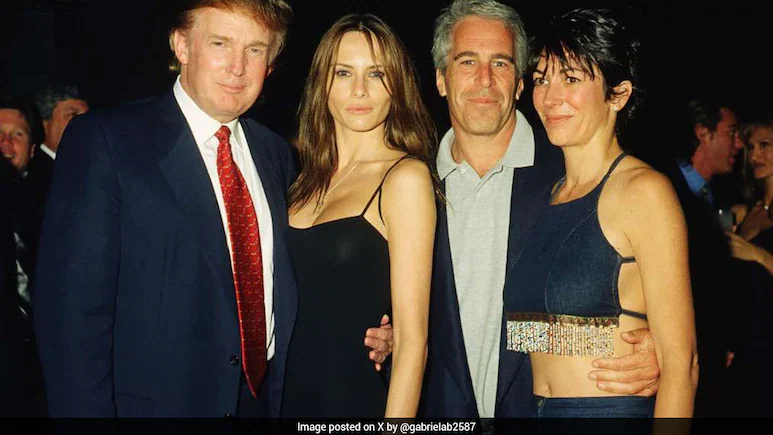
    Trump, who rarely brings up his former friend, said, “I threw Epstein out of a club like 20 years ago because I thought he was a wackjob.”

    “That was a great thing I did; I must tell you.”

    He added that the disgraced financier was “totally exonerated from him.”

    The billionaire Republican, who has never been formally accused of any wrongdoing relating to Epstein’s crimes, also alleged that sex offender Jeffrey Epstein hung out with Democrats.

    He also called protesters, who routinely disrupted his cross-country rallies, “sick, weak people”.

    Epstein died in federal custody in 2019 while awaiting trial on sex trafficking charges involving minors in what was determined to be a suicide.

    Trump also spent several minutes at a rally praising Husted’s body, saying that his image transformed from “Clark Kent to Superman” when he learned the senator had been a successful college football player.

    “I started by looking at his ass, and it was strong as hell,” Trump said.

    He added that his shoulder felt “like a piece of steel.”

    This is not the first time Trump has made comments on Husted’s body. Earlier this month at a Youngstown rally, Trump

    At a rally in Youngstown earlier this month, Trump admitted to admiring Husted’s body and said, “I started examining [Husted’s] body because I didn’t know he was a great athlete, and I looked, and I watched up and down… looked at his a**, and I looked at the whole, and then I looked at his hands. Look at his hands. He’s got these like claws.”

  • 1 Ship, 6 Indians, 6 Months: Long Wait For Seafarers Stranded At Karachi Port

    1 Ship, 6 Indians, 6 Months: Long Wait For Seafarers Stranded At Karachi Port

    New Delhi:

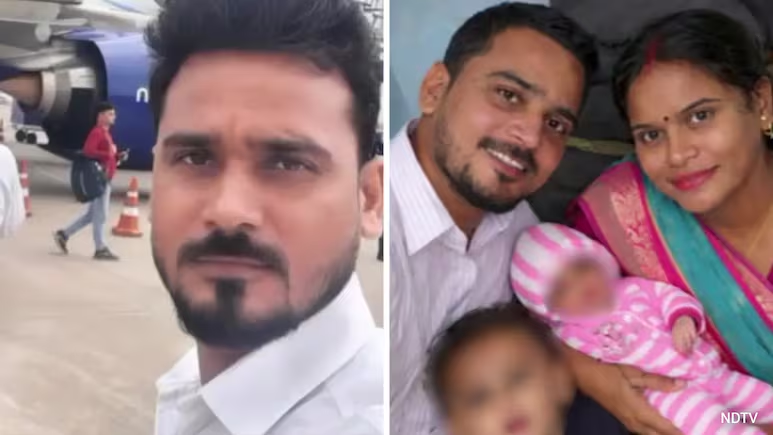
    Eight months ago, on February 25, Vineet Kishore Mishra boarded the general cargo ship ‘KEVER’ as chief officer. After travelling through maritime routes involving Iran and Oman, the ship reached Karachi port in Pakistan on April 17. And since then, Vineet, along with five other Indians, has been stranded at the port with no clarity on his return home.

    Vineet’s family has been running from pillar to post, appealing to Prime Minister Narendra Modi, Uttar Pradesh Chief Minister Yogi Adityanath and External Affairs Minister S Jaishankar to bring him back home safely.

    Vineet is a native of Prayagraj in Uttar Pradesh and a father of two.

    “Mere bache mujhse poochte hai, ‘Mumma, papa kab aayenge?’ (My children ask me, ‘Mother, when will father come home?’),” says Neha Mishra, Vineet’s wife. She gives them a simple reply: “Aa jayenge (He will come).”

    Speaking to NDTV, Neha claimed that her husband and other seafarers have been stranded at Karachi port for over six months now with no update on when they will be freed.

    “He was on a contract for six months, ending in August. His contract and visa have expired but he has not been ‘signed off’ from the vessel. No arrangements have been made for his journey back home. He is not permitted to disembark,” Neha said.

    Neha gets to speak to her husband once in 15 to 20 days for a minute or two. Through these quick calls, she has learnt about the hardships her husband is facing on the ship.

    “The vessel has been under complete blackout for the last three months,” Neha added.

    The family claims food and water supply issues on the ship.

    “My son tells me they are given two biscuits in the morning, lunch comes at 4 pm, and dinner at around 11 pm. There is no power on the ship. They are living in the dark,” said Vineet’s father, Lalit Kishore Mishra.

    Neha, along with her father-in-law, has approached several state and central authorities but all efforts have been in vain. She said they are offered assurances, but nothing moves on the ground.

    “We have written to the government, but no action has been taken to help them. We want him to return safely to his home. We appeal to PM Modi, Yogi Adityanath, the Ministry of External Affairs to help us bring Vineet back home. I have two small kids. They cry for their father,” she added.

    The family has flagged the issue with the Indian Embassy in Pakistan but has not receive any help. The family has now come to Delhi to raise the issue.

    “In the last four days we have visited the Prime Minister’s office, the President’s office and even the Ministry of External Affairs. We have submitted our application,” said army veteran Lalit Mishra.

    According to the family, the ship was seized immediately upon arrival in Karachi following a dispute between an Iranian company and the authorities at the port. Subsequently, the power supply to the ship was cut off, and everyone’s passports were confiscated.

    Vineet’s family is waiting for his return home.

  • From ‘Intifada’ To Kingmaker: Israel’s Arab Parties’ Momentum Post Hamas Attack

    From ‘Intifada’ To Kingmaker: Israel’s Arab Parties’ Momentum Post Hamas Attack

    Tel Aviv:

    They cast ballots in national elections. They select the parliament’s legislators. They have even been key in determining who gets to be prime minister. But for much of the country’s history, Israel’s Arab parties have been on the fringes of power.

    That may change soon.

    In the recently concluded Israeli elections, neither Prime Minister Benjamin Netanyahu’s right-wing bloc nor the opposition won a clear majority, leaving Arab lawmakers to decide who will form the next government. But the story is much bigger than the maths of one election. It is a decades-long argument over Palestinian identity, equal citizenship and whether Arab representatives can wield real power in a state that defines itself as Jewish.

    Who Do They Represent?

    Israel’s Arab parties generally represent Palestinian citizens of Israel, who make up about 20 per cent of the population. There are many descendants of Palestinians who stayed inside the country’s borders after the 1948 Arab-Israeli war and the founding of the state. They are different from Palestinians in the occupied West Bank and Gaza Strip who are not allowed to vote in Israeli national elections.

    The community is made up of Muslims, Christians and Druze, although the Druze have their own political dynamics and many have long supported parties led by Jews. Opinions are by no means unanimous. Some parties espouse Palestinian nationalism and seek to have Arab citizens recognised as a national minority. Others are led by religion. Some call for Arab-Jewish cooperation in civil rights, economic development and social justice.

    Three Traditions

    In the first few decades of Israel, Arab representation was often through lists linked to Mapai, David Ben-Gurion’s leading party. Arab citizens were under military administration until 1966, with their movement restricted. Those lists won seats but had little independence from the Jewish-led parties that were behind them.

    Another tradition was the Israeli Communist Party, which united Arab and Jewish activists in the struggle against discrimination, for socialism and for Palestinian rights. After the split in the movement, New Communist List, Rakah, became a major force among Arab voters. In 1977 it helped found Hadash, the Democratic Front for Peace and Equality, still a major Arab-Jewish coalition.

    Palestinian nationalism was itself a tendency. Al-Ard was banned in the 1960s, and later movements tried to establish an independent voice. The National Democratic Alliance, or Balad, was established in 1995 and entered the Knesset in 1996. It argued that Arab citizens should be recognised as a Palestinian national minority and that equality was impossible without confronting Israel’s national identity.

    The Islamist movement eventually gave birth to the United Arab List, Ra’am, which focused on religious identity, social issues and practical gains for Arab communities. Those differences continue to inform each party’s view on coalitions, Palestinian statehood and cooperation with Jewish-led parties.

    The Intifadas and October 2000

    The First Intifada, which began in December 1987 in the West Bank and Gaza Strip, was a turning point. For Palestinian citizens of Israel, national identity and solidarity with Palestinians in the occupied territories were pushed to the top of the domestic agenda. It also raised the value of independent Arab organisations over the lists that relied on Jewish parties.

    Arab citizens were in a difficult balancing act. They were Israeli citizens. They could vote. Many were also heavily involved in the Palestinian national movement. There was no Arab response to the uprising. It widened the gulf between those who embraced nationalism, those who backed Arab-Jewish partnership, and those who aimed for change via Israeli institutions. The Oslo peace process of the 1990s had raised hopes of resolving the conflict, but it also left many Arab citizens unhappy with their position within Israel.

    The second Intifada began in September 2000 and was a more severe blow to relations with the state. By early October, the protests had spread to Arab towns and villages, where demonstrators showed solidarity with Palestinians in the occupied territories. Israeli police have used violence. Thirteen Arabs were killed.

    For many, the deaths laid bare the limits of integration in a state that they felt had treated them unfairly. Distrust of police and government increased. Even voting patterns changed. Arab turnout, according to the Israel Democracy Institute, dropped dramatically. It averaged around 57 per cent over the four elections held between 2003 and 2013, compared with 66 per cent nationally. Calls to boycott the elections caught fire, fanned by anger at government policy and a sense of the weakness of Arab representation.

    The Joint List and the Power Question

    The Joint List was created before the 2015 election, as the need for unity gave birth to the list. It united Hadash, Balad, Ta’al and Ra’am on a common platform, despite their differences over nationalism, religion and relations with Jewish-led parties. In 2015, it won 13 seats. In March 2020, all four parties ran together again, took a record 15 seats, and became the third-largest faction in parliament.

    But seats alone did not mean power. In 2020, the Joint List had recommended President Reuven Rivlin give Benny Gantz a chance to form a government. The reliance on Arab lawmakers was politically contentious, and the effort never produced an alternative government. The episode highlighted a persistent issue: Arab parties could be kingmakers, but Jewish-led parties didn’t always consider them legitimate partners.

    The Arab Party Joins the Government

    In 2021, Mansour Abbas’s Ra’am broke away from the Joint List and adopted a more pragmatic line. Arab citizens would be better off taking part in decision-making rather than always being in opposition, Abbas said. Ra’am joined the coalition assembled by Naftali Bennett and Yair Lapid, the first independent Arab party in decades to sit in an Israeli governing coalition.

    It campaigned for money and policy changes on crime and violence in Arab communities, housing and planning problems and unequal access to public services. The critics feared that the participation in a government that was committed to Israel’s Jewish character would compromise Palestinian national rights. “Only by taking part could people improve their daily life,” said the supporters. The experiment showed that an Arab party could go into government. It didn’t set the limits of how far such a party could cooperate with Jewish-led parties and still be true to itself.

    October 7

    The October 7, 2023, Hamas-led assault on southern Israel transformed Israel. It killed about 1,200 people according to Israeli figures, and took 251 hostages into Gaza. Israel responded with a military offensive that devastated large parts of Gaza, killed hundreds of Palestinians and caused a dire humanitarian crisis.

    The aftermath was particularly rough for Arab citizens. They lived in a traumatised country, and many identified with the suffering of Palestinians in Gaza. Their representatives had to thread a needle between Israeli grief and fear, anger over the war and concern about how Palestinians were being treated. There was less room for expression, with Arab citizens and activists being targeted for public statements and expressions of solidarity.

    The pragmatic strategy of Ra’am faced the most pressure. The war made it more difficult to disentangle civil concerns and Palestinian national issues. But the everyday problems remained: violence and organised crime in the Arab towns, lack of housing, planning restrictions, access to public resources. October 7 didn’t erase the divisions between the parties. It made them sharper.

    From the Margins to Kingmaker?

    If neither bloc wins the 61 seats needed for a majority, Arab lawmakers could decide who governs. Ra’am indicated it would join a coalition in exchange for pledges on the needs of Arab citizens. Hadash and Ta’al have largely sought influence outside of government. Balad has adopted a more confrontational stance toward the Israeli mainstream. Any deal will depend on the final seat count, the parties’ conditions and whether a potential prime minister is willing to rely on their votes.

    History cautions against equating the maths of parliamentary seats with inclusion. For the parties, the challenge is to turn seats into real change without selling out the principles their voters believe in. The question for Israel’s political establishment is whether it can accept Arab representatives as legitimate partners or only as necessary votes when a majority is at stake.The answer might determine more than who runs Israel. It might determine if Arab political participation becomes a permanent feature of the country’s governance.