Blog

  • No Clear Majority, Record Arab Votes And A Dilemma For Israel’s Opposition

    No Clear Majority, Record Arab Votes And A Dilemma For Israel’s Opposition

    Tel Aviv:

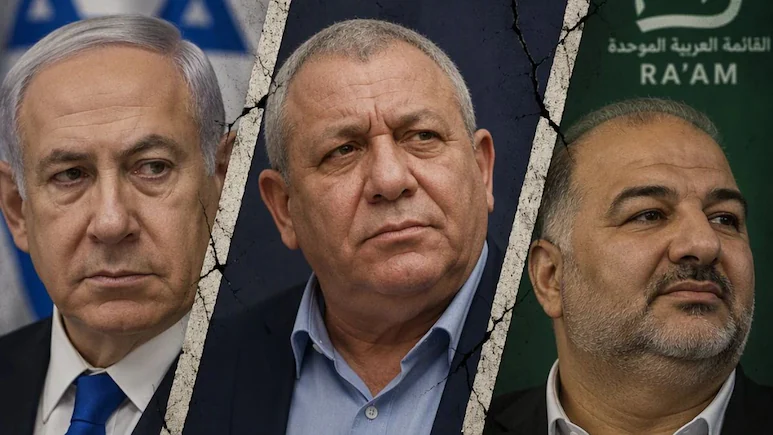
    Israel’s election results left the country with more questions than answers. Prime Minister Benjamin Netanyahu and his main rival, former army chief Gadi Eisenkot, had both stood before cheering supporters in the early hours and claimed victory. But as the count went on, the mood changed. Neither side, it turned out, had the numbers to form a government.

    Preliminary figures give Netanyahu’s Likud-led bloc 53 seats in the 120-member Knesset. Eisenkot’s opposition bloc, led by his Yashar party, has 48. Arab-led parties are projected to take a record 19. To form a government, the coalition needs at least 61 seats.

    The question is no longer just whether Netanyahu can survive. It is whether Israel’s fragmented politics can produce a government at all or whether voters will be sent back to the polls once more.

    Two Victory Speeches

    The post-election speeches of rivals showed how uncertain the picture was. Eisenkot called the result a public verdict against Netanyahu’s leadership. Netanyahu stood by his coalition allies, attacked his critics and called for a right-wing nationalist government.

    Both spoke before the count had settled, and neither can claim a clear mandate.

    Israel’s system makes this difference important. Voters pick party lists, not leaders, and governments are built by bargaining among parties that together command a Knesset majority. Likud is still the largest single party in the preliminary count, which keeps Netanyahu in the contest. But the setback is real: his bloc has lost the majority it held before.

    President Isaac Herzog is now in the spotlight. Once final results are certified and he has consulted party representatives, he will decide who is best placed to form a government. The job does not automatically go to the leader of the largest party. Herzog has already urged politicians to be flexible and avoid a fresh election.

    Arab Parties Become Pivotal

    The standout feature of the election may be the performance of the Arab-led parties. The Joint List and the United Arab List, known as Ra’am, are projected to win 19 seats between them.

    Arab citizens are about a fifth of Israel’s population. Their political weight has long been held back by low turnout, rivalry among their parties, and the reluctance of Jewish-led parties to depend on their votes.

    On paper, the arithmetic offers Eisenkot a way to block Netanyahu. In practice, however, the situation is more complex. Eisenkot has cast himself as the head of a Zionist opposition, and whether his bloc can work with Arab parties has become the central test of his strategy.

    Yair Golan, who leads the centre-left Democrats, has openly backed bringing Arab parties into the process, saying their voters cannot be ignored. Other opposition figures are warier. Some have ruled out any formal partnership, and others fear losing voters who want Netanyahu gone but are uneasy about relying on Arab lawmakers.

    For many Arab families, this election is about more than seats in the Knesset. Their leaders said they want a real voice in the decisions that shape the country, and they have a clear list of what matters to them. They want something done about the violent crime that has haunted Arab towns, an end to the poverty and discrimination many residents live with, and a government that pays attention to their communities. Ra’am leader Mansour Abbas has said Arab citizens will no longer stand on the sidelines, and this result gives him a stronger hand to make that case.

    Fraud Claims 

    The contest has already turned into a row over the integrity of the vote. Likud has alleged widespread fraud at Arab polling stations, saying the election was “stolen.” It has demanded investigations by the police, the Shin Bet and the Central Elections Committee.

    The party said it has filed hundreds of testimonies and pieces of evidence. Its claims include cash handed out alongside ballots for Ra’am, intimidation of polling staff, several voters crowding into booths together, voting under false identities and mismatches in ballot counts.

    Likud’s claims are serious, but they are still just claims. So far, no one has shown that the vote was rigged. A senior official at the Central Elections Committee brushed aside the idea of widespread fraud in a television interview, and the committee said it was going through the complaints as it would after any election. Looking into a complaint is not the same as finding something wrong, and until investigators say otherwise, that gap matters.

    The timing is politically sensitive. Arab parties have become potential kingmakers just as neither big bloc can reach a majority alone. The row risks deepening mistrust between Jewish and Arab communities at a moment when their cooperation is at the heart of coalition talks.

    Netanyahu has long opposed any government that relies on Arab parties, calling it a danger to Israel’s security and national identity. His opponents said Arab citizens have the same democratic right to representation as anyone else.

    Haredi’s Hard Choice

    The numbers also point to shifts among ultra-Orthodox voters. Early figures from Haredi towns suggest United Torah Judaism has held its ground and may have gained slightly. Shas has slipped, with its share of the Haredi vote falling from 30.9 per cent in 2022 to 24.4 per cent. The Haredi Public Party, which drew attention during the campaign, has made little impact.

    This matters because the ultra-Orthodox parties have been key partners in Netanyahu’s coalitions, with influence over religious institutions, public funding and exemptions from military service.

    The draft is especially sensitive after years of war and repeated reservist call-ups. Many Israelis wonder why most ultra-Orthodox men remain exempt while others bear an increasing burden. An Eisenkot-led government would face pressure to pass a tougher conscription law, but that could mean confronting the very parties whose votes it might need. The Haredi parties must now choose between their traditional alliances and a new arrangement that could give them influence under a different prime minister.

    Liberman Keeps His Cards Close

    Another hurdle for the opposition is Avigdor Liberman, who leads Yisrael Beytenu. He has said he will not join a Netanyahu-led government. He has also rejected backing a minority government that depends on Arab parties.

    That leaves the opposition without a common plan. Liberman reportedly had limited direct contact with Eisenkot and fellow opposition figure Naftali Bennett, though talks between their teams continue. He has a record of taking his time: after the 2009 election, when his party won 15 seats, he delayed before joining Netanyahu’s government.

    His stance could push Eisenkot to consider a unity government with Netanyahu rather than an arrangement involving Arab parties.

    Possibility Of A Unity Government 

    A national unity government is one possible solution. It could bring rivals together on the shared view that another election would only prolong the uncertainty and could shut out far-right minister Itamar Ben-Gvir.

    Eisenkot could seek a major post, possibly defence, while other opposition leaders negotiate portfolios and policy pledges. With the ultra-Orthodox parties outside, such a government could pursue changes to the draft.

    But it would demand trust between leaders who spent the campaign attacking each other. Netanyahu’s political future would be central, and any deal would need safeguards on power-sharing, the timing of any rotation in the premiership, and the delivery of promises. It would also be challenging for Eisenkot to explain to voters who backed him as the alternative.

    A unity deal would not settle the deeper disputes over the war, Gaza’s future, relations with Palestinians, judicial independence or the military burden. The United States has not named a preferred outcome, and an American official said it is too early for Washington to step in. Fresh tension with Iran adds another layer of uncertainty, though there is no basis to assume a new conflict or that it would produce a unity government.

    What Happens Next?

    The election has exposed the limits of both Netanyahu’s coalition and Eisenkot’s attempt to build a broad alternative. Netanyahu has lost his majority in the preliminary count but is not out. Eisenkot has rallied a large opposition vote but has not shown he can command the Knesset. Arab parties have a historic result, but their influence depends on others being willing to deal with them.

    Absentee ballots, including those from soldiers and diplomats, are still being counted, and the Central Elections Committee has said the final tally will take more time.

    Turnout was high, reflecting how much Israelis feel is at stake after years of war and upheaval. The next test comes in coalition talks, where Herzog must decide who has the best chance of building a government.

  • Decoys, Italian Passport And A Private Jet: How Brazil’s Bolsonaro Fled To US

    Decoys, Italian Passport And A Private Jet: How Brazil’s Bolsonaro Fled To US

    Brasilia:

    Over a day after he vanished from public sight, Brazil’s defeated presidential candidate Flavio Bolsonaro and his family had landed in Miami, where he declared himself the rightful “leader” of Latin America’s largest country. While Bolsonaro’s clandestine escape to the United States bewildered many in Brazil, the 45-year-old took to X and claimed, without evidence, that the election had been stolen by President Luiz Inacio Lula da Silva and his far-left allies.

    “On Sunday night, I was stunned by an electoral fraud that was made reality before my eyes,” he wrote, escalating his drive to overturn a result that he had effectively accepted on Monday.

    He accused Brazilian Supreme Court Justice Cristiano Zanin, who was Lula’s former attorney, of “illegitimate activity”. He said the court “permitted a mathematical impossibility that added 10 million votes between the first and second rounds” of the election.

    The allegations came after the Supreme Court ordered the son of jailed ex-leader Jair Bolsonaro to forfeit his passports after his electoral loss amid fears he would leave the country due to ongoing investigations against him. But the defeated right-wing presidential candidate failed to hand them in, choosing instead to flee to the US via Argentina and Ecuador.

    The Exit Timeline

    Sunday

    Before leaving Brazil, Bolsonaro made a brief, stone-faced speech from Brasilia following his electoral defeat to leftist incumbent Lula. In his speech, he refused to recognise the result and promised to seek an annulment of the election.

    Monday

    Bolsonaro posted a video on Instagram, speaking outdoors in front of a bare wall. He told his followers that the Supreme Court has banned him from leaving the country in “a clear attempt to intimidate me.”

    “I never had any intention of leaving the country. I will surrender my passports and defend myself against this travesty,” he said. The ban on his travel is linked to one of several ongoing investigations against him.

    Tuesday

    Media reports claimed that Bolsonaro plans to board a flight in the northeastern city of Puerto Iguazu, after his official motorcade was seen leaving his Brasilia residence.

    It was not initially confirmed whether Bolsonaro left in those cars. As speculation runs rampant, AFP reported, quoting a police source, that Bolsonaro’s Brazilian and diplomatic passports were cancelled. American media, meanwhile, reports that the defeated candidate is en route to the US.

    Back in Brazil, Bolsonaro’s campaign manager claimed he has no idea where his boss was. “I received a text message from him this morning, where he said he would let some time pass today and then would talk with us, and that was it,” a dumbfounded Rogerio Marinho tells the press in Brasilia.

    Wednesday

    Later, AFP reported that while the world had been speculating on his whereabouts, Bolsonaro was still in Brazil. He crossed the border into Argentina on Wednesday over 12 hours after the first reports emerged that he had left, the neighbouring country’s immigration authorities announced.

    He entered Argentina “with valid travel documents and no legal impediment” via the Tancredo Neves International Bridge linking the Brazilian city of Foz do Iguacu with Puerto Iguazu, Argentine authorities said.

    Even though his Brazilian and diplomatic passports were cancelled, Bolsonaro also holds an Italian passport. It remains unknown how he got to Argentina from Brasilia, more than 1,500 kilometres away.

    Brazilian police said there is no official record of his departure from the country. They say they are investigating his failure to hand over his passports, but this does not classify him as a fugitive.

    From Argentina, Bolsonaro and his family reached Ecuador’s port city of Guayaquil on a private jet, Argentine immigration authorities later said.

    According to an AFP report, the plane made a brief refuelling stop at the virtually empty airport before heading to Miami.

    Around 12 hours after their departure from Argentina, the Bolsonaro family hits the tarmac at Florida’s Opa-Locka airport. He enters the United States with his cancelled diplomatic passport, according to the Department of Homeland Security website that tracks border controls.US President Donald Trump, a long-time supporter of the Bolsonaro family, confirmed that the US allowed Flavio Bolsonaro to enter the country. “Well, I’m not going to make a comment about that, but I know that we gave him a pass to come into the country, so we’ll see.”Now, according to a Wall Street Journal report, Bolsonaro intends to set up a political operation in exile from the US. But with the US midterm elections days away, sources noted that the White House has given little indication of Team Trump’s intention to go beyond offering Bolsonaro refuge or expend political capital challenging da Silva’s re-election victory, despite pressure from allies in Washington.

  • ‘Minister Of Death’: Huge Anti-Government Protests In Spain After Train Crash Kill 68

    ‘Minister Of Death’: Huge Anti-Government Protests In Spain After Train Crash Kill 68

    Madrid:

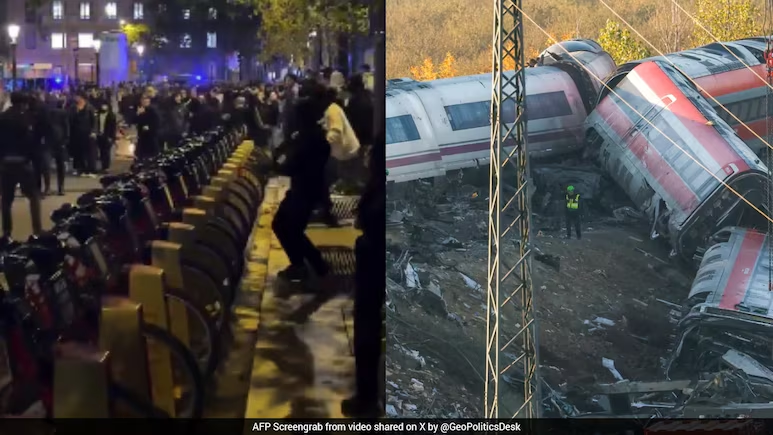
    Public anger is boiling in Spain after at least 68 people were killed and dozens more were injured in one of the worst rail disasters in Europe’s modern history. While rescue teams worked through the night to cut open metal carriages in the search for accident victims, thousands of people gathered in Rome calling for the resignation of Prime Minister Pedro Sanchez and Transport Minister Oscar Puente after the second major high-speed train crash in Spain this year.

    According to a report by Spanish broadcaster TVE, around 1,500 people gathered outside the Spanish Transport Ministry building in the capital overnight, calling for ministers’ ouster. Protesters also reportedly threw bottles and flares at law enforcement officers, following which police used tear gas to disperse the crowd.

    So far, no injuries or arrests have been reported. Visuals of the demonstration circulating on social media showed clashes between demonstrators and police, as protesters questioned the authorities’ handling of the crash. Demostrators were also seen carrying banners reading “CRIMINALES ABAJO EL REGIMEN DEL 78” (Criminals Down with the Regime of ’78).Protesters also chanted “Scar Puente, minister of death” as police moved against the them in the capitalRail drivers are also expected to stage a strike today, with the Spanish Union of Railway Drivers (Semaf) saying the protest will be held “in defence of railway safety”, a BBC report said.

    Spain’s Crowned Rails 

    Spain’s network of high-speed rail has been considered one of the nation’s crowning achievements. It ranks second to China in track mileage in the world. Until this year, it had not endured a deadly crash since coming into service over three decades ago.

    The Wednesday collision that turned a sleepy stretch of rail lined by olive groves into a scene of carnage came just four weeks before the country votes in a national election. Spanish Prime Minister Sanchez visited the crash site in the central province of Toledo after regional authorities confirmed that more than 60 people had died and dozens more were being treated at hospitals.

    Only in January, 46 people had died when one train jumped the track and slammed into the side of another going the opposite way in southern Spain.

    Sanchez pledged an investigation into the latest collision and improvements to prevent another tragedy like the two that have shaken trust in a rail system that carried 45 million travellers last year, including millions of tourists. Sanchez’s government also declared three days of mourning starting Thursday.

    Spain Protests

    People in Spain had already been protesting over housing shortages and surging rents, and the crash has intensified the anger. The movement was triggered last month after police evicted an 87-year-old woman from her lifelong Madrid apartment. The woman, Maricarmen Abascal, was carried out on a stretcher after the police broke down her door, in a scene that caused widespread outrage.

    Her plight tapped into long-simmering resentment in Spain’s major cities over spiralling costs to rent or buy homes. Tens of thousands of protesters took to Madrid’s streets over weeks, rattling keys and blowing whistles.

  • Sheikh Hasina’s Ouster: Yunus Aide Makes Fresh Claim

    Sheikh Hasina’s Ouster: Yunus Aide Makes Fresh Claim

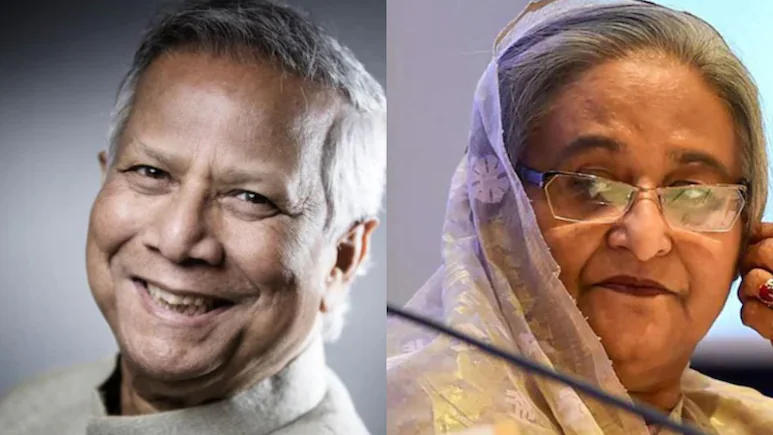
    Dhaka: Bangladesh’s political transition following the removal of former Prime Minister Sheikh Hasina has come under renewed scrutiny after Shafiqul Alam, former press secretary to Muhammad Yunus, claimed that student leaders contacted the Nobel Peace Prize laureate before Hasina left the country in August 2024.

    In a Facebook post, Alam alleged that the student leaders approached Yunus two days before Hasina’s departure on August 5, 2024, seeking his leadership for a possible interim government. He also credited journalist Qadaruddin Shishir with helping establish contact between the two sides.

    What Did Yunus’s Former Press Secretary Claim?

    According to Alam, student leaders involved in the 2024 protests wanted to approach Yunus about leading a post-Hasina interim administration. They allegedly sought assistance from Shishir, who was then associated with Agence France-Presse’s (AFP) fact-checking team in Dhaka.

    Alam said Shishir acted as an intermediary, facilitating the initial communication between Yunus and the student leaders while Sheikh Hasina was still in power.

    Describing the process as a sensitive operation, Alam claimed that only a small number of trusted individuals knew about the discussions. He also praised Shishir for maintaining discretion during a period of political uncertainty in Bangladesh.

    Alam further alleged that Shishir began collecting video evidence of killings during the government’s crackdown on protesters.

    The account has drawn attention because it suggests that discussions about who might lead a future interim administration were taking place before Hasina left Bangladesh. However, Alam’s statements alone do not establish that the wider uprising or the government’s fall was orchestrated as part of a coordinated plan. The details of the alleged communications require independent corroboration.

    How Sheikh Hasina Left Power in August 2024

    Sheikh Hasina left Bangladesh on August 5, 2024, following weeks of student-led protests and escalating political unrest. The demonstrations initially centred on public-sector job quota reforms before expanding into a broader movement demanding her resignation.

    Muhammad Yunus subsequently returned to Bangladesh and took office as chief adviser of the interim government on August 8, 2024.

    His administration remained in office until February 2026, when Bangladesh’s post-election political transition brought Tarique Rahman to the prime minister’s office.

    Sheikh Hasina’s Legal Case and Allegations of Political Repression

    In November 2025, Bangladesh’s International Crimes Tribunal sentenced Hasina to death in absentia over her role in the deadly crackdown on the 2024 protests. Hasina rejected the proceedings and described the verdict as politically motivated.

    The interim government had also banned the activities of Hasina’s Awami League party in Bangladesh and sought her extradition from India. The party remains banned from participating in elections under the restrictions in force as of October 2026.

    Hasina has separately accused the former Yunus-led administration of pursuing politically motivated cases against Awami League members and failing to ensure accountability for violence. These allegations remain contested and should be distinguished from established judicial findings.

    Muhammad Yunus Heckled at New York Airport

    In a separate development, former interim chief adviser Muhammad Yunus was confronted by protesters at New York’s John F. Kennedy International Airport in October 2026.

    Videos circulated on social media showed people shouting accusations at Yunus as he was leaving the airport. Bangladeshi media reports identified several of the protesters as individuals linked to the Awami League, whose activities remain banned in Bangladesh.

    The incident prompted criticism from Bangladeshi officials, who said the matter should be investigated and that appropriate action should be considered against those responsible.

    The confrontation highlights the continuing political divisions surrounding Bangladesh’s 2024 uprising, the subsequent legal proceedings against former government figures and the future of the Awami League.

    For now, the latest claim about Yunus’s early contact with student leaders rests on Alam’s account. Establishing the full circumstances surrounding the alleged discussions will require further independently verified evidence.

  • Russian Drone Strike Hits Ukraine Train Platform, Killing 13 People

    Russian Drone Strike Hits Ukraine Train Platform, Killing 13 People

    At least 14 people have been killed and 14 others injured after a Russian jet-powered drone struck a railway platform in Dnipro, Ukraine, on Thursday, October 29, according to Ukrainian authorities. The attack hit a platform where passenger trains were standing, including a service scheduled to travel from Dnipro to Zaporizhzhia.

    The death toll and number of injured increased from the initial reports as emergency services continued responding to the attack. Several injured people were reported to be in serious condition.

    Russian Drone Hits Passenger Train Platform

    According to Ukraine’s state railway operator, Ukrzaliznytsia, the drone struck a platform at Dnipro railway station while passenger train No. 866, travelling from Dnipro to Zaporizhzhia, was present.

    The railway operator said the attack involved a jet-powered unmanned aerial vehicle (UAV). Despite an earlier warning about an elevated threat level, people were still present on the platform when the strike occurred.

    Dnipro Mayor Borys Filatov described the incident as a tragedy, confirming that a civilian electric train had been hit.

    Emergency personnel, including police officers, medical teams and rescue workers, responded to the scene to assist the injured and document the aftermath.

    Zelensky Calls for Stronger International Action

    Ukrainian President Volodymyr Zelensky condemned the attack, describing the Russian strike on the railway station as horrific.

    He called on international partners, including the United States, the European Union and the G7 countries, to take stronger action against Russia.

    Zelensky also questioned the easing of certain sanctions related to Russian oligarchs and the energy sector, arguing that reducing economic pressure on Moscow would not help prevent further escalation.

    The Ukrainian president urged international partners to maintain and strengthen sanctions against Russia while the war continues.

    Ukraine’s Railway Infrastructure Faces Repeated Attacks

    The strike in Dnipro comes amid continued concerns about the safety of Ukraine’s railway network, which remains vital for passenger transportation, humanitarian assistance and the movement of essential supplies.

    Russian drone attacks have repeatedly threatened railway stations, locomotives, passenger trains and other transport infrastructure.

    A September 2026 report by Deutsche Welle, citing Ukraine’s railway operator, said more than 1,600 attacks on railway infrastructure had been reported during the first eight months of the year.

    The latest incident has renewed concerns about the risks faced by civilians travelling by train, even when railway operators issue warnings about potential threats.

    Casualties and Investigation

    Ukrainian authorities continued assessing the damage and providing medical assistance to those injured in the Dnipro railway station attack. Casualty figures may change as officials release further updates.

    The incident is another deadly development in Russia’s ongoing war against Ukraine, highlighting the continuing dangers facing civilians and critical transport infrastructure.

    EBT News will update this report as further verified information becomes available.

  • Hello world!

    Welcome to WordPress. This is your first post. Edit or delete it, then start writing!