Blog

  • PM Modi Approves Northern Bullet Train Corridor: Delhi To Agra In 59 Minutes

    PM Modi Approves Northern Bullet Train Corridor: Delhi To Agra In 59 Minutes

    The government has given the green light to the new Northern Bullet Train Corridor, a crucial infrastructure project that will drastically cut travel times across northern India. Union Railway Minister Ashwini Vaishnaw announced the approval, sharing that the high-speed rail network will bring major cities much closer. Under the proposed schedule, passengers will be able to travel from Delhi to Agra in just 59 minutes.

    “The prime minister has approved the north corridor of the bullet train, which will change the lives of many,” Vaishnaw said while speaking before flagging off the new Vande Bharat Sleeper Express services between Varanasi and New Delhi.

    “The vision for the bullet train shared by the prime minister will greatly benefit the youth, the middle-income group, and artisans in small-scale industries. People will remember Prime Minister Modi for the next 100 years for this initiative.”

    Key highlights of the project

    Faster travel times: The corridor will also connect other major hubs, reducing travel time between Delhi and Lucknow, and extending connectivity further toward Varanasi and eastern regions.

    Make in India Focus: The minister said that the construction, ranging from pillars to girders, will be completely indigenous, relying heavily on local engineering and domestic workforce capabilities. “The construction is progressing rapidly. It will be fully ‘Make in India’, built by the youth and welders of India,” Vaishnaw said.

    Economic boost: As mentioned by the minister, the initiative is designed to benefit youth, local business owners, and middle-income commuters by making rapid transit more accessible.

    Reduced travel times

    • The journey from Delhi to Kanpur will take 1 hour and 45 minutes.
    • Delhi to Agra will take 59 minutes.
    • From Delhi to Lucknow will take 2 hours and 12 minutes.
    • Additionally, the trip from Lucknow to Varanasi will take 1 hour and 21 minutes.
    • Varanasi to Delhi will take 3 hours and 35 minutes.

    Apart from Vaishnaw, UP Chief Minister Yogi Adityanath said that a plan has been prepared to operate a bullet train between Delhi and Varanasi.

    “This will allow the journey from Delhi to Varanasi to be covered in 3.5 hours – a mode of travel that will be simpler, more convenient, and more affordable than flying,” Adityanath said.

    “Kashi now boasts a state-of-the-art railway station, which reflects the essence and character of Kashi itself. In Uttar Pradesh, 157 railway stations have been modernised. They are so well-designed that one feels as though they are in the VIP lounge of an airport.”

    Vaishnaw also criticised the opposition party over the previous railway budget allocated to the state. “After Yogi Adityanath became the chief minister of UP, the budget has increased significantly; it has doubled, tripled, and then increased by 18 times. Today, UP is receiving a budget of Rs 20,000 crore,” the Union minister noted.

    Further details regarding project timelines and ticket structures are expected to be shared soon.
  • Stalking, Rejected Proposal Behind Andhra Chainsaw Attack: Sources

    Stalking, Rejected Proposal Behind Andhra Chainsaw Attack: Sources

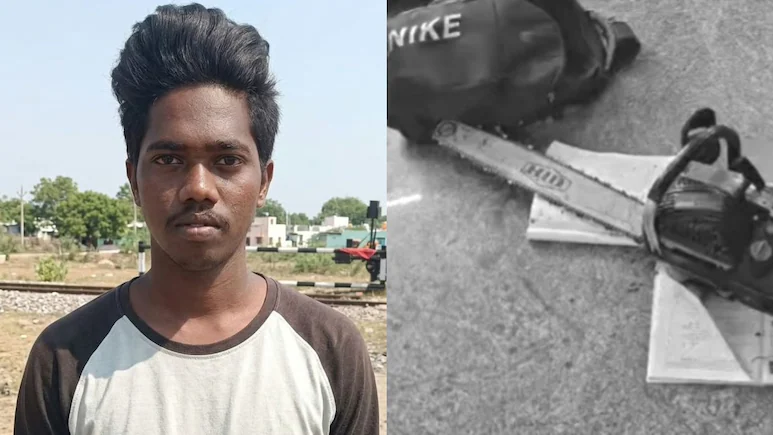
    The man accused of attacking two Class 10 girls with a chainsaw at a government school in Andhra Pradesh’s Anantapur district is said to be the uncle of the girl he allegedly targeted. Police sources said rejection of advances was behind the attack.

    He is still on the run, and police have formed 12 to 15 teams to find him. The accused used to stalk the victim and had proposed to her in past.

    On Saturday morning, a 21-year-old man allegedly walked into a classroom at the Zilla Parishad High School in Raptadu village carrying a chainsaw. According to preliminary information, the attack took place at about 10.30 am. Lessons were underway, and a teacher was in the room.

    Both girls were injured, and one of them is in a critical condition. They were taken straight to the Government General Hospital in Anantapur. One of them is undergoing critical surgery there, and arrangements are being made to move her to a hospital in Bengaluru by air ambulance.

    Preliminary police information names the accused as Hemanth alias Dummu. He is reportedly from Nagalur in Dharmavaram mandal of Sri Sathya Sai district.

    The investigation into the sequence of events and the circumstances behind the attack is continuing.

    A Teacher Describes The Panic

    The class teacher who was present at the scene, Rajeshwari, said staff were slow to understand what the man was carrying. Work was going on at the school, so they assumed someone had come to do a job.

    “Classes were ongoing. The first period was completed, and the classes were continuing. All the children were studying,” the teacher said. “The classroom doors are generally kept open. Someone came through that door. Before we could realise what was happening, the incident with the boy took place.”

    “Only one boy (the accused) came. He turned on the motor from outside and then came inside. The motor… we didn’t even understand what instrument it was,” the teacher added.

    The teacher said staff first thought the sound was linked to the work on the premises.

    “Since work was going on in the school, we thought perhaps some workers had come to do some work. He suddenly went among the children. He went right into the middle. Before the children could realise what was happening, or what had happened, and before they could get up and go outside… that is what we remember. He entered while they were still inside,” the teacher said.

    “Sounds started coming from outside. He came towards the girls. Before we could figure out what was happening, it had already happened,” the teacher added.

    One of the girls was sitting in the front row when the attack took place, according to the teacher’s account. There was little chance to step in before the assault unfolded, the teacher said.

    Children ran in different directions as panic spread, which made it hard to know what had happened straight afterwards. Several of the older children and teachers, themselves in shock, were seen consoling each other.

    “The children, poor things, were running here and there. Exactly how many people he attacked, I am unable to say. I am in a state of shock. What actually happened hasn’t even properly registered in my mind yet,” the teacher said. The teacher confirmed that another girl had also been injured.

    “There were two teaching staff members. All the others are on election duty. Only four of us ladies are here, and after that, we have a few non-teaching staff, some vocational staff, and the headmistress is also there,” the teacher said.

    Counsellors Visit Students At Home

    Education Minister Nara Lokesh said 20 mental health counsellors are visiting the homes of all 32 students of Class X-A, as well as girl students of Classes 8, 9 and 10. He wrote on X, “Following the deeply disturbing incident at Rapthadu, our priority is to ensure that every affected child feels safe and supported.”

    “We have deployed a dedicated team of 20 mental health counsellors who are visiting the homes of all 32 students of Class X-A, as well as girl students of Classes 8, 9 and 10. They are speaking with the children and their parents, offering emotional support and helping them cope with the trauma,” he added.

  • Video: Cab Flips After 3 Vehicles Collide At High Speed In Gurugram

    Video: Cab Flips After 3 Vehicles Collide At High Speed In Gurugram

    Gurugram:

    A commercial taxi overturned, and its driver was seriously injured after three vehicles collided at high speed in Gurugram’s DLF Phase 2 late on Friday night. Dashcam footage of the crash has gone viral on social media.

    The crash took place around 1:30 am on the Golf Course connecting road, beneath the Rapid Metro line.

    The dashcam of a vehicle approaching from behind captured the whole incident. The footage shows a black SUV travelling at high speed and hitting another vehicle, which slid after the impact. The SUV then rammed a commercial taxi before crashing into the side wall on the left side of the road.

    The impact was so severe that the taxi overturned and slid a considerable distance along the road. The airbags in another vehicle deployed.

    The taxi driver suffered serious injuries and has been admitted to hospital.

    After receiving information about the crash, the DLF patrolling team and the police arrived at the scene to manage the situation.The footage is circulating widely on social media, and the police are using video evidence in their investigation. An investigation into the cause of the crash is underway.

  • Meghalaya Minister Quits After MLAs Join BJP And Conrad Sangma’s Party

    Meghalaya Minister Quits After MLAs Join BJP And Conrad Sangma’s Party

    Guwahati:

    Once  considered as a kingmaker political party in Meghalaya, the United Democratic Party (UDP) is now facing a huge existential crisis as political defections have finally reached the UDP’s top leadership. The first casualty of the party’s dramatic collapse is its own president.

    With 11 of its 12 MLAs having walked out of the party, UDP president Metbah Lyngdoh on Saturday resigned as Cabinet minister in the Conrad K Sangma-led Meghalaya Democratic Alliance (MDA) government after serving in the cabinet for over a year.

    Metbah, who is also a former speaker of Meghalaya assembly, has resigned citing the changed political circumstances as his cause of exit with eight MLAs switching over to the BJP and three to the NPP.

    Metbah said he could no longer continue as a minister when his party had been reduced to a single MLA in the assembly. It was once the single-largest regional party in the Khasi-Jaintia Hills region of Meghalaya.

    Announcing his decision, Metbah said the changing political situation had made it difficult for him to continue as a cabinet minister.

    “Due to the current political scenario arising in the state, where 11 MLAs of UDP has left me as lone MLA in the party. I decided I will not be able to cabinet minister in the MDA government, so therefore, today I have placed my resignation to Chief Minister Conrad K Sangma. My resignation is effective immediately. This is first decision of the party, other decision will follow.”

    UDP had won 12 seats in the 2023 assembly elections and emerged as the single-largest party in the Khasi-Jaintia Hills region. However, within three years, it has seen an extraordinary exodus of legislators.

    His resignation is the first step in what he indicated could be a series of decisions by the party as it confronts the consequences of the mass defection.

  • PM Modi Greets People Of 6 States On Foundation Day

    PM Modi Greets People Of 6 States On Foundation Day

    New Delhi:

    Prime Minister Narendra Modi on Sunday greeted the people of Madhya Pradesh, Chhattisgarh, Haryana, Karnataka, Tamil Nadu and Keralam on their states’ foundation day, and prayed for the peace, prosperity, and well-being of all residents.

    PM Modi also hoped that the coming years would bring new opportunities, greater prosperity and continued progress to the people of the six states.

    “Heartiest greetings to all my brothers and sisters of Madhya Pradesh on the state’s Foundation Day. The state is a land of glorious heritage, rich culture, and extraordinary natural beauty. Its world-renowned heritage sites further enhance its grand historical identity,” he said in a post on X in Hindi.

    The prime minister said the people of Madhya Pradesh have made remarkable contributions in every field through their talent and entrepreneurial spirit.

    He said from agriculture, industry, tourism, education, and infrastructure to innovation, the state is continually achieving new milestones.

    “Along with its overall development, it is also playing a crucial role in the building of a self-reliant India. I pray that this special occasion brings happiness, peace, and prosperity to the lives of my family members in the state,” he said.

    In his message to the people of Chhattisgarh, PM Modi said it brings great joy to see that the state is accelerating along the path of development while uprooting Naxalism.

    “Heartiest greetings to all the residents of Chhattisgarh on the state’s Foundation Day!” he said.

    The prime minister said the state is renowned for its tribal culture, natural wealth, and unique folk traditions, and its archaeological heritage has always been its distinctive identity.

    He said the atmosphere, rich in local folk culture, possesses a wonderful warmth that draws everyone in.

    PM Modi said he was confident that with the active participation of the talented and hardworking people of Chhattisgarh, the state will continue to contribute immensely to the nation’s prosperity.

    “May this special occasion bring welfare and well-being to all the residents of Chhattisgarh,” he said.

    While extending greetings to the people of Haryana, the prime minister said that adorned with a glorious history, extraordinary valour, and a rich culture, the state is the pride of the nation.

    He said its folk traditions and vibrant rural culture have always enriched the country’s cultural heritage.

    “Heartiest congratulations and best wishes to all my family members of the state on Haryana Day,” he said.

    PM Modi said that through their hard work and dedication, the people of Haryana have proven their talent and resolve across every domain – from agriculture, sports, and defence services to industry, education, and start-ups.

    “While our athletes bring honour to the Tricolour, our farmers (annadatas) are strengthening the nation’s food security. I pray that this special occasion brings happiness and prosperity into the lives of all the people of the state,” he said.

    Extending warm greetings to the people of Karnataka on ‘Kannada Rajyotsava’, the prime minister said Karnataka is a land of rich traditions, remarkable achievements and immense possibilities.

    “Its glorious heritage and timeless customs have enriched our nation’s cultural fabric,” he said.

    PM Modi said the people of Karnataka have distinguished themselves through their hard work, enterprise and remarkable skills, especially in futuristic sectors.

    He said from information technology, biotechnology and aerospace to artificial intelligence, advanced manufacturing and start-ups, the people of Karnataka have time and again shown their dexterity.

    “They are at the forefront of providing solutions to pressing global challenges. May this special occasion bring joy and prosperity in the lives of the people,” he said.

    In his greetings to the people of Keralam, PM Modi said this special day celebrates the vibrant traditions and extraordinary spirit of Keralam.

    “Keralappiravi greetings to my sisters and brothers of Keralam,” he said.

    Blessed with abundant natural beauty and a rich cultural heritage, the prime minister said the state has always occupied a cherished place in the nation’s history.

    He said Keralam’s greatest strength lies in its people, whose dedication and commitment to excellence have earned admiration far beyond India’s shores.

    PM Modi said the achievements of the people of Keralam in several areas like healthcare, education, entrepreneurship, science and several other fields have made the nation proud.

    “I hope the coming years bring new opportunities, greater prosperity and continued progress to every person of Keralam,” he said.

    The prime minister also greeted the people of Tamil Nadu on Tamil Nadu Day.

    “The hardworking and enterprising people of Tamil Nadu have made outstanding contributions to India’s progress. From manufacturing, automobiles and textiles to electronics, space technology, healthcare and emerging industries, the state has distinguished itself through innovation, skill and industrial excellence,” he said.

    The people of Tamil Nadu take immense pride in their cultural identity and traditions. Tamil culture has enriched our nation’s civilisational journey in innumerable ways, he noted.

    “May this occasion bring happiness, success and new opportunities to every person of Tamil Nadu in the times to come,” the prime minister added.

  • Jharkhand Cop Arrested For Raping Woman Inside Police Station, 5 Suspended

    Jharkhand Cop Arrested For Raping Woman Inside Police Station, 5 Suspended

    Seraikela (Jharkhand):

    A constable was arrested after a woman accused him of raping her inside a police station in Jharkhand’s Seraikela-Kharswan district, where she had gone to lodge a complaint, the police said on Saturday.

    Five policemen, including the officer-in-charge of Gamharia police station, were also suspended for dereliction of duty following the incident that took place on the night of October 29.

    In her complaint, the victim had told the police that she had an altercation with her husband on Thursday evening and left home, apprehending that he would beat her up.

    She went to a neighbour’s house and contacted the police using her mobile phone. A PCR van arrived at the house and brought her to the police station that night, the police said in a statement.

    The officers on duty provided her with a room in the police station to rest. While she was in the room, the accused, a wireless operator at the police station, raped her, the statement said.

    Superintendent of Police Manoj Swargiary directed Sub-Divisional Police Officer (Seraikela) Anubhav Bhardwaj to conduct an investigation into the matter.

    Based on the SDPO’s report, the police arrested the accused, and a court remanded him to judicial custody.

    The SP also suspended the officer-in-charge of Gamharia police station and four other staff on charges of dereliction of duty, irresponsible conduct and indiscipline.

    The authorities also closed the five to police lines, the statement said.

    The police have seized the clothes the accused was wearing at the time of the incident, and the process to send them to the Forensic Science Laboratory in Ranchi for examination was underway.

    Responding to the case, the opposition BJP claimed that such incidents have become common in the state as the police administration is not afraid of anyone.

    BJP Jharkhand president Aditya Sahu alleged that police officers secure postings by paying money to their higher-ups.

    Those police officers facilitate the theft of sand, iron ore and coal under the patronage of those at the helm of affairs, the Rajya Sabha MP alleged while talking to reporters.

    This was the reason that people have lost faith in the ruling coalition comprising the JMM, Congress and the RJD, he added.

  • 10,000 Cops, Traffic Curbs: Delhi Gears Up For INDIA Bloc, BJP Rival Marches

    10,000 Cops, Traffic Curbs: Delhi Gears Up For INDIA Bloc, BJP Rival Marches

    New Delhi:

    The Opposition bloc INDIA and the BJP will hold rival marches in Delhi today with the Opposition targeting the Election Commission over alleged electoral roll irregularities and the ruling party raising the 1984 anti-Sikh riots to attack the Congress.

    The INDIA bloc’s “Chalo Delhi” march will end at Ramlila Maidan as they call for the resignation of Chief Election Commissioner Gyanesh Kumar over alleged irregularities in the Special Intensive Revision (SIR) of electoral rolls.

    INDIA bloc MPs will assemble at the Constitution Club at 11 am and the march is scheduled to start at noon from central Delhi’s Minto Road-Connaught Place junction. Opposition leaders including Rahul Gandhi, Mallikarjun Kharge, Mamata Banerjee, Abhishek Banerjee, Hemant Soren, Revanth Reddy, Tejashwi Yadav and Akhilesh Yadav are among the leaders expected to attend.

    The rally follows an Opposition programme yesterday in which Kharge moved a symbolic resolution containing six allegations against the CEC. It accused Kumar of conspiring to influence elections, deleting 13.2 crore voters, changing Form 6 without parliamentary oversight and taking control of electoral rolls through the ECINET.

    The resolution alleged that the two other election commissioners had been excluded from key decisions, alluding to a report by the Indian Express newspaper.

    The BJP has dismissed the exercise as “melodrama”.

    One group that’s not attending is the Cockroach Janta Party (CJP) whose founder Abhijeet Dipke met Trinamool Congress chief Mamata Banerjee in Delhi yesterday and thanked her for supporting the outfit’s youth-led protests. He, however, said the CJP would retain its independent identity and not join the Sunday protest by the opposition parties.

    “I just came to say thank you to Didi because the way she supported our first Jantar Mantar movement, she was always so strongly with the youth movement. When Saurav and Ashutosh were arrested by the Delhi Police, even then Didi stood with us very firmly,” he said.

    Nearly 10,000 police and paramilitary personnel including Delhi Police, Central Armed Police Forces (CAPF), CRPF and Rapid Action Force (RAF) have been deployed across central and New Delhi.

    More than 4,000 personnel have been stationed around Ramlila Maidan, along the route from Minto Bridge to the rally venue and in the surrounding areas. Heavy security arrangements and multi-layered barricading have also been put in place around Connaught Place, Jantar Mantar, Bhagwan Das Road and areas near the Supreme Court and Election Commission of India office.

    Traffic is being regulated and diversions are being made in parts of central Delhi from 10 am to 5 pm. Commuters have been asked to plan their journeys in advance.

    “We have covered the entire area with 200 to 250 CCTV cameras. The organisers also have their own control room and we are working together to ensure the security of this entire area,” senior police officer Rohit Rajbir said.

    Congress General Secretary KC Venugopal, who announced the November 1 rally last month, called the campaign “Chalo Dilli, Vote Bachao, Desh Bachao”, referring to the theme of the protest against the CEC as a “campaign to stop electoral manipulation to save the country.”

    “Thirteen crore names have been deleted from electoral rolls. There is a massive fraud happening in voter rolls in state after state,” Venugopal alleged, adding Gandhi was “fearlessly raising questions” and holding those in power “accountable”.

    The BJP will hold a separate march in west Delhi to remember those killed in the 1984 anti-Sikh riots, with the party accusing the Congress of holding its rally on the anniversary of the violence.

    The BJP march will begin at 11.30 am from Hari Nagar bus depot and go to Tilak Nagar metro station. Union Minister Hardeep Singh Puri, Delhi Chief Minister Rekha Gupta, Minister of State Harsh Malhotra, HS Phoolka, Manjinder Singh Sirsa and BJP MP Bansuri Swaraj are expected to participate.

    BJP MP Vikramjit Singh Sahney will address the media with riot survivors at Gurdwara Shaheed Ganj Sahib before the march while Survivors and families of those killed in the 1984 anti-Sikh are also expected to join the protest.

    Another set of people protesting against the INDIA bloc rally are traders in the national capital. They fear road closures and congestion will keep buyers away during the festive shopping period just before Diwali.

    Automotive Parts Merchant Association president Vinay Narang said traders supported the right to protest but opposed the venue and timing. “We are not aligned with any political party, nor are we against democratic protests. But the timing and the venue are completely wrong,” he said.

    Narang said Chandni Chowk, Sadar Bazaar, Daryaganj, Mori Gate and Kashmere Gate were located within 3 km of the protest site. “Whenever such rallies take place, outstation traders avoid visiting Delhi for nearly three days before and after due to fear and disruption,” he said.

    The association’s vice-president, Ravinder Singh Kohli, said daily-wage workers would be hit first. “The worst hit are the daily-wage earners, coolies, porters and cart-pullers who depend on daily earnings of Rs 200-300 to feed their families,” he said.

    APMA general secretary Dharampal Ratra estimated that traders could lose more than Rs 2,000.

    Gandhi however rejected the traders’ concerns and asked rally participants to shop in Delhi. “Protest, march, hold rallies, and along with that, do a little shopping too. It will benefit the traders,” he said. “I know the rally will not harm the traders. The BJP is scared, that’s why it’s spreading rumours.”

  • Mutual Funds vs Direct Stocks: Which Is Better When Markets Turn Volatile?

    Mutual Funds vs Direct Stocks: Which Is Better When Markets Turn Volatile?

    Stock Market News: A falling stock market can make investors question everything. Stocks they once wanted to buy suddenly look cheaper. Mutual fund portfolios turn red. And the temptation to abandon a systematic investment plan (SIP) and pick individual stocks grows stronger.

    But a market correction is not necessarily the best time to change your investment strategy. It is a test of whether your existing approach suits your financial goals, risk appetite and ability to handle losses.

    The choice between mutual funds and direct stocks becomes particularly important when markets are volatile. Both offer exposure to businesses and the potential to build wealth over time. The difference lies in how much control investors want, how widely they spread their risk and how actively they can manage their money.

    Hemant Sood, Founder and Managing Director of Findoc Group, told NDTV that the decision should depend on an investor’s ability to manage risk and stick to a disciplined investment process, rather than market conditions alone.

    Mutual Funds vs Direct Stocks: What Should Investors Choose?

    The recent market correction offers a useful lesson in investor behaviour. According to the Association of Mutual Funds in India (AMFI), monthly SIP contributions reached a record Rs 32,490 crore in September. Net inflows into equity mutual funds rose around 31 per cent to approximately Rs 38,300 crore during the month.

    The SIP stoppage ratio also eased to 78.5 per cent from 81.1 per cent in August.

    These numbers highlight one of the biggest advantages of mutual funds. An SIP allows investors to continue investing at regular intervals, irrespective of short-term market movements. When markets fall, the same instalment buys more mutual fund units.

    Investors do not have to decide every month whether it is the right time to enter the market. The process is already in place.

    Direct stock investors face a different challenge. When a share falls sharply, they must decide whether to buy more, hold on or sell. These decisions require research and emotional discipline, particularly when market sentiment is weak.

    A lower share price does not automatically make a stock attractive. If a company’s business prospects have deteriorated, buying more shares could increase the investor’s losses.

    Do Mutual Funds Always Beat Direct Stocks?

    Mutual funds offer diversification and professional management, but they do not guarantee superior returns.

    The S&P Dow Jones Indices SPIVA India scorecard shows that more than 70 per cent of active funds underperformed their respective benchmarks over the 10 years to June 2026 across every category examined.

    This is an important consideration for investors choosing between actively managed mutual funds and direct stocks. Even professional fund managers can struggle to outperform the broader market consistently.

    Low-cost index funds, which track an index such as the Nifty 50, can be a practical option for investors seeking diversified market exposure without trying to identify the best-performing fund manager.

    However, investors who choose individual stocks must be prepared to do their own homework. This includes understanding a company’s financial statements, competitive position, debt, growth prospects and valuation.

    Sood’s central argument is that investors should choose their route based on their own capabilities. Mutual funds can provide the core of a portfolio, while direct stocks may suit those who have the time, knowledge and discipline to research businesses and monitor their investments.

    When Do Direct Stocks Make Sense?

    Direct stock investing offers greater control over portfolio decisions. Investors can choose the businesses they want to own, decide when to buy or sell and avoid mutual fund management fees.

    However, brokerage charges, statutory levies and taxes still apply.

    More importantly, direct investing requires a clear strategy. Investors should know why they are buying a stock, what could weaken their investment thesis and how much of their portfolio they are willing to expose to a single company.

    They must also distinguish between a temporary fall in share prices and a lasting deterioration in a business.

    A bull market can make stock selection look easy because rising prices lift investor confidence. A correction, however, can expose weaknesses in research and risk management.

    For investors who lack the time or expertise to conduct this analysis, diversified mutual funds may be a more practical starting point.

    What Should Investors Do In A Volatile Market?

    Investors should begin by separating their short-term financial needs from their long-term investment goals. Money needed for emergencies or near-term expenses should generally not be exposed to equity market volatility.

    For long-term goals, diversified equity mutual funds and regular SIPs can help investors maintain discipline through market cycles. Those choosing direct stocks should consider limiting that exposure to a portion of their portfolio they can afford to put at risk.

    Investors should also check whether their direct stock holdings overlap with the companies already held by their mutual funds. Owning several investments does not necessarily mean the portfolio is well diversified if they all have exposure to the same businesses or sectors.

    Sood’s advice is to focus on the investment process rather than trying to predict the market’s next move. Investors who choose direct stocks should evaluate their performance against an appropriate total-return benchmark over a full market cycle, after accounting for costs.

    Ultimately, neither mutual funds nor direct stocks are automatically the better choice. The right option depends on the investor’s ability to research businesses, tolerate losses and follow a consistent strategy.

  • Pay 45 Paise At Railway Ticket Counters, Get Rs 10 Lakh Insurance Cover

    Pay 45 Paise At Railway Ticket Counters, Get Rs 10 Lakh Insurance Cover

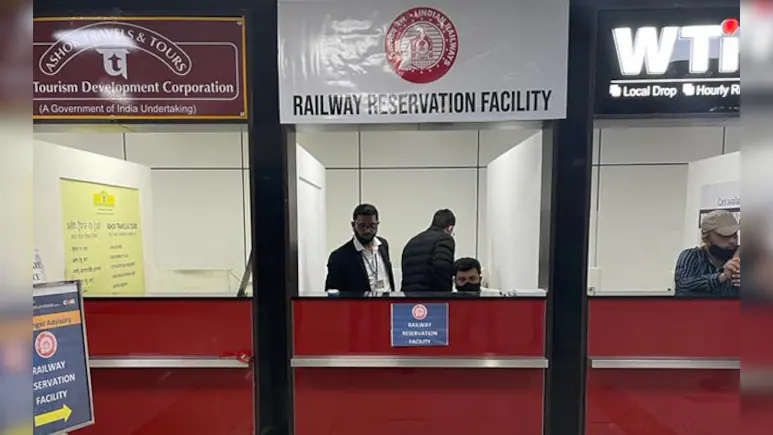
    For just 45 paise, train passengers can get insurance cover of up to Rs 10 lakh. Now, Indian Railways is extending this facility to eligible passengers booking reserved tickets at railway counters. This benefit was previously offered to online ticket buyers..

    The move is significant for millions of passengers who still prefer to buy their tickets at railway stations. Until now, the optional travel insurance facility was associated with online ticket bookings. Extending it to eligible counter bookings widens access to a low-cost safety net.

    “The insurance is optional. Passengers who opt for it can get coverage of up to Rs 10 lakh, subject to the policy’s terms and conditions. The cover is intended to provide financial assistance in the event of specified railway accidents or other covered incidents,” Suraj Pandey, Managing Director, ACME India Industries Limited, told NDTV.

    How To Get Rs 10 Lakh Train Insurance For 45 Paise

    The premium is nominal, but passengers should understand how the facility works before opting for it.

    “Eligible passengers booking reserved tickets at railway counters can access the optional insurance facility. The premium is 45 paise per passenger, and the maximum coverage is Rs 10 lakh, subject to the applicable policy conditions,” added Suraj Pandey.

    However, the actual amount payable depends on the nature of the incident and the terms of the policy. The maximum cover should not be mistaken for a guaranteed payout in every case.

    “Passengers should check the insurance option and the applicable conditions at the time of booking. They should also read the policy details to understand the incidents covered, the benefits available and the process for making a claim,” added Pandey.

    Why Train Insurance Alone Is Not Enough

    Insurance can offer financial support after a covered incident. It cannot prevent an accident or eliminate the risks passengers face during a journey. That requires consistent investment in railway infrastructure, coach design, material quality and maintenance.

    Coach interiors, for instance, face constant use, heavy passenger movement and regular wear and tear. Using fire-safe materials that meet applicable railway standards, durable components and reliable fittings can help reduce certain risks. Regular inspections and timely repairs are equally important to identify damaged components before they become a safety concern.

    Hygiene and functionality also matter. Worn-out fittings, deteriorating interiors and poorly maintained components can affect the passenger experience and, in some cases, create avoidable risks.

    Safety Must Extend To Existing Coaches

    As Indian Railways modernises its fleet, attention must extend beyond introducing new coaches. The maintenance of existing Integral Coach Factory (ICF) and Linke Hofmann Busch (LHB) coaches is equally important.

    Material testing, engineering quality, periodic inspections and planned refurbishment should remain central to railway safety. Replacing damaged parts on time and ensuring that materials meet the required standards can help maintain the reliability of coaches throughout their service life.

    Ultimately, the 45-paise insurance facility offers passengers an affordable way to access financial protection against specified risks. Extending it to eligible counter bookings makes that protection more accessible.

    But the larger goal must be to combine financial safeguards with stronger preventive measures. Insurance can help passengers and their families cope with the financial consequences of a covered incident. Better engineering, rigorous safety checks and regular maintenance are what help make train journeys safer in the first place.

  • Too Many Cars, Too Few Buyers? Why Is China Winning Globally, But Losing Domestically

    Too Many Cars, Too Few Buyers? Why Is China Winning Globally, But Losing Domestically

    China has emerged as a global powerhouse in electric vehicles (EVs). Its carmakers are challenging established brands, introducing advanced battery technology and expanding rapidly into overseas markets. From Europe to Latin America, Chinese electric cars are finding buyers.

    But behind this global success lies a problem at home. China’s car industry is struggling with too many manufacturers, excess production capacity and an increasingly crowded domestic market. Carmakers are fighting for customers through aggressive price cuts, even as their profits come under pressure.

    The contrast is becoming difficult to ignore. Companies that once raced to expand production are now struggling to sell enough vehicles to keep their factories running.

    A recent report by The Wall Street Journal highlighted the troubles facing China’s automotive industry, pointing to manufacturers whose production ambitions have far outpaced actual sales.

    The problem is not a lack of technology or manufacturing capability. China has some of the world’s most advanced EV makers and battery companies. The bigger challenge is that the industry has expanded faster than domestic demand can absorb.

    China’s EV Makers Face A Crowded Home Market

    For years, China’s electric vehicle industry benefited from strong government support, investments and growing consumer demand. Local governments backed manufacturers, hoping to create industrial hubs and generate employment.

    The strategy helped China build a formidable EV ecosystem. Companies such as BYD, NIO, Xiaomi and Geely have become important names in the global automotive industry.

    However, the rush to enter the EV market also resulted in an explosion in the number of manufacturers. Several companies invested heavily in factories and production facilities, expecting demand to keep growing.

    That assumption is now being tested.

    With several manufacturers chasing the same customers, competition has intensified. Companies have increasingly relied on discounts to attract buyers. While this has made electric cars more affordable, it has also put pressure on margins.

    The result is an industry where manufacturing capacity and actual demand are increasingly out of sync.

    Why China’s Car Industry Is Struggling

    China’s automotive market is dealing with a combination of challenges.

    First, there are too many manufacturers competing for a limited pool of buyers. The entry of several EV brands has created intense competition, making it difficult for smaller companies to survive.

    Second, the industry has invested heavily in production capacity. Building factories made sense when sales were growing rapidly. But when demand slows, those same facilities become expensive assets that manufacturers must keep running or risk incurring losses.

    Third, aggressive pricing has made profitability harder to achieve. Carmakers are under pressure to offer attractive prices while continuing to invest in technology, research and development.

    This creates a difficult cycle. Companies cut prices to protect market share, but lower prices squeeze profits. They then need higher sales volumes to compensate, adding to the pressure to expand.

    For manufacturers that lack financial strength or a distinct product advantage, the situation can become particularly difficult.

    Chinese Carmakers Look Overseas For Growth

    With the domestic market becoming increasingly competitive, overseas markets are emerging as an important growth opportunity.

    Chinese manufacturers are taking their products to Europe, Southeast Asia, Latin America and other regions. Their competitive pricing, technology and expanding product portfolios are helping them challenge established automakers.

    However, this expansion is also creating pressure for traditional carmakers.

    European manufacturers, in particular, face competition from Chinese companies that have developed large-scale manufacturing capabilities and can offer technologically advanced vehicles at competitive prices.

    The growing presence of Chinese brands is forcing established automakers to rethink their pricing, product strategies and investments.

    But exporting more vehicles is not necessarily a permanent solution. Overseas markets have their own regulatory requirements, trade barriers and established competitors. Manufacturers also need to build customer trust, distribution networks and after-sales service capabilities.

    What China’s EV Crisis Means For India

    India and China are at different stages of EV adoption. Their infrastructure, consumer demand and automotive ecosystems are also different. Therefore, China’s situation cannot be directly compared with India’s.

    However, the importance of balancing manufacturing capacity with actual demand is relevant to Indian companies looking to expand in the electric mobility space. Naveen Gupta, Founder and CEO of Trev Mobility, told NDTV that China’s automotive market offers an important lesson for the global EV industry.

    “Manufacturing scale and technological innovation alone do not guarantee long-term sustainability. As the market matures, the ability to balance production capacity with actual demand, maintain healthy economics and build lasting customer confidence becomes just as important as launching new products or expanding manufacturing,” Gupta told NDTV.

    He also pointed to the risks of relying on discounts and aggressive expansion to drive growth. “The intense price competition in China also highlights the risks of growth being driven primarily by discounts and aggressive expansion. While competition can accelerate innovation and make electric vehicles more accessible, prolonged price pressure can affect margins and make it difficult for companies to build sustainable businesses,” he said.

    According to Gupta, the companies that emerge stronger will be those that combine cost efficiency and product innovation with a clear understanding of customer needs.

    India’s EV Industry Needs To Avoid The Trap

    India’s electric mobility ecosystem is still evolving. The market has room to grow as charging infrastructure improves, more models become available and consumers become increasingly comfortable with electric vehicles.

    But growth in vehicle sales alone should not be the only measure of success. Manufacturers also need to consider how frequently their vehicles will be used, the cost of ownership, charging availability, battery performance and after-sales support.