Category: World

  • ‘Minister Of Death’: Huge Anti-Government Protests In Spain After Train Crash Kill 68

    ‘Minister Of Death’: Huge Anti-Government Protests In Spain After Train Crash Kill 68

    Madrid:

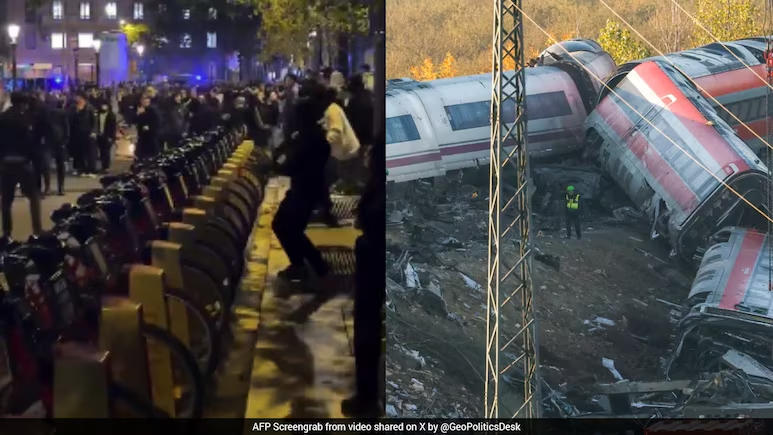
    Public anger is boiling in Spain after at least 68 people were killed and dozens more were injured in one of the worst rail disasters in Europe’s modern history. While rescue teams worked through the night to cut open metal carriages in the search for accident victims, thousands of people gathered in Rome calling for the resignation of Prime Minister Pedro Sanchez and Transport Minister Oscar Puente after the second major high-speed train crash in Spain this year.

    According to a report by Spanish broadcaster TVE, around 1,500 people gathered outside the Spanish Transport Ministry building in the capital overnight, calling for ministers’ ouster. Protesters also reportedly threw bottles and flares at law enforcement officers, following which police used tear gas to disperse the crowd.

    So far, no injuries or arrests have been reported. Visuals of the demonstration circulating on social media showed clashes between demonstrators and police, as protesters questioned the authorities’ handling of the crash. Demostrators were also seen carrying banners reading “CRIMINALES ABAJO EL REGIMEN DEL 78” (Criminals Down with the Regime of ’78).Protesters also chanted “Scar Puente, minister of death” as police moved against the them in the capitalRail drivers are also expected to stage a strike today, with the Spanish Union of Railway Drivers (Semaf) saying the protest will be held “in defence of railway safety”, a BBC report said.

    Spain’s Crowned Rails 

    Spain’s network of high-speed rail has been considered one of the nation’s crowning achievements. It ranks second to China in track mileage in the world. Until this year, it had not endured a deadly crash since coming into service over three decades ago.

    The Wednesday collision that turned a sleepy stretch of rail lined by olive groves into a scene of carnage came just four weeks before the country votes in a national election. Spanish Prime Minister Sanchez visited the crash site in the central province of Toledo after regional authorities confirmed that more than 60 people had died and dozens more were being treated at hospitals.

    Only in January, 46 people had died when one train jumped the track and slammed into the side of another going the opposite way in southern Spain.

    Sanchez pledged an investigation into the latest collision and improvements to prevent another tragedy like the two that have shaken trust in a rail system that carried 45 million travellers last year, including millions of tourists. Sanchez’s government also declared three days of mourning starting Thursday.

    Spain Protests

    People in Spain had already been protesting over housing shortages and surging rents, and the crash has intensified the anger. The movement was triggered last month after police evicted an 87-year-old woman from her lifelong Madrid apartment. The woman, Maricarmen Abascal, was carried out on a stretcher after the police broke down her door, in a scene that caused widespread outrage.

    Her plight tapped into long-simmering resentment in Spain’s major cities over spiralling costs to rent or buy homes. Tens of thousands of protesters took to Madrid’s streets over weeks, rattling keys and blowing whistles.
  • Sheikh Hasina’s Ouster: Yunus Aide Makes Fresh Claim

    Sheikh Hasina’s Ouster: Yunus Aide Makes Fresh Claim

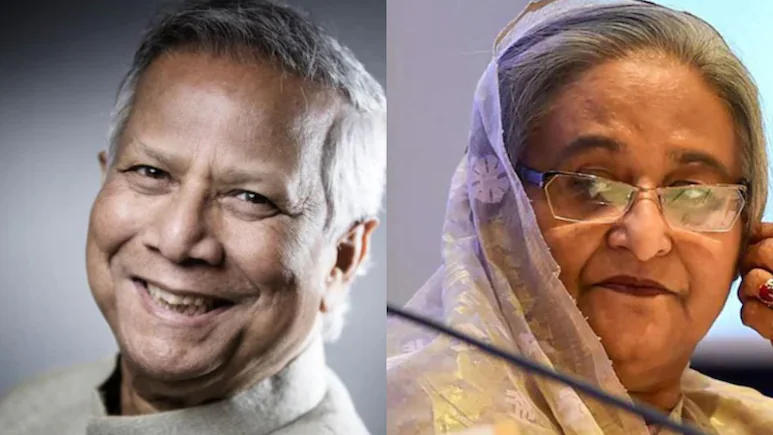
    Dhaka: Bangladesh’s political transition following the removal of former Prime Minister Sheikh Hasina has come under renewed scrutiny after Shafiqul Alam, former press secretary to Muhammad Yunus, claimed that student leaders contacted the Nobel Peace Prize laureate before Hasina left the country in August 2024.

    In a Facebook post, Alam alleged that the student leaders approached Yunus two days before Hasina’s departure on August 5, 2024, seeking his leadership for a possible interim government. He also credited journalist Qadaruddin Shishir with helping establish contact between the two sides.

    What Did Yunus’s Former Press Secretary Claim?

    According to Alam, student leaders involved in the 2024 protests wanted to approach Yunus about leading a post-Hasina interim administration. They allegedly sought assistance from Shishir, who was then associated with Agence France-Presse’s (AFP) fact-checking team in Dhaka.

    Alam said Shishir acted as an intermediary, facilitating the initial communication between Yunus and the student leaders while Sheikh Hasina was still in power.

    Describing the process as a sensitive operation, Alam claimed that only a small number of trusted individuals knew about the discussions. He also praised Shishir for maintaining discretion during a period of political uncertainty in Bangladesh.

    Alam further alleged that Shishir began collecting video evidence of killings during the government’s crackdown on protesters.

    The account has drawn attention because it suggests that discussions about who might lead a future interim administration were taking place before Hasina left Bangladesh. However, Alam’s statements alone do not establish that the wider uprising or the government’s fall was orchestrated as part of a coordinated plan. The details of the alleged communications require independent corroboration.

    How Sheikh Hasina Left Power in August 2024

    Sheikh Hasina left Bangladesh on August 5, 2024, following weeks of student-led protests and escalating political unrest. The demonstrations initially centred on public-sector job quota reforms before expanding into a broader movement demanding her resignation.

    Muhammad Yunus subsequently returned to Bangladesh and took office as chief adviser of the interim government on August 8, 2024.

    His administration remained in office until February 2026, when Bangladesh’s post-election political transition brought Tarique Rahman to the prime minister’s office.

    Sheikh Hasina’s Legal Case and Allegations of Political Repression

    In November 2025, Bangladesh’s International Crimes Tribunal sentenced Hasina to death in absentia over her role in the deadly crackdown on the 2024 protests. Hasina rejected the proceedings and described the verdict as politically motivated.

    The interim government had also banned the activities of Hasina’s Awami League party in Bangladesh and sought her extradition from India. The party remains banned from participating in elections under the restrictions in force as of October 2026.

    Hasina has separately accused the former Yunus-led administration of pursuing politically motivated cases against Awami League members and failing to ensure accountability for violence. These allegations remain contested and should be distinguished from established judicial findings.

    Muhammad Yunus Heckled at New York Airport

    In a separate development, former interim chief adviser Muhammad Yunus was confronted by protesters at New York’s John F. Kennedy International Airport in October 2026.

    Videos circulated on social media showed people shouting accusations at Yunus as he was leaving the airport. Bangladeshi media reports identified several of the protesters as individuals linked to the Awami League, whose activities remain banned in Bangladesh.

    The incident prompted criticism from Bangladeshi officials, who said the matter should be investigated and that appropriate action should be considered against those responsible.

    The confrontation highlights the continuing political divisions surrounding Bangladesh’s 2024 uprising, the subsequent legal proceedings against former government figures and the future of the Awami League.

    For now, the latest claim about Yunus’s early contact with student leaders rests on Alam’s account. Establishing the full circumstances surrounding the alleged discussions will require further independently verified evidence.

  • Russian Drone Strike Hits Ukraine Train Platform, Killing 13 People

    Russian Drone Strike Hits Ukraine Train Platform, Killing 13 People

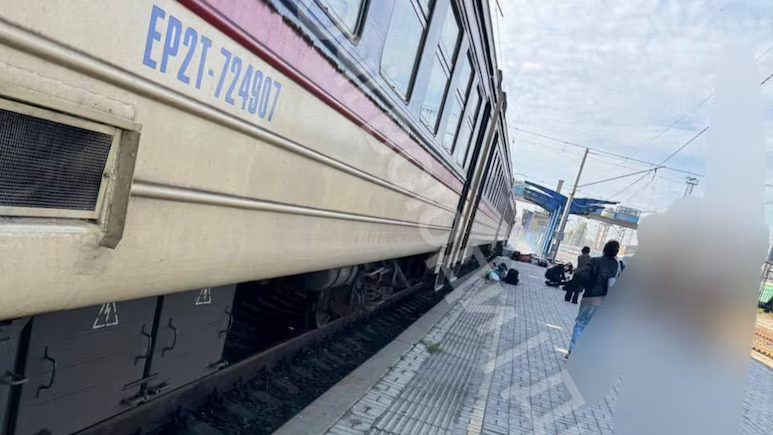
    At least 14 people have been killed and 14 others injured after a Russian jet-powered drone struck a railway platform in Dnipro, Ukraine, on Thursday, October 29, according to Ukrainian authorities. The attack hit a platform where passenger trains were standing, including a service scheduled to travel from Dnipro to Zaporizhzhia.

    The death toll and number of injured increased from the initial reports as emergency services continued responding to the attack. Several injured people were reported to be in serious condition.

    Russian Drone Hits Passenger Train Platform

    According to Ukraine’s state railway operator, Ukrzaliznytsia, the drone struck a platform at Dnipro railway station while passenger train No. 866, travelling from Dnipro to Zaporizhzhia, was present.

    The railway operator said the attack involved a jet-powered unmanned aerial vehicle (UAV). Despite an earlier warning about an elevated threat level, people were still present on the platform when the strike occurred.

    Dnipro Mayor Borys Filatov described the incident as a tragedy, confirming that a civilian electric train had been hit.

    Emergency personnel, including police officers, medical teams and rescue workers, responded to the scene to assist the injured and document the aftermath.

    Zelensky Calls for Stronger International Action

    Ukrainian President Volodymyr Zelensky condemned the attack, describing the Russian strike on the railway station as horrific.

    He called on international partners, including the United States, the European Union and the G7 countries, to take stronger action against Russia.

    Zelensky also questioned the easing of certain sanctions related to Russian oligarchs and the energy sector, arguing that reducing economic pressure on Moscow would not help prevent further escalation.

    The Ukrainian president urged international partners to maintain and strengthen sanctions against Russia while the war continues.

    Ukraine’s Railway Infrastructure Faces Repeated Attacks

    The strike in Dnipro comes amid continued concerns about the safety of Ukraine’s railway network, which remains vital for passenger transportation, humanitarian assistance and the movement of essential supplies.

    Russian drone attacks have repeatedly threatened railway stations, locomotives, passenger trains and other transport infrastructure.

    A September 2026 report by Deutsche Welle, citing Ukraine’s railway operator, said more than 1,600 attacks on railway infrastructure had been reported during the first eight months of the year.

    The latest incident has renewed concerns about the risks faced by civilians travelling by train, even when railway operators issue warnings about potential threats.

    Casualties and Investigation

    Ukrainian authorities continued assessing the damage and providing medical assistance to those injured in the Dnipro railway station attack. Casualty figures may change as officials release further updates.

    The incident is another deadly development in Russia’s ongoing war against Ukraine, highlighting the continuing dangers facing civilians and critical transport infrastructure.

    EBT News will update this report as further verified information becomes available.