Category: World

  • Warren Buffett Hasn’t Had Water In 48 Years, Here’s What He Drinks Instead

    Warren Buffett Hasn’t Had Water In 48 Years, Here’s What He Drinks Instead

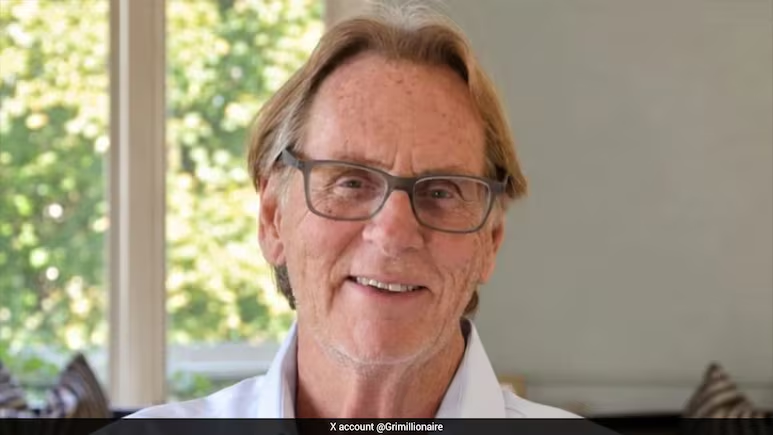
    Legendary investor Warren Buffett has said that he has not had a glass of water since the 1970s. Apparently, his optimal hydration levels are achieved through his favourite drink ‘Cherry Coke’.

    Billionaire hedge fund manager Bill Ackman shared these details this week in a podcast called Equity Mates Investing, recalling a dinner where Buffett politely declined both still and sparkling water, claiming he had not touched the beverage in nearly five decades.

    Ackman said that they were sitting at the table one time when he asked whether he would like still or sparkling water. But Buffett declined his offer and said he prefers soda.

    “But I said, you know, ‘Don’t you drink water?’” Ackman recollected. “And he said, ‘Bill, I haven’t had water in 48 years.’”

    Ackman said that he stocked up Cherry Coke when Buffett came over to his place for dinner “years ago”.

    British author Glen Arnold wrote in his book “The Deals of Warren Buffett Volume 2: The Making of a Billionaire”, that the 96-year-old investor drank five cans of Coke a day. He used to drink Pepsi for 50 years but had later switched because an old neighbour intervened.

    “I’m one quarter Coca-Cola,” Buffett had told Fortune magazine in 2015.

    “If I eat 2,700 calories a day, a quarter of that is Coca-Cola. I drink at least five 12-ounce servings”, he said.

    His son Howard used to call him “Pepsi Warren”, one of Howard’s childhood friends told CNBC.

    “I remember as a kid, we used to play poker with Howie, and his dad would come down in the middle of the night in a bathrobe. In those days, he drank Pepsi,” said Jim Ross.

    During the 1986 Berkshire Hathaway annual meeting, Warren Buffett revealed a major shift after 48 years of loyalty to Pepsi, naming Cherry Coke as the company’s official meeting beverage.

  • Death Penalty Returns, Beauty Pageants Suspended As Burkina Faso Tightens Rules

    Death Penalty Returns, Beauty Pageants Suspended As Burkina Faso Tightens Rules

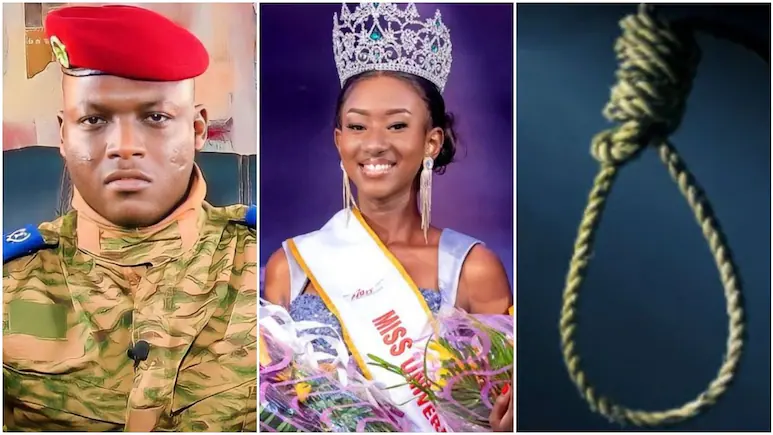
    Burkina Faso’s military-led government, headed by Captain Ibrahim Traore, has attracted international attention after restoring the death penalty and suspending beauty pageants across the West African nation. On October 20, 2026, the country’s transitional parliament unanimously approved a new penal code that restores capital punishment for serious offences, including terrorism, treason, and espionage.

    All 71 lawmakers supported the legislation, reversing the 2018 abolition of the death penalty. The country’s last known execution took place in 1988.

    Justice Minister Edasso Rodrigue Bayala defended the decision, arguing that tougher punishments were needed to tackle terrorism and strengthen national security.

    Beauty Pageants Suspended Nationwide

    In a separate decision announced on June 8, 2026, Burkina Faso’s Ministry of Communication, Culture, Arts and Tourism suspended beauty competitions throughout the country.

    Authorities said the restrictions would remain until new regulations were introduced to ensure such events respected national traditions, cultural identity and social values.

    The government also stopped issuing permission for beauty pageants during this period.

    However, the suspension was announced months before the death penalty was restored.

    Science Competition for Young Women

    In August, the government introduced HAKILI Mousso, a national science competition encouraging young women to pursue education in mathematics, physics and chemistry.

    The programme brought together 84 participants, with outstanding students receiving awards and educational support.

    President Traore later met the winners and encouraged them to pursue careers in science and technology.

    Human Rights Concerns

    The government’s decisions have sparked debate over personal freedoms and human rights.

    Human Rights Watch criticised the return of capital punishment, warning that it could be used against political opponents and worsen existing restrictions on civil liberties.

    Amnesty International has also opposed the death penalty, describing it as an irreversible violation of the right to life.

    Meanwhile, the beauty pageant suspension has divided opinion. Supporters welcome greater recognition of women’s academic achievements, while critics argue that women should remain free to choose their interests.

    Burkina Faso has been under military rule since Traore seized power in September 2022.

    The latest developments highlight the government’s changing approach to security, culture and individual freedoms.

  • Canadian CEO’s Family Fights Off Home Invaders, 3 Shot, Wife Hit With Hammer

    Canadian CEO’s Family Fights Off Home Invaders, 3 Shot, Wife Hit With Hammer

    A Canadian real estate CEO’s family was attacked by three men in masks after they broke into their multi-million-dollar home in Toronto’s affluent Bridle Path neighborhood at 3:45 AM on Thursday.

    According to the Toronto Sun, MAC Group boss David Morton and his daughters were shot by the men and his wife was struck with a hammer.

    The suspects, who possessed handguns and a hammer, broke into the five-bedroom residence through the back door, Toronto Police Service Inspector Kristy Smith said.

    Morton, 75, and his two daughters, Maggie Zohil-Morton and Cristina Zohil-Morton “tried to fight off” the intruders who were wearing ski masks and hoodies.

    “A struggle ensued during this altercation in which the suspects fired their guns multiple times and one victim was struck with a hammer,” Smith said.

    Morton and one of his daughters suffered gunshot wounds on their legs. The second daughter was shot on the arm. His wife, Doriana Zohil-Morton, who serves as the president of the MAC group, was hit with a hammer.

    Smith said that two members of the family suffered “life-altering-injuries” and are recovering in the hospital.

    After the attack, the suspects fled the neighbourhood in an SUV. However, there have been no indications of a robbery in the house.

    “There was a violent interaction. There was a demand made for valuables from within the home. Whether or not they escaped with anything is uncertain at this point,” Smith said.

    “An affluent area where people would have things that are sought after would be the motivation for this,” Smith added.

    Priced at $2.1 million, the luxury 5+1-bedroom, 7-bathroom home features a tennis court, an in-ground pool, and private gardens.

    The Mayor of Toronto, Olivia Chow, said that she was “deeply troubled” by the incident and said that there would be an expanded police presence in the neighbourhood.

    “I am deeply troubled by the violent home invasion early this morning in the Bridle Path neighborhood. My thoughts are with the family and their loved ones, who are going through something no family should ever have to face. I am praying for their full recovery,” Chow wrote on X.

    The MAC Group is a Toronto-based, family-run enterprise featuring dedicated divisions in real estate, hospitality, and executive corporate housing.

  • Man Arrested For Falsely Claiming To Be Australia Bondi Beach Shooting Victim

    Man Arrested For Falsely Claiming To Be Australia Bondi Beach Shooting Victim

    Sydney:

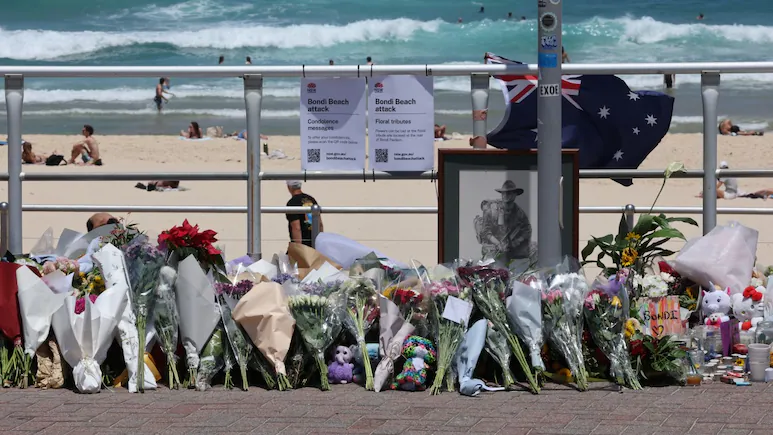
    Australian police have charged a man with falsely claiming he was injured in a mass shooting at Sydney’s Bondi Beach in an attempt to gain financial compensation.

    A father-and-son duo allegedly carried out the gun attack on a Jewish festival at the beach in December last year, killing 15 people and wounding dozens.

    “Detectives identified a 46-year-old man who allegedly made a false statement that he was injured in the Bondi shooting and made subsequent fraudulent claims for compensation in the aftermath,” New South Wales police said in a statement Wednesday.

    Police said they arrested the man on Tuesday and charged him with publishing false and misleading material to obtain advantage.

    He was given conditional bail, and is scheduled to appear in western Sydney’s Parramatta Local Court on November 18.

    One of the Bondi Beach gunmen, Sajid Akram, 50, was shot and killed by police during the December 14 attack. An Indian national, he entered Australia on a visa in 1998.

    His son Naveed, an Australian-born citizen, remains in custody facing a total of 78 charges including terrorism and 15 murders.

    A Sydney court on Wednesday set Naveed Akram’s committal hearing for February 24 next year, when he is set to appear by audio-video link from prison.

  • EU Angle, And PM, President On Opposing Sides: Coup In Poland, Explained

    EU Angle, And PM, President On Opposing Sides: Coup In Poland, Explained

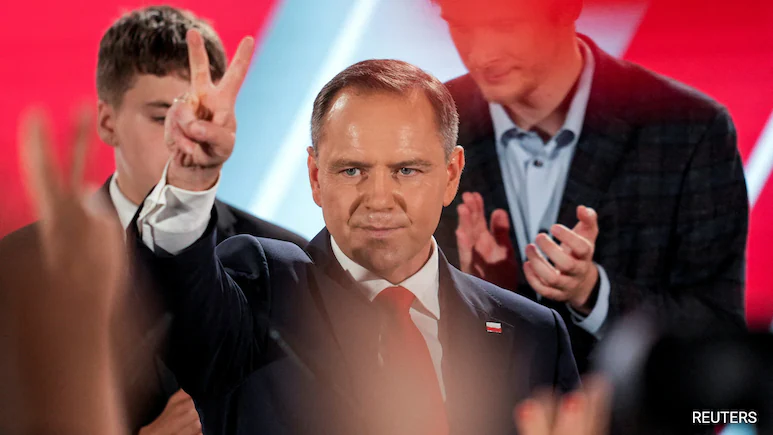
    Poland’s President Karol Nawrocki cut short his visit to Senegal and rushed back to Warsaw as a political fight over the country’s top court escalated, with police deployed outside the building and protesters accusing the government of staging a coup.

    Nawrocki called urgent talks with political party representatives on Saturday, a day after two senior judges of the Constitutional Tribunal were suspended by a fellow judge. The court rejected the orders and accused those involved of attempting a coup d’etat.

    In its website, the tribunal wrote that President Bogdan Swieczkowski and Vice President Bartlomiej Sochanski remain in their positions.

    It wrote on X, “All persons participating in these actions are committing the crime of a coup d’etat.”

    Dozens of police officers guarded the building as supporters of the opposition right-wing Law and Justice party (PiS) gathered outside. Some protesters tried to push through security barricades, while others chanted “Tusk traitor”. Police said three people were arrested.

    The confrontation has brought an old dispute between Prime Minister Donald Tusk’s government and the previous PiS administration back into focus.

    Why Polish President Rushed Back From Senegal

    The trigger was a move against two senior officials of Poland’s Constitutional Tribunal.

    Judge Anna Korwin-Piotrowska issued orders suspending Tribunal President Bogdan Swieczkowski and Vice President Bartlomiej Sochanski from their duties.

    She accused the two judges of blocking the work of judges elected by the parliamentary majority, violating judicial procedures and preventing the court from functioning properly.

    The government has also moved to bring criminal charges against them.

    Nawrocki, who was in Senegal at the time, announced that he was returning to Warsaw.

    “At such a moment, the President must be in Poland,” he wrote on X.

    On Saturday, he called urgent talks with representatives of political parties, citing “the threat to internal security”. He was also expected to meet Zbigniew Kapinski, the first president of the Supreme Court.

    Why The Polish Government Is Fighting With The Top Court

    The dispute began in 2015, when the right-wing Law and Justice party came to power. The party’s parliamentary majority moved to appoint judges to the Constitutional Tribunal, which has the power to decide whether laws passed by parliament are constitutional.

    The appointments soon became controversial. The PiS majority appointed three judges to positions that had already been filled by the previous parliament.

    This led to a dispute over the legitimacy of the court’s appointments and its independence.

    The European Court of Human Rights and the Court of Justice of the European Union later ruled that the three judges had been improperly appointed.

    The European courts also ruled that Poland’s Constitutional Tribunal could no longer be considered an “independent and impartial tribunal”.

    What Donald Tusk Wants

    Donald Tusk came to power in 2023 promising to restore the rule of law and reverse changes made to the judiciary under the previous PiS government.

    His administration argued that the previous government had weakened judicial independence by changing the way courts and judges were appointed.

    Tusk’s government has used the European court rulings to challenge the legitimacy of the Constitutional Tribunal. It has also stopped publishing the tribunal’s rulings.

    Nawrocki and his predecessor, Andrzej Duda, have used their presidential veto powers to block some of Tusk’s proposed reforms.

    This has left the government struggling to carry out its promise of judicial reform, while the dispute over the tribunal’s authority has continued.

    Tusk said that his government is trying to correct the damage caused by years of PiS rule.

    The two sides have repeatedly accused each other of undermining the country’s institutions.

    What Tusk Said About The Crisis

    The Polish prime minister has defended his government’s actions, saying restoring the rule of law will be difficult after years of political interference in the judiciary.

    “Restoring the rule of law is our duty”, he wrote on X.

    “After years of PiS (party)-led lawlessness, this is a difficult process, sometimes painful, and it requires decisive action. There is no other way,” he added.

    Tusk’s government has been trying for weeks to force out the court’s judges, who were appointed by the previous PiS government that ruled from 2015 to 2023.

    The court frequently ruled in favour of Polish legislation over EU law and the European Union accused Poland’s highest court of being too close to the nationalist political power of the time.

  • Kiren Rijiju, Bhutan PM Drive Together To Attend Stupa Construction Ceremony

    Kiren Rijiju, Bhutan PM Drive Together To Attend Stupa Construction Ceremony

    At 2:00 AM on Sunday, the construction of the 108 Jangchub Chortens (Stupas) will commence in Bhutan’s Gelephu Mindfulness City. The sacred event will begin with the resonant echo of 58 ritual trumpets blowing to invoke the spirits and deities, accompanied by the mass chanting of the compassion mantra ‘Om Mani Padme Hum’.

    This mantra is the most famous and is widely recited in Tibetan Buddhism and dedicated to Avalokiteshvara (known as Chenrezig in Tibetan), the Bodhisattva of Compassion.

    Union Minister for Parliamentary Affairs and Minority Affairs Kiren Rijiju will be representing India at the ceremony.

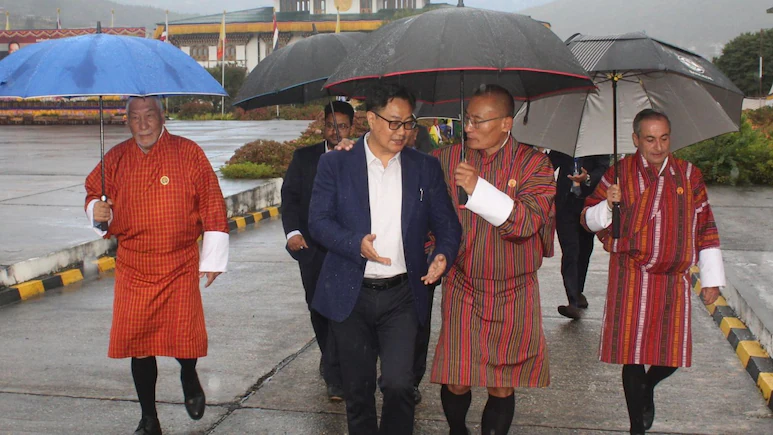
    In a post on X, Rijiju wrote, “Honored to be warmly received at Paro Airport by the Prime Minister of Bhutan, H.E. Dasho Tshering Tobgay, Foreign Minister Lyonpo D. N. Dhungyel, the Foreign Secretary, and the Ambassadors of Bhutan and India”.

    He added, “Travelling to Gelephu to witness the grand ceremony of the raising of 108 Stupas (Jangchub Chortens), an initiative conceived by His Majesty The King of Bhutan. A moment of deep spiritual and cultural significance.”

    The Prime Minister of Bhutan, Dashi Tshering Tobgay took to the wheels as Rijiju arrived in Gelephu for the ceremony.

    “It’s a huge honour, as Prime Minister of Bhutan, H.E. Dasho Tshering Tobgay drove the car upon reaching Gelephu to witness the grand ceremony of the raising of 108 Stupas (Jangchub Chortens), an initiative conceived by His Majesty The King of Bhutan,” Rijiju said.

    Bhutan’s biggest spiritual event will see the raising and consecration of 108 stupas at one location at the same time which is also likely to create a Guiness Record.

    Speaking about the process and the significance of the ceremony, Choten Dorji, a Principal Secretary in the Central Monastic Body, which is the official state monastic order of Bhutan, said, “This is a sacred ceremony of Vajrayana Buddhism and it is seen as the awakening of the Buddha himself. A stupa has to empower itself to have divine power and become a sacred monument and that process begins on Sunday morning with the raising of the stupas and the consecration after they are completed.”

    The practice of building stupas is a sacred Buddhist tradition of constructing architectural monuments that symbolise the Buddha’s enlightened mind, body and consciousness.

    The practice started immediately after the death of Maha Parinirvana of Guatam Buddha in the 5th century BC.

    The Buddha’s cremated remains were divided into eight portions and buried under eight dirt mounds. Emperor Ashoka opened the original relic mounds, divided the Buddha’s relics into 84,000 parts, and initiated a massive empire-wide construction of stupas.

    However, in recent times the construction of 108 stupas at the same time and place has been born out of the vision of the King of Bhutan, Jigme Khesar Namgyal Wangchuk.

    In terms of volume, this is the largest volume of stupas anywhere in the world. Each stupa will receive the Zung according to the ancient practices in Bhutan. Manuscripts, sacred relics, and images along with mantras will be placed inside the stupas. Each stupa will have the Buddha’s bone relics, hair relics that have been received from Thailand.

    “Project 108 has been blessed by the presence of overwhelming presence of donors and over a 100 spiritual masters will be attending the ceremony,” Choten Dorji added. For the relics that are being installed in the 108 Jangchub Chortens, several countries have participated in the effort. “We had offers for more relics. Relics have arrived from Thailand, Malaysia, Singapore, Taiwan and India apart from Bhutan. The relics that arrived from Thailand and Malaysia have their primary origins in India,” Choten Dorji added.

    The sacred ceremony to raise and consecrate 108 stupas in one place in one day will begin early in the morning before sunrise and continue till the afternoon.

    18 monks will be deployed at each stupa for the ceremony with 12 engaged in installing the relics and the others engaged in ceremonial rituals.

    Once this process is over, the 70th Je Khenpo Chief Abbot of the Central Monastic Body of Bhutan, Zhung Dratshang, will conduct the consecration ceremony. The Chief Abbot serves as the highest spiritual authority in Bhutan and heads the Commission for Monastic Affairs.

  • India Pins UN Security Council Seat Hope On AI-led Maritime Security Pitch

    India Pins UN Security Council Seat Hope On AI-led Maritime Security Pitch

    New Delhi:

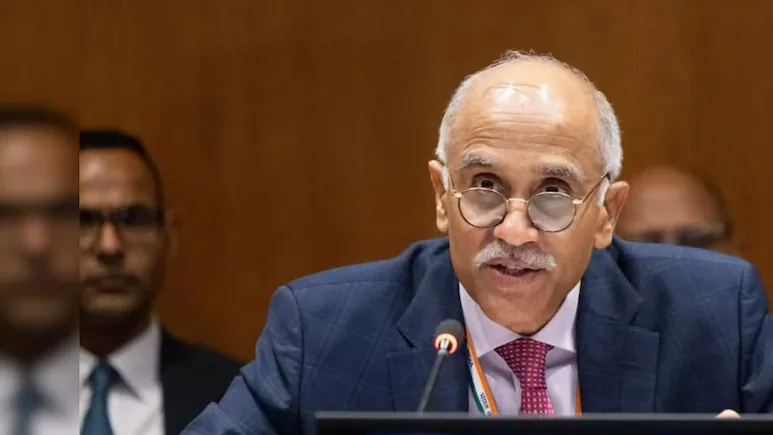
    Maritime security and artificial intelligence (AI) will be central to India’s bid for a non-permanent seat on the UN Security Council for 2028-29, according to the Indian envoy to the United Nations. Addressing a high-level debate at the council, India’s Permanent Representative to the UN, Ambassador Harish Parvathaneni, emphasised that technology must enhance human security and make shared maritime commons safer, rather than more contested.

    India also stressed the need for developing nations to gain access to necessary technology and training to participate in governance.

    “India has identified AI (artificial intelligence) and maritime security as important priorities for its candidature to the Security Council for 2028-2029. Our objective is clear: technology must strengthen human security, not undermine it; it must expand opportunity, not inequality; and it must make our shared maritime commons safer, not more contested,” Parvathaneni said.

    India is contesting the election next year for a non-permanent Council seat with a two-year term starting in 2028, polling for which will be conducted in June next year, where India and Tajikistan will compete for the sole seat in the Asia-Pacific Group category.

    The Indian envoy highlighted the threat of cyber vulnerabilities and the importance of safeguarding freedom of navigation against attacks on commercial shipping. He also stressed that technological advances must not deepen existing disparities.

    “Developing countries require access to technology, training and institutional capabilities to secure their maritime infrastructure and participate meaningfully in shaping technological governance,” Parvathaneni said.

    Parvathaneni underscored the need to safeguard freedom of navigation and maritime commerce, saying recent attacks against commercial shipping have demonstrated how disruptions at critical maritime chokepoints can have consequences far beyond their immediate geography.

    “They threaten seafarers, disrupt supply chains and disproportionately affect developing countries through higher costs and economic uncertainty,” he said, reiterating India’s strong condemnation of attacks against commercial vessels.

    He recalled that External Affairs Minister S. Jaishankar and Greece’s Foreign Minister George Gerapetritis had co-chaired a high-level discussion last month on AI and maritime security and said this was an opportunity to build on it.

    The Council debate took place on a day when Iran’s Navy said three oil tankers in the Strait of Hormuz had hit sea mines and were ablaze, highlighting the maritime perils.

    On the debate topic– “Emerging Technologies and Maritime Security: Implications for Peace and Security” — he said, “Emerging technologies are fundamentally transforming the maritime domain,” and “equally, their misuse presents new challenges that demand our collective attention.”

    “AI-enabled analysis of satellite imagery, radar and vessel-tracking data can improve maritime domain awareness and detect suspicious activities,” he said.

    To enable these solutions, he offered India’s cooperation, which he said is “guided by the vision of SAGAR, Security and Growth for All in the Region”.

    “India’s Information Fusion Centre-Indian Ocean Region (IFC-IOR), located near New Delhi, demonstrates the value of cooperation and information-sharing in strengthening maritime security,” he said.

    “Our approach is guided by the vision of SAGAR — Security and Growth for All in the Region — and the broader commitment to inclusive maritime cooperation,” he said.

    Calling on the international community to address emerging technological vulnerabilities, he said increasing digitalisation and automation also expose ports, vessels, communication networks and undersea infrastructure to cyber threats.

    “The proliferation of autonomous systems raises complex questions of attribution, accountability and unintended escalation. We must therefore ensure appropriate safeguards, meaningful human oversight and clear responsibility in the deployment of emerging technologies,” he said.

  • Iran Guards Say Halted 3 Tankers After ‘Incidents’ In Strait Of Hormuz

    Iran Guards Say Halted 3 Tankers After ‘Incidents’ In Strait Of Hormuz

    Iran’s Revolutionary Guards on Friday said three oil tankers had been halted after encountering unspecified “incidents” or hitting mines while attempting to transit the Strait of Hormuz.

    “Two offending oil tankers, one in the eastern part and the other in the western part of the Strait of Hormuz, which were attempting to pass through the unauthorised route, encountered incidents and were brought to a halt in the waters south of the strait,” the IRGC said in a statement.

    The tankers had “switched off all their navigation and positioning systems and, with the support of the terrorist US military, were attempting to exit through the unauthorised route,” the statement added.

    The Guards did not specify the nature of the incidents, which came a day after Iran’s armed forces said at least four tankers had stopped in the area after hitting mines.

    They said Friday’s incidents occurred after the vessels received several radio warnings but disregarded them.

    The IRGC later said in a separate statement that a supertanker carrying two million barrels of oil had come to a halt following an explosion “after striking a naval mine while navigating an unauthorised route through the Strait of Hormuz”.

    “This is the third oil tanker to have exploded and caught fire today as a result of attempting to pass through an unauthorised route,” it added.

    Iran’s army also reported that two tankers had been seen on fire after hitting mines in the eastern part of the waterway.

    It was not immediately clear whether the two vessels reported by the army were the same as those reported by the IRGC.

    Iranian forces have demanded that vessels use a designated route through the strait and coordinate their passage with the country’s armed forces, labelling a southern corridor closer to Oman’s shores as unauthorised.

    Iran has restricted maritime traffic through the strategic waterway since the Middle East war began on February 28 with US-Israeli strikes on Iran that killed former supreme leader Ayatollah Ali Khamenei.

    The United States has in turn imposed a blockade on Iranian ports, further restricting Tehran’s ability to export oil and conduct trade.

  • How A BMW, Audi Race On UK Street Led To 28-Year Jail Term For 2 Indian-Origin Men

    How A BMW, Audi Race On UK Street Led To 28-Year Jail Term For 2 Indian-Origin Men

    London:

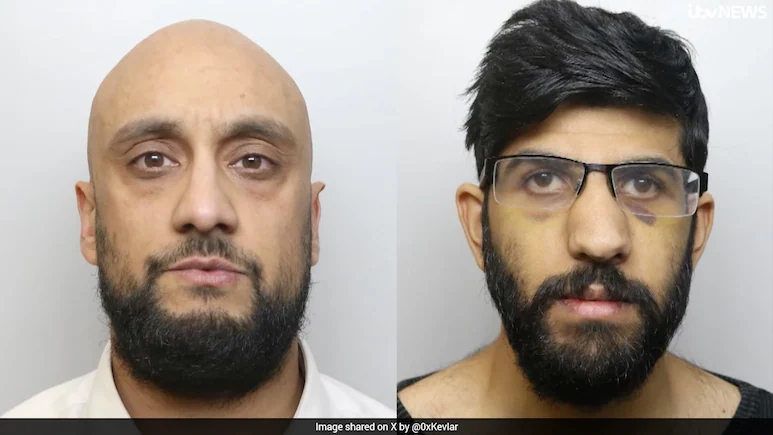
    Two Indian-origin men have been jailed for a total of 28 years after being convicted of causing the deaths of a mother and her four-year-old daughter as they walked to school in northern England. The jury found that car salesman Jasskamal Riyat, 37, was racing against Hardeep Bhachu, 29, who lost control and rammed into the pair as they walked along Scott Hall Road on their way to school in January 2023.

    Justyna Hulboj, 27, and four-year-old Lena Czepczor died at the scene after being struck by Bhachu’s Audi TT RS. Riyat was caught on CCTV racing Bhachu in a BMW M135i immediately before the road collision.

    Bhachu pleaded guilty in June 2024 to causing their deaths by dangerous driving and was sentenced to 12 years in prison, according to a Yorkshire Evening Post report.

    Riyat denied responsibility, despite dashcam footage clearly showing him racing Bhachu, and was found guilty of two counts of causing death by dangerous driving and sentenced at the same court to 16 years’ imprisonment.

    They were both also handed a six-year driving ban and will be required to take extended driving tests.

    “A road is not a race track. A powerful car is not an invitation to test its limits on a public road,” Judge Ray Singh said, addressing the duo in court.

    “The consequences of competitive driving at extreme speed can be, and in this case were, irreversible,” he said.

    The Race

    During the trial, it was heard that the two Indian-origin men did not know each other. Minutes before the crash, Bhachu and Riyat had a conversation through the windows of their sports cars while waiting side-by-side at a traffic light.

    Bhachu’s dashcam footage, as well as a recording on Riyat’s phone, established that the duo congratulated each other on the power of their cars, with Riyat reportedly “egging him on”.

    They then began racing, with Riyat accelerating away first, followed by Bhachu, who had been travelling at almost 90mph on the 40mph road when he hit a kerb and lost control. His car mounted the pavement close to the Jaguar dealership, striking and killing the mother-daughter pair.

    “A woman and her young daughter have died because of the actions of these men, and I know no sentence will ever feel enough to compensate for the lives that have been lost,” said Detective Inspector (DI) Paul Conroy of West Yorkshire Police’s Major Collision Enquiry Team.

    “This sentencing hearing, though, does mark the end of a long criminal justice process for Justyna and Lena’s family.

    “It is over two years since Bhachu admitted his part in this tragic incident, and I know that the wait for justice has taken its toll. My thoughts are firmly with them today,” he said.

  • Trump’s ‘Can Strike Iran In 10 Minutes’ Warning As Mojtaba Khamenei Updates ‘Target List’

    Trump’s ‘Can Strike Iran In 10 Minutes’ Warning As Mojtaba Khamenei Updates ‘Target List’

    New Delhi:

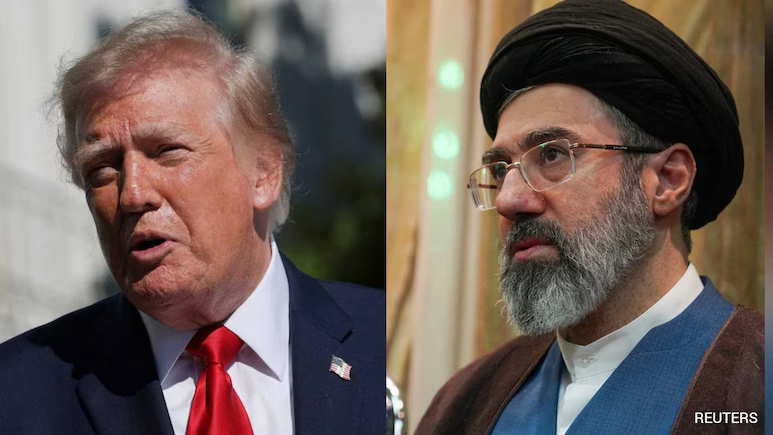
    President Donald Trump has said that the United States still has to “take care of” one or two targets in Iran as country’s supreme leader Mojtaba Khamenei warned the US and Israel of fresh attacks.

    “We’ve knocked out their nuclear. We still have to take care of, I would say one or two sites, but we can do that in 10 minutes,” Trump told reporters at his Florida residence on Saturday.

    “You probably could look at Pickaxe Mountain, and you have to take care of that. We can do that all very quickly,” he said, referring to a site linked to Iran’s nuclear program.

    He was also asked if the US would carry out a possible attack on Iran as soon as this week.

    He, however, maintained that negotiations with Iran were “going fine but you know they’re not very reliable.”

    Trump’s statement came after Mojtaba Khamenei, who has not been seen publicly since before he took the helm in March, after the killing of his father, Ayatollah Ali Khamenei, in US-Israeli strikes, said that any threat will be met with an “immediate” response.

    “Any level or type of threat must be met with an immediate, impactful and geographically unrestricted response,” he told top military commanders, according to a statement.

    He also ordered commanders to update Iran’s target list to include “all types of tangible and intangible assets belonging to the American-Zionist enemy”.

    This was the first reported meeting between Khamenei and top Iranian military brass.

    Trump To Strike Iran After US Midterm Elections?

    Donald Trump has in the past few days suggested he could launch fresh military action against Iran after the midterm elections in the US early next week.

    “We may do another little Epic Fury,” Trump said last week, referring to the US name for its attacks on Iran.

    The Wall Street Journal reported on Wednesday that Washington had told several Gulf Arab countries to prepare for a possible “short, intense military campaign” against Iran after the US midterm elections on November 3.

    The newspaper, citing people briefed on the conversations, said Trump had not made a final decision.

    US Secretary of State Marco Rubio on Saturday also warned that “we can achieve military objectives if we seek to”, adding that Trump had not made a decision on any fresh strikes.

    He also slammed Tehran for “actively and openly” targeting commercial vessels for attack.

    The War In Middle East

    The war in the Middle East began on February 28 when the US and Israel launched joint strikes on Iran, killing the country’s supreme leader, Ali Khamenei, along with senior military commanders.

    In response, Tehran struck American bases in the Middle East and shut the Strait of Hormuz, the world’s most vital energy conduit, which sent the oil prices across the world skyrocketing.

    On June 17, Trump and his Iranian counterpart, Masoud Pezeshkian, signed a 14-point deal to end the war. The agreement provided for an immediate cessation of military operations, including in Lebanon, and commited both countries to pursuing a final agreement within 60 days.

    Trump, however, on July 8, said the deal was “over”. Tehran also suspended the memorandum of understanding a week later, accusing Washington of “violating all its commitments”.

    Since then, Trump has reiterated that he’s in no rush to reach a deal.

    Israeli Prime Minister Benjamin Netanyahu, whose party fell short of a majority in general elections on Tuesday, has in recent days also repeatedly vowed to topple the clerical state in Iran, following two major bombing campaigns against it since last year.