Category: Latest News

  • Bubble Or Bargain: Have Stock Market Corrections Finally Made Valuations Fair?

    Bubble Or Bargain: Have Stock Market Corrections Finally Made Valuations Fair?

    Stock Market News: Indian stock markets have corrected sharply from their September 2024 peaks, bringing valuations closer to levels that could offer long-term investors an opportunity. But does that mean stocks are now cheap, or is there still a risk of paying too much for future earnings?

    The answer depends on where investors look. While large-cap stocks are closer to fair value, mid-cap and small-cap stocks require greater selectivity, market experts say. Elevated crude oil prices, pressure on corporate margins and the possibility of earnings downgrades could also keep markets volatile in the coming months.

    Anil Rego of Right Horizons told NDTV that the correction has meaningfully improved the risk-reward equation in Indian equities, although the broader market cannot yet be described as cheap.

    The MSCI India 12-month forward price-to-earnings (P/E) ratio has fallen from 24.5 times in September 2024 to around 18.5 times, its lowest level since May 2020. However, Indian equities continue to trade at a premium to their emerging-market peers.

    The Nifty 50’s forward valuations have corrected by around 31 per cent from their peaks, while mid-cap valuations have declined by 36 per cent.

    Large-Caps Near Fair Value, But Is The Broader Market A Bargain?

    According to Rego, large-cap stocks are now closer to fair value, while investors need to be more careful when picking mid-cap and small-cap stocks. “The key question is whether earnings can deliver what current valuations imply,” he said.

    For investors, this means a lower share price alone may not be enough to justify buying a stock. Companies must be able to deliver earnings growth that supports their valuations.

    Rego said he remains constructive on businesses with strong balance sheets, healthy cash flows and improving capital efficiency. Companies with the potential to double their earnings over the next three to five years could offer opportunities.

    Financial services, manufacturing, hospitals and wealth management are among the sectors where he sees selective opportunities.

    However, he cautioned that elevated crude oil prices, higher bond yields and the risk of earnings downgrades make it important for investors to maintain a margin of safety.

    “The correction alone makes every stock a bargain” is not an assumption investors should make, his assessment suggests. Instead, investors should accumulate quality businesses in phases and focus on earnings visibility and reasonable valuations.

    Mid-Caps Offer Opportunities After The Correction

    A more optimistic view comes from the broader market, where the recent correction has brought several stocks closer to attractive valuations.

    For long-term investors, the market is now closer to a bargain than a bubble. The Nifty trades at around 19 times trailing earnings, below its averages over the past one, three and five years. The assessment also points to an earnings recovery in FY27 as a factor that could support valuations.

    The opportunity could be more pronounced in mid-cap stocks. After correcting significantly, mid-caps are trading below their five-year median valuation, while their earnings have compounded faster than those of the Nifty.

    Businesses linked to the government’s Make in India push, defence and energy security could offer opportunities. These include companies operating in power, electricity grids and battery storage, where investors may find businesses at more reasonable prices after a prolonged period of expensive valuations.

    Small-cap stocks, however, still warrant caution. Investors need to distinguish companies with sustainable earnings growth from those whose valuations have fallen mainly because of weaker market sentiment.

    Why Markets Could Remain Volatile

    Despite the improvement in valuations, the near-term outlook remains uncertain.

    Elevated crude oil prices have put pressure on the rupee and contributed to sustained foreign portfolio investor (FPI) selling. Higher input costs could also squeeze corporate margins, particularly if companies cannot pass on the additional costs to customers.

    The ongoing earnings season will be crucial in determining whether companies can meet market expectations. If earnings disappoint, valuations could face further pressure even after the correction.

    This is why investors need to look beyond headline valuation ratios. A stock trading below its historical average may still be expensive if its earnings outlook deteriorates. Conversely, a company with strong cash flows and consistent earnings growth could become attractive even if it does not appear cheap on every valuation measure.

    How Should Investors Approach The Market Now?

    For retail investors, the correction calls for a more selective approach rather than an attempt to time the market. Rego recommends focusing on companies with strong balance sheets, healthy cash flows and clear earnings visibility. Investors should also assess whether a company’s current valuation leaves enough room for unexpected setbacks.

    Staggered investments can help reduce the risk of committing all available money at a single market level. Investors should also consider their investment horizon, risk appetite and asset allocation before increasing exposure to equities.


  • Google Parent Tumbles 13% As Tech Jitters Pull Down Wall Street Stocks

    Google Parent Tumbles 13% As Tech Jitters Pull Down Wall Street Stocks

    United Kingdom:

    Wall Street’s main stock indices flashed red Thursday as investors dropped shares in the parent company of Google following results that flamed concerns over whether the global technology boom can be sustained.

    After a mostly downbeat showing across Asia, Europe’s main stock indices advanced, with the European Central Bank leaving interest rates unchanged after the Federal Reserve maintained US borrowing costs on Wednesday.

    The euro dipped however as Christine Lagarde announced she would step down as the ECB’s president in February.

    “Buoyed by strong corporate results, European markets chalked up strong gains on Thursday, bucking the negative trend seen in Asia overnight,” said AJ Bell investment director Russ Mould.

    Bumper profits for oil giants Shell and TotalEnergies helped lift the London and Paris stock markets.

    Both companies benefited from disruptions to oil and gas supplies in the Middle East, which boosted prices and refining margins.

    Crude prices shed around two percent, however, on reports of renewed diplomatic efforts between the United States and Iran to avoid further strikes.

    Wall Street opened lower, with the tech-heavy Nasdaq Composite dropping 1.4 percent.

    Shares in Alphabet plunged after it reported after Wednesday’s close lower-than-expected profit while it maintained big spending on artificial intelligence.

    “The stock quickly fell over 10 percent as investors clocked a sharp drop in free cash flow, along with a slowdown in Google’s search engine growth,” said Trade Nation analyst David Morrison.

    There are concerns that the growing prominence of AI search will undermine Google’s search engine and the juggernaut ad business built around it.

    Underwhelming results from South Korea’s Samsung Electronics also added to doubts about the returns on AI spending.

    Samsung, the world’s largest maker of memory chips, delivered record quarterly profits but missed market expectations in its semiconductor division.

    South Korea’s Kospi shares index closed down 1.2 percent, while Hong Kong and Shanghai also fell. Tokyo finished higher.

    In other tech news, Microsoft posted forecast-topping revenue and profit, fuelled by its Azure cloud computing division. Its shares added 0.8 percent.

    “Tech earnings will remain in focus today with Amazon and Intel reporting” after the US close, said Deutsche Bank’s Jim Reid.

    Markets had enjoyed a healthy run-up in the previous two days as traders welcomed strong reports from South Korean chip titan SK hynix and an impressive IPO filing from Claude-creator Anthropic.

    There was little major reaction to the Federal Reserve’s widely expected decision to hold interest rates, as it cited the need for more data in the fight against inflation, which has held stubbornly above officials’ two-percent target for five years.

    Two dissenting members of the panel voted for an immediate interest rate increase.

    Personal consumption expenditures data, the Fed’s preferred inflation gauge, showed that core prices that exclude volatile food and energy products rose by 3.1 percent year-on-year in September.

    “Both headline and core PCE rose to their highest levels since May, underscoring that inflation remains a stubborn issue,” said eToro US investment analyst Bret Kenwell.

    Over three-quarters of investors believe the Fed will raise interest rates in December, according to CME’s FedWatch tool.

    Meanwhile the US economy grew at a better-than-expected annualised rate of 3.4 percent in the third quarter, beating expectations.

  • How To Avoid UPI Fraud? PhonePe Shares 3 Checks Every User Must Follow

    How To Avoid UPI Fraud? PhonePe Shares 3 Checks Every User Must Follow

    UPI has made digital payments quick and convenient. But scammers are finding new ways to exploit users, from fake payment requests to impersonation and remote access scams.

    In an exclusive communication with NDTV, PhonePe shared three basic checks for users to protect their money:-

    1. Never Enter Your UPI PIN To Receive Money

    A UPI PIN is required to authorise payments from your bank account, not to receive money. Fraudsters may send fake payment requests or QR codes, claiming they will transfer money or issue a refund. If a transaction asks for your UPI PIN, check it carefully. Entering the PIN can authorise a debit from your account.

    2. Verify The Recipient’s Name Before Paying

    Before completing a UPI transaction, check the registered bank account name displayed on the payment screen. Scammers may use fake profiles or misleading UPI IDs to impersonate friends, family members or businesses. If the name does not match the intended recipient, stop the transaction and verify the details independently. Be wary of strangers offering to transfer money digitally in exchange for cash. Such offers could be part of a fraud.

    3. Never Share OTPs Or Click Unknown Links

    Fraudsters often pose as bank officials, telecom representatives or customer support agents to trick users into sharing sensitive information. Never disclose your OTP, UPI PIN or banking details over calls, messages or emails. Do not click suspicious links or install screen-sharing apps at the request of unknown callers. Such apps can give scammers access to your phone and expose sensitive information. PhonePe has also warned users against money mule scams. In these cases, people are tricked into receiving and transferring money linked to illegal activities. Even unknowingly handling suspicious funds can lead to frozen bank accounts and legal complications.

    What To Do If You Fall Victim To UPI Fraud

    Act quickly if you suspect that your account has been compromised or money has been stolen. PhonePe users can raise a complaint through the Help section of the app or contact customer care at 080-68727374 or 022-68727374.

    For further action, report the incident to the national cybercrime helpline at 1930 or file a complaint at the National Cyber Crime Reporting Portal. Suspicious calls, messages and fraudulent WhatsApp or Telegram activity can also be reported through the Chakshu facility on the Sanchar Saathi portal.

    The key is to verify every payment request, protect your authentication details and report suspected fraud without delay.

  • $6.3-Billion Binance Crypto Hack: What We Know So Far

    $6.3-Billion Binance Crypto Hack: What We Know So Far

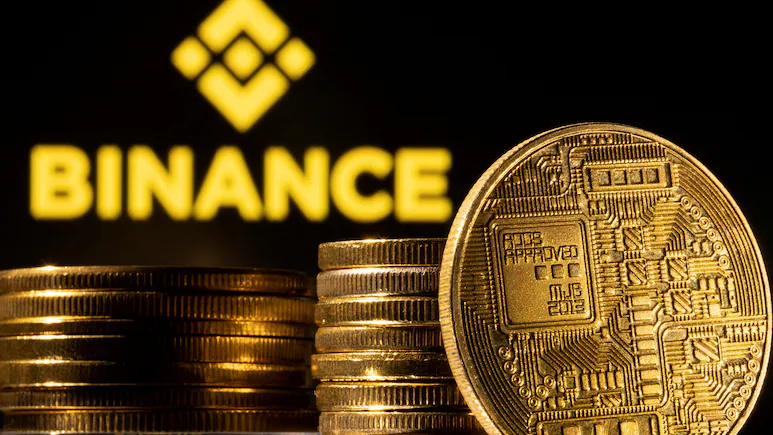
    World’s largest cryptocurrency exchange Binance was hit by hackers today, who stole $6.3 billion from the platform in the biggest crypto heist in history.

    Confirming the incident, Binance said that it was working to resolve a “complex attack”.

    “This was a complex attack, and we are doing all we can in coordination with law enforcement to resolve it,” Binance wrote on X.

    It warned that the $6.3 billion figure may “continue to increase as our teams work closely with law enforcement, issuers, blockchain intelligence firms and industry partners to trace and freeze additional assets.”

    Here is what we know so far:

    What Happened?

    Around $6.3 billion worth of cryptocurrencies were stolen from wallets that Binance uses to process transactions, the exchange said. In a statement, Binance said it first believed the attack happened due to a compromised laptop.

    “However, our subsequent investigation has uncovered additional points of breach,” it added.

    How Did Hackers Steal The Money?

    The global centralised exchange of Binance, Binance.com, was compromised during the hack. Binance.us, which is meant for US users, was not affected, it said.

    The exchange further said that the compromised laptop “gave an attacker access to a service container, where they submitted unauthorised withdrawal transactions.”

    Richard Teng, Binance’s co-chief executive officer, described it as a “complex attack process”.

    According to US blockchain analytics firm TRM Labs, the attackers compromised Binance’s “signing infrastructure”, which authorizes transactions, allowing them to issue instructions that emptied the affected wallets.

    The bulk of the heist unfolded in about 20 minutes, blockchain records show, beginning shortly after 2000 GMT on Thursday.

    Once the funds were moved, the attackers raced to shift them beyond the reach of Binance counterparties and stablecoin issuers, which have frozen roughly half of the stolen assets.

    Who Did It?

    No confirmation from Binance or any other authority has come regarding who is behind this hacking. However, a US-based blockchain intelligence firm says a North Korean unit was likely behind the hack.

    TRM, in a post on its website on Thursday, attributed the attack to TraderTraitor, which it said was one of North Korea’s elite hacking unit. “We make this judgment with high confidence,” the firm said.

    Blockchain analysis company Chainalysis also believed the Binance hack was “likely done by DPRK (North Korea) group TraderTraitor,” its co-founder and CEO Jonathan Levin wrote on X.

    What Will Happen To Binance Users?

    Binance said on Friday it has reserved more than $6.34 billion in company funds, including $5 billion already held in impacted token assets, to deal with the fallout of the attack.

    In an earlier statement, Teng said Binance users’ funds are safe. The platform also suspended all withdrawals and deposits temporarily as part of a safety measure.

    Binance said it was working with its partners to freeze assets worth $3 billion, which have been located so far.

    That doesn’t mean the coins will be returned to Binance, but it significantly limits the attackers’ ability to convert them into cash.

    “We are still on track towards the expected timeline to resume the withdrawal service in 45 hours,” Binance said.

  • NRIs Buying Real Estate In India In Record Numbers. These Cities Top The List

    NRIs Buying Real Estate In India In Record Numbers. These Cities Top The List

    India’s property market is drawing growing interest from Non-Resident Indians (NRIs). But overseas Indians are no longer looking at real estate purchases only as a way to earn returns or benefit from property price appreciation. Their priorities are changing.

    Connectivity, quality of construction, rental income and access to healthcare are increasingly shaping their buying decisions. For many families, a home in India is also about staying connected to their roots and ensuring their parents have a comfortable place to live.

    Several Indian cities are emerging as preferred destinations for NRI property buyers. Mumbai, Bengaluru, Delhi-NCR, Pune and Hyderabad are among the markets attracting attention.

    Mumbai Metropolitan Region

    Mumbai continues to be a major draw for NRI investors. Its position as India’s financial capital, international connectivity and wide range of residential properties make it an attractive market. Infrastructure development across the Mumbai Metropolitan Region (MMR) is also opening up new residential locations. This is allowing buyers to explore areas beyond traditional premium neighbourhoods.

    Bengaluru

    Bengaluru’s technology industry and large expatriate community have helped strengthen its appeal among overseas Indians. Locations such as Whitefield, Sarjapur and North Bengaluru are attracting buyers looking for homes with long-term potential. The city’s employment base also supports rental demand, making it relevant for NRIs considering both investment and eventual personal use.

    Delhi-NCR

    Delhi-NCR, particularly Gurugram, remains an important market for overseas property buyers. The region’s premium housing developments, corporate ecosystem and improving connectivity are supporting its appeal. For NRIs with family connections in the capital region, the possibility of owning a home close to relatives is another consideration.

    Pune

    Pune offers a combination of employment opportunities, educational institutions and healthcare facilities. Its relatively comfortable pace of life and proximity to Mumbai also make it an attractive option. For NRIs looking beyond India’s largest metropolitan markets, Pune offers residential choices that can serve both investment and end-use requirements.

    Hyderabad

    Hyderabad has strengthened its position as a residential destination, supported by its technology and healthcare industries and expanding infrastructure. Residential corridors in the western and north-western parts of the city, particularly those connected to the Outer Ring Road (ORR), are drawing interest. Connectivity and access to established employment hubs are among the factors shaping buyer preferences.

    Why NRI Homebuyers Are Looking Beyond Property Returns

    The changing preferences of NRI buyers also reflect a broader shift in how families approach property ownership in India. For some, the purchase is not just about building an asset. It is also about planning for their parents’ future and ensuring they have access to a comfortable living environment.

    Arudradev Rao, Co-founder of Amaya Senior Living, said, “For many NRI families, buying a home in India is no longer simply an investment decision. It can also be a decision about where their parents will live, how independently they can continue to do so, and what kind of everyday life surrounds them.”

    He said this is influencing what families expect from residential communities. “Healthcare access matters, certainly, but so do thoughtful design, social connection, hospitality, open spaces and the reassurance of having support close at hand when it is needed,” Rao said.

    According to him, cities that combine these facilities with good connectivity and access to familiar neighbourhoods could become increasingly relevant to overseas buyers. “The opportunity is not merely to build more homes, but to create places in which people can continue to live well,” he added.

  • Gross GST Collections Increase 23% To Rs 2.31 Lakh Crore In October

    Gross GST Collections Increase 23% To Rs 2.31 Lakh Crore In October

    New Delhi:

    Gross GST collections increased 23 per cent to over Rs 2.31 lakh crore in October, driven by strong mop-up from domestic activities and imports, according to government data released on Sunday.

    Gross GST collections from domestic sales rose 16 per cent to over Rs 1.59 lakh crore, and revenues from imports climbed 42 per cent to Rs 72,246 crore.

    The Rs 2.31 lakh crore collection includes Central GST mop-up of 42,935 crore, State GST of Rs 51,340 crore and Integrated GST of over Rs 1.37 lakh crore, data showed.

    Goods and Services Tax (GST) refunds increased 6.5 per cent year-on-year to Rs 27,934 crore in October.

    After adjusting for refunds, net GST collections rose 26 per cent to over Rs 2.03 lakh crore in October.

    During April-October, gross GST collection grew 13.2 per cent to over Rs 14.77 lakh crore. Net collections rose 13 per cent to over Rs 12.69 lakh crore.

  • How Smart Design Choices Can Help Reduce Electricity Consumption

    How Smart Design Choices Can Help Reduce Electricity Consumption

    A building’s electricity bill arrives every month. Yet some of the decisions that determine how high it climbs are made long before the building becomes operational.

    When we talk about energy efficiency in real estate, the conversation often turns to efficient equipment, smart controls and building management systems. These matter, but they address only part of the problem. Before asking how efficiently a building can use electricity, we need to examine why it needs so much of it in the first place.

    Reduce The Demand Before Managing It

    A building’s orientation and facade influence how much heat enters its interiors. Large west facing windows, for instance, can contribute to afternoon heat gain and add further pressure on air conditioning. With the right glazing, external shading, and window placement, you can keep the natural light and limit unwanted heat.

    “These decisions matter because eventually the heat that enters a building has to be dealt with. By reducing the amount of hat coming into buildings, it reduces the load on cooling systems before they even have to kick in,” said Puri.

    Space planning also impacts energy use. In a mixed-use development retail areas might be active late into the evening while residential common areas have different occupancy patterns. Lighting and cooling zoning based on actual use will help avoid unnecessary use in parts of the building that are unoccupied or need less cooling.

    The principle is the same in both cases. Rather than relying on systems to compensate for avoidable demand, design should reduce that demand from the outset.

    Let Technology Respond To Real Needs

    Even a well-designed building must respond to changing conditions. Occupancy varies, temperatures fluctuate and equipment needs maintenance. This is where technology can make a meaningful difference.

    “I was able to see how intelligent infrastructure can support building performance during my visit to One Bangkok, a 41-acre mixed use development. The development has over 250,000 sensors and delivers around 17,000 MWh of electricity savings per year, while its wider sustainability infrastructure, including district cooling, saves around 9,000 tons of CO₂,” said Puri.

    Operational data allows building management systems to recognise inefficiencies, alter settings and react to changing needs. While design helps establish how much energy a building requires, these systems help manage that demand as the building is used.

    Get The Decisions Right Before Construction

    Energy modelling allows project teams to compare façade options, estimate cooling loads and coordinate architectural choices with building services before construction begins. Identifying an inefficient design on paper is generally easier and less expensive than correcting it after the building is complete.

    The Bureau of Energy Efficiency’s Energy Conservation Building Code provides a framework for improving the energy performance of eligible commercial buildings. Such standards offer an important benchmark, but the broader question is how well a building will perform in everyday use.

    In India, buildings account for over 30 per cent of total electricity consumption, according to the Bureau of Energy Efficiency. Reducing this demand starts with decisions made at the design stage.

    Rethinking Comfort And Consumption

    “A trip to Japan made me pay closer attention to how temperature, air and water were managed in the everyday settings I encountered. Soon afterwards, in Dubai, I experienced grand lobbies, dramatic interiors and extensive air conditioning. I remember being in spaces cooled to 20 degrees Celsius despite the heat outside,” Koheli J Puri, Founder & Managing Director, Studio XP, told NDTV.

    She added, “These were different experiences, but together they raised a question for me. Does creating a comfortable, premium space have to mean consuming more resources? Or can we design buildings that deliver the same experience with less energy? For me, this is where sustainable luxury begins. The aim is not to compromise comfort to save electricity, but to design spaces that need less energy to provide it.”


  • Warren Buffett Hasn’t Had Water In 48 Years, Here’s What He Drinks Instead

    Warren Buffett Hasn’t Had Water In 48 Years, Here’s What He Drinks Instead

    Legendary investor Warren Buffett has said that he has not had a glass of water since the 1970s. Apparently, his optimal hydration levels are achieved through his favourite drink ‘Cherry Coke’.

    Billionaire hedge fund manager Bill Ackman shared these details this week in a podcast called Equity Mates Investing, recalling a dinner where Buffett politely declined both still and sparkling water, claiming he had not touched the beverage in nearly five decades.

    Ackman said that they were sitting at the table one time when he asked whether he would like still or sparkling water. But Buffett declined his offer and said he prefers soda.

    “But I said, you know, ‘Don’t you drink water?’” Ackman recollected. “And he said, ‘Bill, I haven’t had water in 48 years.’”

    Ackman said that he stocked up Cherry Coke when Buffett came over to his place for dinner “years ago”.

    British author Glen Arnold wrote in his book “The Deals of Warren Buffett Volume 2: The Making of a Billionaire”, that the 96-year-old investor drank five cans of Coke a day. He used to drink Pepsi for 50 years but had later switched because an old neighbour intervened.

    “I’m one quarter Coca-Cola,” Buffett had told Fortune magazine in 2015.

    “If I eat 2,700 calories a day, a quarter of that is Coca-Cola. I drink at least five 12-ounce servings”, he said.

    His son Howard used to call him “Pepsi Warren”, one of Howard’s childhood friends told CNBC.

    “I remember as a kid, we used to play poker with Howie, and his dad would come down in the middle of the night in a bathrobe. In those days, he drank Pepsi,” said Jim Ross.

    During the 1986 Berkshire Hathaway annual meeting, Warren Buffett revealed a major shift after 48 years of loyalty to Pepsi, naming Cherry Coke as the company’s official meeting beverage.

  • Death Penalty Returns, Beauty Pageants Suspended As Burkina Faso Tightens Rules

    Death Penalty Returns, Beauty Pageants Suspended As Burkina Faso Tightens Rules

    Burkina Faso’s military-led government, headed by Captain Ibrahim Traore, has attracted international attention after restoring the death penalty and suspending beauty pageants across the West African nation. On October 20, 2026, the country’s transitional parliament unanimously approved a new penal code that restores capital punishment for serious offences, including terrorism, treason, and espionage.

    All 71 lawmakers supported the legislation, reversing the 2018 abolition of the death penalty. The country’s last known execution took place in 1988.

    Justice Minister Edasso Rodrigue Bayala defended the decision, arguing that tougher punishments were needed to tackle terrorism and strengthen national security.

    Beauty Pageants Suspended Nationwide

    In a separate decision announced on June 8, 2026, Burkina Faso’s Ministry of Communication, Culture, Arts and Tourism suspended beauty competitions throughout the country.

    Authorities said the restrictions would remain until new regulations were introduced to ensure such events respected national traditions, cultural identity and social values.

    The government also stopped issuing permission for beauty pageants during this period.

    However, the suspension was announced months before the death penalty was restored.

    Science Competition for Young Women

    In August, the government introduced HAKILI Mousso, a national science competition encouraging young women to pursue education in mathematics, physics and chemistry.

    The programme brought together 84 participants, with outstanding students receiving awards and educational support.

    President Traore later met the winners and encouraged them to pursue careers in science and technology.

    Human Rights Concerns

    The government’s decisions have sparked debate over personal freedoms and human rights.

    Human Rights Watch criticised the return of capital punishment, warning that it could be used against political opponents and worsen existing restrictions on civil liberties.

    Amnesty International has also opposed the death penalty, describing it as an irreversible violation of the right to life.

    Meanwhile, the beauty pageant suspension has divided opinion. Supporters welcome greater recognition of women’s academic achievements, while critics argue that women should remain free to choose their interests.

    Burkina Faso has been under military rule since Traore seized power in September 2022.

    The latest developments highlight the government’s changing approach to security, culture and individual freedoms.

  • Canadian CEO’s Family Fights Off Home Invaders, 3 Shot, Wife Hit With Hammer

    Canadian CEO’s Family Fights Off Home Invaders, 3 Shot, Wife Hit With Hammer

    A Canadian real estate CEO’s family was attacked by three men in masks after they broke into their multi-million-dollar home in Toronto’s affluent Bridle Path neighborhood at 3:45 AM on Thursday.

    According to the Toronto Sun, MAC Group boss David Morton and his daughters were shot by the men and his wife was struck with a hammer.

    The suspects, who possessed handguns and a hammer, broke into the five-bedroom residence through the back door, Toronto Police Service Inspector Kristy Smith said.

    Morton, 75, and his two daughters, Maggie Zohil-Morton and Cristina Zohil-Morton “tried to fight off” the intruders who were wearing ski masks and hoodies.

    “A struggle ensued during this altercation in which the suspects fired their guns multiple times and one victim was struck with a hammer,” Smith said.

    Morton and one of his daughters suffered gunshot wounds on their legs. The second daughter was shot on the arm. His wife, Doriana Zohil-Morton, who serves as the president of the MAC group, was hit with a hammer.

    Smith said that two members of the family suffered “life-altering-injuries” and are recovering in the hospital.

    After the attack, the suspects fled the neighbourhood in an SUV. However, there have been no indications of a robbery in the house.

    “There was a violent interaction. There was a demand made for valuables from within the home. Whether or not they escaped with anything is uncertain at this point,” Smith said.

    “An affluent area where people would have things that are sought after would be the motivation for this,” Smith added.

    Priced at $2.1 million, the luxury 5+1-bedroom, 7-bathroom home features a tennis court, an in-ground pool, and private gardens.

    The Mayor of Toronto, Olivia Chow, said that she was “deeply troubled” by the incident and said that there would be an expanded police presence in the neighbourhood.

    “I am deeply troubled by the violent home invasion early this morning in the Bridle Path neighborhood. My thoughts are with the family and their loved ones, who are going through something no family should ever have to face. I am praying for their full recovery,” Chow wrote on X.

    The MAC Group is a Toronto-based, family-run enterprise featuring dedicated divisions in real estate, hospitality, and executive corporate housing.