Category: Health

  • Amitabh Bachchan Opens Up About Sleep Struggles At 84, Shares Fitness Mantra

    Amitabh Bachchan Opens Up About Sleep Struggles At 84, Shares Fitness Mantra

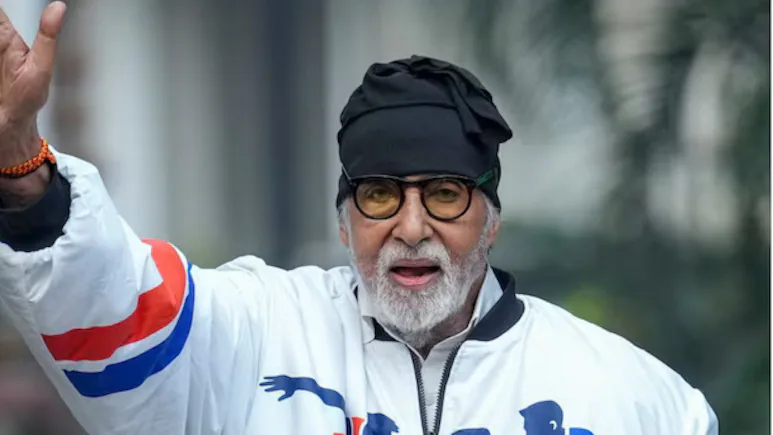
    Amitabh Bachchan has opened up about his recent struggles with sleep and getting back to his fitness routine. The 83-year-old actor shared that his demanding work schedule has disrupted his gym sessions. Reflecting on the challenges of keeping up with exercise as one grows older, Big B also shared a mantra he follows to remain active.

    “At times on the net you get so many physical motions to activate sleep .. tried all and nothing happened .. so best to do it the natural .. get in to the coverings, cuddle like the fetus we were before evolving and facing the World .. and DONE .. snoring and all… Aaaahhhh… a yawn .. indicator of the shortage of the Oxygen needed .. so shall retire,” Amitabh Bachchan wrote in his vlog.

    Big B revealed that his gym routine has become irregular and is currently on pause. Referring to the phrase “Don’t let the old man in”, the actor acknowledged that staying fit is not always easy but stressed the importance of continuing to make an effort despite the challenges.

    “Gyming has been a bit non routined , so trying to bring it back in line .. for, the demanding work all over taxes the body and mind .. and a little more attention needs to be accommodated .. The mind says YES ..but the BODY says – ‘hold on buddy’, don’t let the old man in ‘ easier said than done .. but DO IT ..so I shall IT,” he added.

    On the work front, Amitabh Bachchan is currently hosting Kaun Banega Crorepati Season 18. The actor will next be seen in the Kalki 2898 AD sequel alongside Prabhas and Kamal Haasan.

  • Your Mithai Box Has A Secret: Which Diwali Sweet Is Actually The Lesser Evil?

    Your Mithai Box Has A Secret: Which Diwali Sweet Is Actually The Lesser Evil?

    Ask any gastroenterologist about the days after Diwali and the list is familiar: heartburn that wakes people at night, a distended abdomen, loose stools, and the occasional stomach infection traced to a sweet left out too long. The sweets are not villains. But the digestive tract is far from indifferent to how a mithai is made, how much is eaten and when.

    Most advice on festive sweets rests on calories. That is incomplete. The gut responds to fat, to lactose, to fermentable carbohydrates and to the timing of a meal, and a calorie count captures only some of that.

    What The Gut Notices

    Fat

    Dietary fat slows gastric emptying, so food lingers in the stomach. High-fat meals are also associated with more frequent transient relaxations of the lower esophageal sphincter, the muscular valve that keeps acid where it belongs. The consequence is reflux. A fried sweet in syrup, eaten late at night, is close to a textbook trigger. In people with gallstones, a large fatty load can also provoke a gallbladder attack.

    Lactose

    By most estimates, a majority of Indian adults digest lactose, the sugar in milk, poorly. Khoya is milk reduced by prolonged heating, which concentrates its lactose. Chhena is curdled milk from which much of the whey, and the lactose dissolved in it, has been drained. Undigested lactose draws water into the bowel and is fermented by colonic bacteria, producing gas, cramps and diarrhea.

    Fermentable Carbohydrates

    Chickpea flour and cashews both contain oligosaccharides, which ferment in the colon. In people with irritable bowel syndrome, larger portions can aggravate symptoms.

    Sugar

    The World Health Organization recommends that free sugars supply less than 10 percent of daily energy, with additional benefit below 5 percent: about 50 grams and 25 grams on a 2,000-calorie diet. Sucrose is half fructose, which is metabolized largely in the liver, where excess promotes fat synthesis. That matters in a country where metabolic dysfunction-associated steatotic liver disease, formerly called fatty liver disease, is estimated to affect roughly one in three adults.

    A Sweet-by-Sweet Reckoning

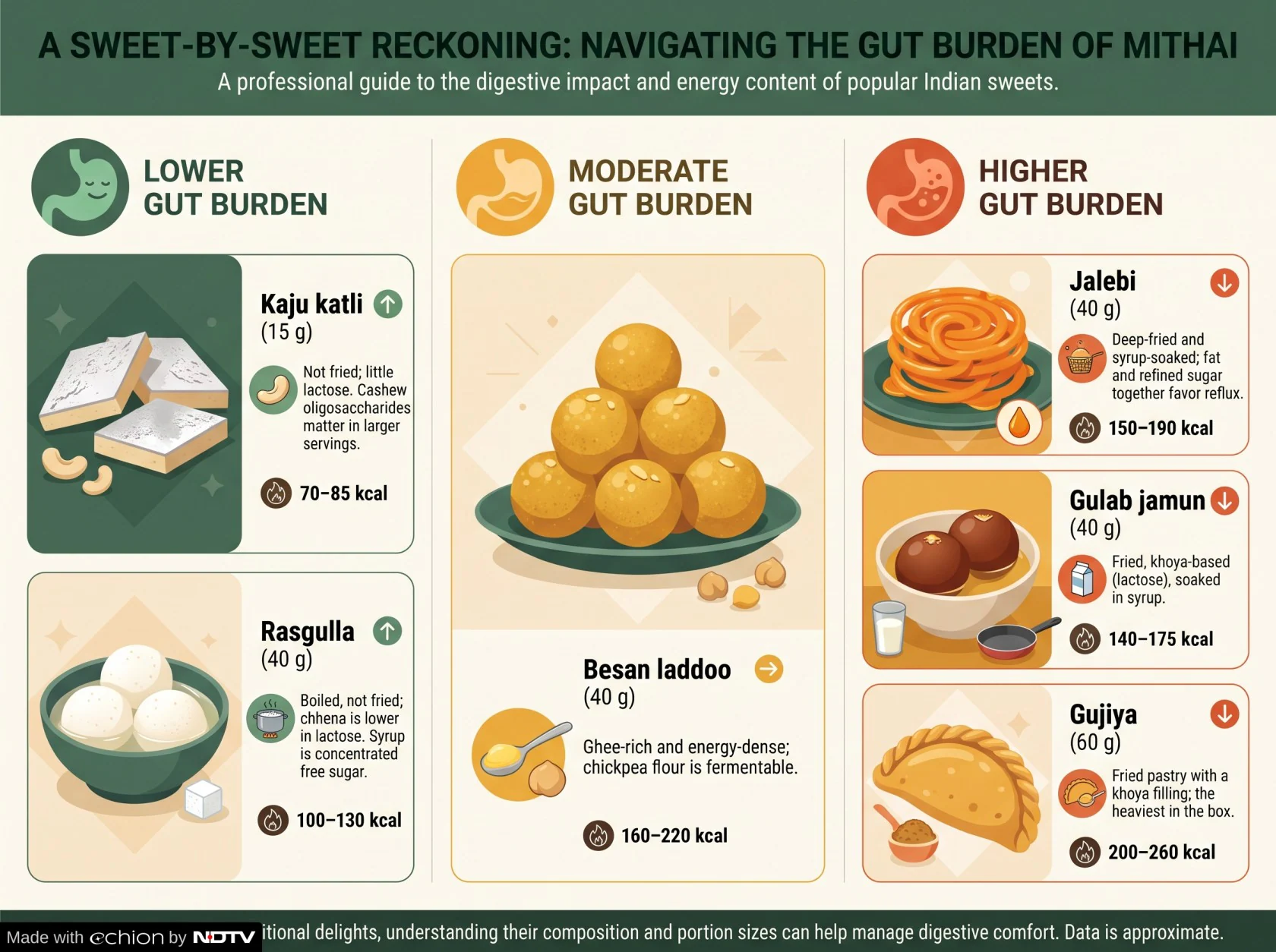
    Mithai Approx. Energy Principal Digestive Considerations Relative Gut Burden

    *Energy values are indicative and vary with recipe and portion. The final column is a clinical judgment about typical preparations, not a measured quantity.

    The ranking is comparative. A single rasgulla is not a license to eat four. Portion and timing alter every row of this table.

    The Risks Outside the Box

    Festive demand strains supply, and gastroenterologists see the consequences in the form of gastroenteritis. Milk-based sweets spoil quickly, especially when left unrefrigerated through an evening of visitors. Adulterated khoya is a recurring concern in the festival season. Buy from licensed vendors, check the date of preparation, refrigerate milk-based sweets and discard anything that smells sour or looks discolored.

    How to Eat Mithai

    The evidence favors modest, unglamorous habits.

    • Eat sweets after a meal, not in place of one. Skipping meals to “save room” tends to end in overeating and acid.
    • Plate one portion. Grazing from the box makes it easy to lose count.
    • Finish dinner early. Guidelines for gastroesophageal reflux disease, including the American College of Gastroenterology’s 2022 guideline, suggest avoiding meals within two to three hours of bedtime in people with nighttime symptoms.
    • Take a short walk. Light walking after meals modestly lowers post-meal blood glucose in trials; its effect on acidity is less well established.
    • Hydrate, and ease off alcohol, strong tea and carbonated drinks, which can aggravate acidity.
    • Keep fiber in the day. Fruit, dal, vegetables and whole grains guard against the constipation that rich festive food brings.

    People with diabetes should count the carbohydrate: jaggery, honey and dates are still sugars. Sweets made with sugar alcohols, often marketed as sugar-free, commonly cause gas and loose stools. Those with reflux should avoid fried sweets late in the evening, and people with gallstones or high triglycerides should be wary of large, fatty meals.

    When It Is Not Just Indigestion

    Mild discomfort after a rich meal usually settles on its own. Persistent or severe symptoms do not, and the following warrant prompt medical attention: severe or lasting abdominal pain; repeated vomiting or vomiting blood; black, tarry or bloody stools; difficulty or pain with swallowing; unexplained weight loss; and diarrhea lasting more than a couple of days.

    There is no single healthiest Diwali sweet, only better and worse bargains for the digestive tract. For most people, a small piece of kaju katli or a rasgulla with the syrup drained will be easier on the gut than a fried, khoya-heavy sweet. But portion, timing and food safety shape the outcome more than the choice of mithai itself. Choose what you love, eat it slowly and early, and let the festival be a festival.

  • Dr. Reddy’s Breakthrough Twice-Yearly HIV Prevention Shot Approved By U.S. Drug Regulator

    Dr. Reddy’s Breakthrough Twice-Yearly HIV Prevention Shot Approved By U.S. Drug Regulator

    The US Food and Drug Administration (FDA) has granted tentative approval to Indian pharmaceutical company Dr. Reddy’s Laboratories for its generic version of lenacapavir. This drug is a breakthrough HIV prevention injection that needs to be administered just twice a year. This approval is granted under the US President’s Emergency Plan for AIDS Relief (PEPFAR) and is an important step towards making HIV prevention more affordable and accessible across low- and middle-income countries. This generic injection is made for adults and adolescents weighing at least 35 kg who are at risk of sexually acquired HIV-1.

    Under an existing agreement, the injection is expected to be available at $40 per person per year across 120 countries covered by the voluntary licence granted by US-based Gilead Sciences. The first supplies are expected to reach countries before the end of 2026, with wider availability planned for 2027.

    What Is Lenacapavir And How Does It Prevent HIV?

    Lenacapavir is a long-acting antiviral medicine originally developed by Gilead Sciences. It belongs to a class of medicines called HIV-1 capsid inhibitors. Lenacapavir works at multiple stages to prevent HIV from multiplying and spreading in the body, which is unlike several other existing antiviral medicines that target a single stage of the virus’s life cycle.

    The drug has been developed for both HIV treatment and prevention, although the formulations and dosage schedules differ depending on its use. For HIV prevention, it is administered as an injection twice a year, making it a convenient option for people who may struggle with daily preventive medication. The World Health Organization (WHO) has also recommended twice-yearly injectable lenacapavir in its HIV prevention guidelines. The medicine has been recognised as a major scientific development, with the journal Science naming it the 2024 ‘Breakthrough of the Year’.

    Why Is The US FDA Approval Important?

    The FDA’s tentative approval is an important milestone because it allows Dr. Reddy’s to go ahead with supplying an affordable generic version of the injection in eligible countries. The development follows a voluntary licensing agreement granted by Gilead Sciences to Dr. Reddy’s in October 2024. In September 2025, Dr. Reddy’s entered into an agreement with Unitaid, the Wits Reproductive Health and HIV Institute (Wits RHI), and the Clinton Health Access Initiative (CHAI) to support product development, regulatory processes and wider access.

    Dr Neil Buddy Shah, CEO of CHAI, highlighted the importance of making HIV prevention easier to follow. “For someone at risk of HIV, taking a pill every day to prevent a disease they don’t have is a hard thing to ask. Two injections a year, of a product that is almost 100% effective at preventing HIV, changes that entirely,” he said.

    He also pointed out that more than 1,25,000 people in Africa have already started using lenacapavir, adding that the generic approval could bring the medicine within reach of millions more.

    How Can A Twice-Yearly Injection Help Prevent HIV?

    One of the biggest challenges in HIV prevention is ensuring that people can consistently follow preventive treatment. Pre-exposure prophylaxis (PrEP) involves taking medication before potential exposure to HIV to reduce the risk of infection. Daily oral PrEP is an effective prevention option, but taking a pill every day can be difficult for some people because of lifestyle, access, privacy concerns or challenges with maintaining a routine. A twice-yearly injection could help address some of these barriers.

    • Fewer doses: Instead of taking a preventive pill every day, people can receive two injections annually, reducing the need for frequent medication.
    • Convenience: People who have difficulty maintaining a daily medication schedule may find long-acting injections easier to follow.
    • Higher privacy: Some individuals may prefer receiving an injection twice a year rather than keeping daily HIV prevention medication at home.
    • Better access: The planned $40 annual price could make this prevention option more accessible in countries with limited healthcare resources.
    • Additional prevention: Lenacapavir offers another option for people who may not prefer or be able to use daily oral PrEP.

    However, HIV-negative status must be confirmed before starting lenacapavir and before every subsequent injection. The medicine is intended for HIV prevention and does not replace other measures to reduce the risk of sexually transmitted infections.

    Deepak Sapra, Chief Executive Officer, API and Services, Dr. Reddy’s Laboratories Ltd., said, “This is a moment of immense pride for all of us at Dr. Reddy’s. Developing and manufacturing a complex long-acting injectable like lenacapavir at an affordable price required strong scientific capabilities and manufacturing expertise to address an urgent access need. The U.S. FDA approval validates that work and brings us a significant step closer to making this twice-yearly HIV prevention option available to people across low- and middle-income countries.”

  • Not Just Lung Damage, India’s Toxic Air Is Fueling Diabetes And Obesity

    Not Just Lung Damage, India’s Toxic Air Is Fueling Diabetes And Obesity

    Pulled into our lungs, travelling through our bloodstream and potentially disrupting our metabolism, air pollution may be contributing to India’s diabetes and obesity epidemic.

    Air pollution could be doing far more than damaging your lungs. Emerging research suggests that breathing toxic air over prolonged periods may increase the risk of developing type 2 diabetes, interfere with insulin metabolism and even contribute to weight gain and obesity.

    And this could have particularly serious implications for India, which is already battling an enormous burden of diabetes and obesity.

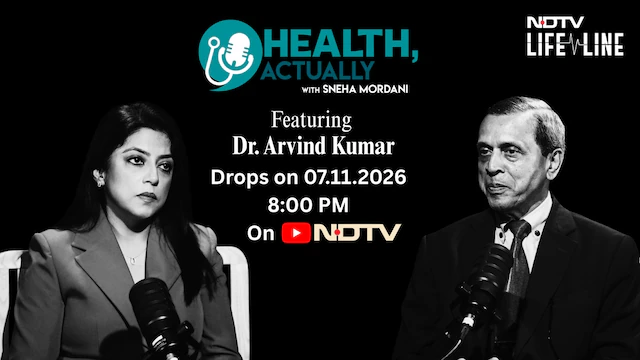
    In a conversation with NDTV Lifeline, renowned pulmonologist Dr Arvind Kumar warned that air pollution must no longer be viewed as merely a respiratory health problem.

    “There is now data to say that diabetes and even obesity, which is so rapidly increasing in our country, have been linked to air pollution,” Dr Kumar said while speaking on Health, Actually.

    The warning comes against the backdrop of mounting scientific evidence linking long-term exposure to fine particulate matter, particularly PM2.5, with metabolic disorders.

    So Can Breathing Dirty Air Fuel A Diabetes Crisis?

    One of the most important studies to examine this question was published in the journal BMJ Open Diabetes Research & Care in October 2023.

    Researchers studied 12,064 adults in Delhi and Chennai to investigate the relationship between PM2.5 exposure, blood glucose levels, HbA1c and the incidence of type 2 diabetes.

    A 10 microgram per cubic metre increase in annual average PM2.5 exposure was associated with a 22% higher risk of developing type 2 diabetes.

    The researchers also found that a 10 microgram per cubic metre increase in monthly average PM2.5 exposure was associated with a 0.40 mg/dL increase in fasting blood glucose and a 0.021-unit increase in HbA1c.

    This is particularly significant for India, where diabetes is already a major public health challenge.

    Dr Kumar explained the possible biological mechanism during his conversation with NDTV Lifeline.

    “When these toxic particles go into the lungs, they get absorbed into the blood. And then they go to every organ in the body.”

    He added that when these particles reach the pancreas, they can trigger inflammation and interfere with insulin metabolism.

    “When these particles get deposited in the pancreas, they cause inflammation there. And that disturbs the insulin metabolism. And you have less insulin,” Dr Kumar explained.

    The pancreas plays a central role in regulating blood sugar by producing insulin. Disruption of insulin production and signalling can contribute to metabolic dysfunction and diabetes.

    So Is Pollution Making Us Obese?

    The potential connection between air pollution and obesity is another emerging area of research.

    Dr Kumar pointed out that the effects of toxic particles may extend to adipose tissue which is the body’s fat-storing tissue.

    “Likewise, when these particles get deposited in the adipose tissue, which is the fatty tissue, they again disturb the fat metabolism,” he said during the NDTV Lifeline podcast, Health, Actually.

    Another research points in this direction.

    A systematic review and meta-analysis published in Environmental Research in 2026 examined 41 studies involving adults and found positive associations between exposure to PM2.5 and several obesity-related measurements.

    The researchers found that higher PM2.5 exposure was associated with:

    • 0.93 kg/m2 higher body mass index (BMI).
    • 1.17 cm higher waist circumference.
    • 1.60% higher waist-to-hip ratio.

    The analysis also found associations between PM2.5 and increased risks of general and abdominal obesity.

    The researchers cautioned that more longitudinal studies are needed to establish causality. Nevertheless, the findings add to concerns that environmental pollution could be an overlooked contributor to the obesity epidemic.

    How Does Polluted Air Affect Your Metabolism?

    The mechanism is increasingly being investigated by researchers.

    Fine particulate matter can trigger oxidative stress and inflammation. These processes may affect several organs involved in regulating blood sugar and energy balance, including the pancreas, liver, skeletal muscle and adipose tissue.

    A systematic review and meta-analysis published in 2018 examined the relationship between air pollution and insulin resistance. It found associations between certain pollutants, including nitrogen dioxide and PM10, and changes in insulin resistance markers.

    A 2025 review in Frontiers in Endocrinology established the same.

    This is important because insulin resistance is a key feature of type 2 diabetes.

    However, researchers are still investigating precisely how much of the relationship is directly attributable to pollution, and how it interacts with other risk factors such as diet, physical inactivity, genetics and socioeconomic conditions.

    As a pulmonologist and chest surgeon who is seeing Delhi NCR’s air pollution worsen over the years, this is a link established without a doubt, says Dr Kumar.

    Clearly India’s pollution problem could have consequences beyond the lungs.

    “There are three or four other areas where there is solid evidence available of horrible damage being caused,” he said, referring to the wider effects of air pollution on the human body.

    He pointed to cardiovascular disease, hypertension, stroke and neurological disorders, besides diabetes and obesity.

    India’s diabetes and obesity crisis may have environmental dimensions that are not receiving enough attention.

    Pollution cannot be considered the sole cause of either condition. Diet, physical activity, genetics, sleep, age and other factors remain important. But mounting evidence suggests that the air people breathe could be another significant piece of the metabolic health puzzle.

    “The lungs are the point of entry, but the damage can travel much further. The question is no longer simply whether polluted air makes us cough or struggle to breathe” Dr Arvind said.
  • 7 Bollywood Celebrities Who Have Given Up Sugar: What Happens To Your Body When You Cut Sugar

    7 Bollywood Celebrities Who Have Given Up Sugar: What Happens To Your Body When You Cut Sugar

    Sugar is often one of the hardest things to eliminate from our daily diet. From the morning cup of tea and packaged breakfast cereals to chocolates, desserts and sugary beverages, added sugar finds its way into our meals more often than we realise. While occasional indulgence is not necessarily harmful, regularly consuming excessive amounts of added sugar can affect metabolic health, contribute to weight gain and increase the risk of dental problems. Several Bollywood celebrities have spoken about reducing or eliminating sugar from their diets as part of their fitness and lifestyle routines. From Kartik Aaryan giving up sugar for his dramatic physical transformation in Chandu Champion to AR Rahman revealing that he has avoided sugar for a decade, these celebrities have brought renewed attention to the benefits of cutting down on added sugar. Sonam Kapoor, Masaba Gupta and television actor Saumya Tandon have also discussed their experiences with sugar-free diets. But what actually happens to your body when you stop consuming added sugar? Can it improve your energy levels, help manage weight and support metabolic health? Here are seven celebrities who have spoken about giving up sugar and what nutrition science says about this dietary change.

    7 Bollywood Celebrities Who Have Given Up Sugar

    1. Kartik Aaryan: Stayed Away From Sugar For 1.5 Years

    As reported by Indian Express, Kartik Aaryan underwent a remarkable physical transformation for his role in Kabir Khan’s Chandu Champion. The actor, who plays Paralympic gold medallist Murlikant Petkar, revealed that he stayed away from sugar for approximately one-and-a-half years while preparing for the film. In an interview with Filmfare, Kartik spoke about his earlier fondness for sweets and how having something sweet after every meal had become a habit. However, eliminating sugar was not easy initially. He experienced cravings and what he described as withdrawal symptoms during the early stages of his dietary change. The actor eventually became comfortable with his new eating habits and said that cutting sugar also improved his quality of sleep. His diet included protein-rich foods such as paneer, tofu, beans and lentils, alongside salads. He also replaced regular rice with cauliflower rice during his preparation.

    2. AR Rahman: Avoided Sugar For A Decade

    Music composer AR Rahman revealed in February 2026 that he had been avoiding sugar for the past 10 years. During an appearance on The Great Indian Kapil Show, the Oscar-winning composer spoke about his dietary habits and also mentioned reducing his rice consumption. When asked whether his decision meant giving up even an occasional gulab jamun, Rahman indicated that he had stayed away from sugar altogether. His experience highlights how dietary changes can become long-term lifestyle habits rather than temporary measures adopted for a particular fitness goal.

    3. Sonam Kapoor: Gave Up Sugar While Managing PCOS

    Actor Sonam Kapoor has previously spoken about her experience of living with polycystic ovary syndrome (PCOS) and the lifestyle changes she adopted to manage the condition. In a video shared on social media in 2020, Sonam revealed that she had completely given up sugar, including refined sugar and alternatives such as honey, maple syrup and jaggery. She also spoke about incorporating regular physical activity into her routine, including walking, yoga and meditation. Sonam said that eliminating sugar had changed her relationship with sweet foods. She explained that desserts and chocolates, which she once enjoyed, started tasting excessively sweet after she stopped consuming them regularly.

    However, dietary changes alone are not a treatment for PCOS. Women with the condition should follow an individualised management plan based on their symptoms and medical requirements.

    4. Saumya Tandon: Gave Up Sugar, Honey And Jaggery

    Actor Saumya Tandon, known for her role in Bhabi Ji Ghar Par Hai!, revealed in December 2024 that she had stopped consuming sugar and its alternatives approximately four years earlier. Sharing a sugar-free sweet potato halwa recipe on social media, Saumya said she had eliminated sugar, honey and jaggery from her diet. Instead, she relied on fruits and dry fruits for sweetness and experimented with desserts prepared using natural ingredients.

    Her approach also highlights an important nutritional distinction: replacing refined sugar with honey or jaggery does not necessarily eliminate the health concerns associated with excessive free sugar consumption.

    5. Masaba Gupta: Completed 21 Days Without Refined Sugar

    Actor and fashion designer Masaba Gupta shared her experience of completing 21 days without refined sugar in January 2023. She spoke about finding the initial days particularly challenging, especially because of her fondness for desserts and chocolates. Masaba also avoided alternatives such as honey and jaggery during this period. In her social media updates, she described experiencing changes in her energy levels, focus, mood and skin. She also discussed feeling better during workouts.

    While these were her personal observations, individual responses to dietary changes can vary. There is no scientific guarantee that eliminating sugar for 21 days will produce the same results for everyone.

    6. Ranveer Singh: Gave Up Sugar And Nutella For ‘Befikre’

    Ranveer Singh adopted a strict dietary routine while filming Aditya Chopra’s Befikre in Paris. According to a 2016 report by Mumbai Mirror, the actor stayed away from sugar, alcohol, sweets, aerated drinks and junk food while preparing for the film. His favourite Nutella was also off the menu. His trainer, Lloyd Stevens, supervised the actor’s fitness routine and dietary restrictions during the filming schedule. The decision was part of a specific physical preparation programme rather than evidence of a permanent sugar-free lifestyle. Nevertheless, it demonstrates how reducing calorie-dense foods and sugary treats can form part of a structured fitness plan.

    7. John Abraham: Reportedly Avoided Sugar For 25 Years

    Known for his muscular physique and disciplined fitness routine, John Abraham has also been associated with a long-term sugar-free lifestyle. According to a Times of India report, actor Alyy Khan and his wife Chandni Khan spoke about John’s dietary discipline and claimed that he had not consumed sugar for approximately 25 years.

    Although the claim was shared by people familiar with the actor rather than established through a detailed account of his diet, it offers another example of the emphasis some celebrities place on limiting sugar consumption as part of their fitness routines.

    What Happens To Your Body When You Give Up Added Sugar?

    While celebrity experiences can be interesting, the more important question is what science says about reducing sugar consumption. According to the World Health Organisation (WHO), free sugars should account for less than 10 per cent of total daily energy intake. Ideally, this should be reduced to below 5 per cent to provide additional health benefits. Free sugars include sugars added to foods and beverages by manufacturers, cooks or consumers, as well as naturally occurring sugars in honey, syrups, fruit juices and fruit juice concentrates. Here are some changes that may occur when you reduce your added sugar intake.

    1. It May Help With Weight Management

    One of the potential benefits of reducing added sugar is better weight management. Sugary beverages, desserts and packaged foods can contribute considerable calories without providing the same satiety as nutrient-dense foods containing protein and fibre. Reducing these foods can lower overall calorie consumption, particularly when they are replaced with healthier alternatives. However, cutting sugar alone does not automatically lead to weight loss. Your overall calorie intake, physical activity, sleep and dietary quality also matter.

    2. Your Blood Sugar Levels May Become Easier To Manage

    Frequently consuming sugar-sweetened beverages and foods high in added sugar can contribute to excessive calorie intake and poor dietary quality. Reducing these foods can help improve overall dietary patterns and support better blood glucose management, particularly when combined with regular physical activity and a balanced diet.

    This can be especially relevant for people with insulin resistance or an increased risk of type 2 diabetes. However, eliminating sugar does not guarantee that someone will avoid diabetes. The condition is influenced by several factors, including genetics, body composition, physical activity and overall metabolic health.

    3. You May Experience Fewer Energy Fluctuations

    Foods and beverages high in added sugar can cause blood glucose levels to rise quickly, particularly when consumed without other nutrients. Some people experience fluctuations in their perceived energy levels after consuming sugary foods and drinks. Replacing these foods with balanced meals containing protein, fibre and healthy fats may help support more consistent energy levels throughout the day. This does not mean that all carbohydrates should be eliminated. Whole grains, vegetables, legumes and fruits provide important nutrients and should remain part of a healthy diet.

    4. Your Dental Health May Improve

    One of the better-established benefits of reducing free sugar consumption is improved dental health. According to the WHO, free sugars are a major risk factor for dental caries, commonly known as tooth decay. Bacteria in the mouth use sugars to produce acids that gradually damage tooth enamel. Frequent exposure to sugary foods and beverages can increase the risk of cavities. Reducing the frequency of sugar consumption, particularly between meals, can help protect your teeth.

    5. It May Support Better Metabolic Health

    Excessive consumption of free sugars can contribute to unhealthy weight gain and increase the risk of several non-communicable diseases. The WHO highlights that free sugars provide energy without necessarily supplying essential nutrients. Regularly consuming large amounts can also displace healthier foods in the diet. Reducing added sugar while eating more whole foods, vegetables, fruits, legumes and whole grains can support better overall dietary quality and metabolic health.

    6. Your Taste Preferences May Change

    If you regularly consume sugary foods, your taste preferences may become accustomed to intense sweetness. After reducing added sugar for some time, certain desserts and packaged foods may begin to taste excessively sweet. Sonam Kapoor and Saumya Tandon have both spoken about changing their relationship with sweet foods after eliminating sugar. However, this is a subjective response rather than a guaranteed physiological change. Individual experiences can differ.

    7. You May Reduce Your Risk Of Tooth Decay And Excess Calorie Consumption Over Time

    Reducing sugary beverages, confectionery and processed desserts can have cumulative benefits. The WHO recommends limiting free sugar intake to less than 10 per cent of total daily energy, with a further reduction to below 5 per cent being desirable. For someone consuming a high-sugar diet, even a gradual reduction can be a meaningful step towards improving long-term dietary habits.

    Should You Give Up Sugar Completely?

    Completely eliminating sugar is not necessary for everyone. The more practical approach is to distinguish between added or free sugars and naturally occurring sugars in whole foods.

    For instance, whole fruits contain natural sugars along with fibre, vitamins, minerals and other beneficial compounds. Milk also contains naturally occurring lactose. These foods do not need to be eliminated simply because they contain sugar. Instead, focus on reducing:

    1. Sugar-sweetened beverages, including soft drinks and packaged juices.
    2. Chocolates, sweets, cakes and pastries consumed frequently.
    3. Sugar added to tea, coffee and breakfast cereals.
    4. Packaged foods containing substantial amounts of added sugar.
    5. Frequent consumption of honey, syrups and jaggery as supposedly healthier sugar substitutes.
    6. The goal should be to develop a sustainable eating pattern rather than follow an unnecessarily restrictive diet.Ultimately, the experiences of these seven celebrities highlight how reducing sugar can become part of a broader lifestyle change. However, better health does not depend on eliminating one ingredient alone. A balanced diet, regular exercise, adequate sleep and consistency remain equally important.
  • Is Running After 40 Safe? What Older Beginners Should Know Before Following Celebrity Fitness Goals

    Is Running After 40 Safe? What Older Beginners Should Know Before Following Celebrity Fitness Goals

    Running has become one of the most popular ways to get fit in midlife. Park tracks, early-morning clubs and weekend 5Ks are full of people who laced up for the first time in their forties or fifties. That is good news. But the body at 45 does not respond like the body at 25, and how an adult starts matters as much as the decision to start. The key is not to avoid running after 40, but to start at the right pace, build strength and progress gradually.

    Why Running After 40 Is Worth It

    It is never too late. People who begin exercising in midlife gain real protection for their heart and overall health, even if they were inactive in their younger years.

    The medical benefits are broad:

    • Heart and circulation. Running improves blood flow, blood pressure, cholesterol and blood sugar control.
    • Bones. Impact is a signal for bone to stay strong, which matters as density declines, especially after menopause.
    • Joints. The fear that running ruins knees is largely a myth. Moderate, gradual running keeps the muscles, tendons and cartilage around the joint conditioned. Extreme, high-volume running is a different matter.
    • Mood and sleep. Running lifts mood, eases stress and often improves sleep.
    • Community. A running group gives structure and motivation, which helps the habit last.

    What Changes in the Body After 40

    None of the following should stop anyone from running. Together they explain why the approach has to change.

    • Muscle loss. Muscle mass starts declining around the thirties, and the loss speeds up after 60. The fast-twitch fibres that give speed and power go first.
    • Stiffer tendons and ligaments. Collagen changes make connective tissue less elastic and slower to adapt. This is the main reason injury risk rises.
    • Slower recovery. Training that left someone fresh the next day at 30 can leave them flat for two or three days at 45.
    • Hormonal shifts. Falling oestrogen after menopause affects bone density, recovery and body composition. In men, testosterone also declines gradually.
    • Gradual fitness decline. Aerobic capacity falls slowly with age, but regular training slows that fall considerably.
    • The heart is often ready before the tendons are. Aerobic fitness builds fast, but connective tissue adapts slowly.

    The Orthopaedic Risks

    Running is not risk-free. Most injuries are overuse injuries, caused by doing too much too soon rather than by running itself. Those seen most often in older runners are:

    • Achilles tendinopathy. Stiffness or pain at the back of the heel, often worst at the start of a run.
    • Plantar fasciitis. Sharp heel pain with the first steps in the morning.
    • Runner’s knee. Pain around or behind the kneecap, often linked to weak hips and glutes.
    • Shin splints. Pain along the shinbone from sudden increases in volume or impact.
    • Stress fractures. Small cracks in bone, more likely when bone density is low, particularly in women after menopause. These include the hip and pelvis, not just the shin.

    Before the First Run

    1. Get a check-up. Anyone who has been inactive for years, or has heart, joint or blood pressure problems, should see a doctor first. A blood panel, a resting ECG and sometimes a stress test are reasonable.
    2. Review old injuries. A previous knee, back or ankle problem is worth discussing with an orthopaedic specialist or physiotherapist.
    3. Check bone health. A vitamin D and calcium check is sensible, since low vitamin D is common in India and affects bone strength.
    4. Buy proper shoes. A specialist shop can match shoes to foot type, weight and the surface. Expensive gadgets are not needed.

    How to Start Safely

    • Begin with walk-run. A typical start is 30 seconds of jogging followed by a couple of minutes of walking, repeated, three days a week. Running time then grows week by week.
    • Use the talk test. If a full sentence is not possible, the pace is too fast.
    • Follow the 10 percent rule. Weekly distance or time should not rise by more than about 10 percent.
    • Take rest days. Running on consecutive days is best avoided in the early months. Cycling or swimming can fill the gaps.
    • Delay racing. Four to six months of steady training before a first race is a sensible rule of thumb.
    • Warm up properly. A few minutes of brisk walking and dynamic movement prepares muscles and tendons, and stretching is best saved for after the run.
    • Mix the intensity. Roughly 80 percent of running should be easy and 20 percent harder.

    The Part Many Runners Skip: Strength Training

    If one thing protects an older runner, it is strength work. Two short sessions a week can slow muscle loss, strengthen tendons, improve running efficiency and support bone density. Useful exercises include:

    • Squats and step-ups
    • Lunges and single-leg strengthening
    • Glute bridges and hip thrusts
    • Calf raises, including slow, controlled ones
    • Planks for core stability

    These can be done at home, starting with body weight and adding load gradually. Balance work, such as standing on one leg, also lowers the risk of falls.

    Recovery Is Part of Training

    • Sleep seven to nine hours, since most repair happens overnight.
    • Eat enough protein across the day to support muscle, along with calcium-rich foods.
    • Hydrate well. Thirst signals weaken with age, and India’s heat and humidity raise the stakes.
    • Run at cooler times and judge easy runs by effort, not pace, in hot weather.

    Soreness or Injury: Knowing the Difference

    Mild, even soreness a day or two after a harder session is normal and fades with rest. Stop and seek advice for:

    • Sharp pain that worsens during a run
    • Pain that changes the way a person walks or runs
    • Localised bone pain, especially if it builds with each run
    • Joint swelling, locking or a feeling of giving way
    • Pain that persists beyond a few days or wakes a person at night

    Early assessment often means a short break and a modified plan rather than months away from running.

    Why This Matters in India

    • Desk-bound lives leave many people with weak cores, tight hips and deconditioned legs before they even begin.
    • Running is booming through clubs and social media, and enthusiasm often runs ahead of preparation.
    • Vitamin D deficiency is widespread, which affects bone health.
    • Lifestyle diseases such as diabetes and heart disease are rising, so regular exercise has real public health value.

    Running after 40 can be one of the best investments in long-term health, and many people find they are fitter than they have been in years. For older beginners, the formula is simple: assess individual health risks, start with walking and short running intervals, build strength twice a week, allow adequate recovery and pay attention to persistent pain. Patience is what keeps tendons, bones and joints in step with enthusiasm. The goal is not to run like someone else. It is to keep running safely for years to come.

  • ‘You Can Either Find Me Walking On A Road Or A Treadmill’, Says Amrita Arora: How To Turn Your Daily Walks Into A Workout

    ‘You Can Either Find Me Walking On A Road Or A Treadmill’, Says Amrita Arora: How To Turn Your Daily Walks Into A Workout

    Amrita Arora, in a recent interview, shared that walking is an important part of her fitness routine. The 45-year-old recently opened up about her approach to fitness, healthy ageing and the effort it took to get back in shape after a phase when she felt she had let herself go. Speaking to Pinkvilla Lifestyle Plus, the actor said, “You can either find me walking on a road or a treadmill. I go to the gym a lot. I’m very particular about what I eat.” She also spoke about including cardio and strength training in her routine.

    Amrita admitted that maintaining fitness has not always been easy. “It was never like that. I had a couple of years where I let myself go. It took me a while to get back in shape and find that rhythm again. It’s not always so smooth as it looks. It takes a lot of effort, hard work. You have to make certain sacrifices,” she said. She added that if she feels she has binged, she sometimes works harder at the gym.

    How Is Walking Beneficial For Your Health?

    Walking is one of the easiest ways to stay physically active. It doesn’t need expensive equipment, can be done almost anywhere and is suitable for people across different age groups. If you walk regularly, it can offer several health benefits. Here, take a look at some of them.

    • Heart health: Walking increases the heart rate and improves blood circulation. Regular brisk walking can help lower the risk of cardiovascular diseases by supporting healthy blood pressure and cholesterol levels.
    • Weight management: Walking burns calories and adds to daily energy expenditure. When combined with a balanced diet, it can help maintain a healthy weight and reduce excess body fat.
    • Blood sugar control: Physical activity helps the muscles use glucose for energy. Walking after meals can help reduce post-meal blood sugar spikes and improve insulin sensitivity.
    • Strengthens muscles and bones: Walking works the muscles of the legs, hips and core. Since it is a weight-bearing activity, it also helps maintain bone strength and can improve mobility.
    • Mental health: Walking can help reduce stress and improve mood. Spending time outdoors, getting natural light and moving the body can also support better mental well-being.
    • Improves stamina and endurance: Regular walking improves the body’s ability to sustain physical activity. Over time, people may find that they can walk longer distances without feeling as tired.
    • Better sleep: Regular physical activity can help regulate the sleep-wake cycle and improve sleep quality.

    How To Turn Your Daily Walks Into A Workout

    Walking does not have to be a low-intensity activity. A few changes can make it an effective workout. Here, take a look at some of the ways to turn your daily walks into a workout.

    1. Walking Speed

    Instead of walking at the same pace throughout, include periods of brisk walking. You should be able to talk but find it slightly difficult to sing. Increasing your speed raises your heart rate and makes your cardiovascular system work harder.

    2. Interval Walking

    Alternate between a few minutes of brisk walking and a few minutes of slower walking. For instance, walk at a comfortable pace for two minutes, followed by three minutes of faster walking. Repeat this throughout your session and gradually increase the brisk intervals.

    3. Inclines And Slopes

    Walking uphill or increasing the incline on a treadmill makes your muscles work harder. It engages the glutes, hamstrings and calves and also increases the intensity of your workout. Start with a small incline and increase it gradually.

    4. Walking Duration

    If you usually walk for 15 minutes, gradually increase it to 20 or 30 minutes. Adults should aim for at least 150 minutes of moderate-intensity physical activity every week. This can be brisk walking spread across five or more days.

    5. Walking Posture

    Keep your back straight, shoulders relaxed and head facing forward. Allow your arms to swing naturally. Avoid looking down at your phone throughout the walk, as this can affect your posture and walking.

    6. Short Strength-Training Exercises

    Walking primarily works the lower body, but you can do it along with strength training. Include exercises such as squats, lunges, calf raises and wall push-ups before or after your walk. This helps improve muscle strength, balance and overall fitness.

    7. Walk Consistently

    Consistency is more important than walking at an extremely fast pace once in a while. Choose a time that fits your daily schedule, whether it is early morning, during a lunch break or in the evening. You can also divide your walking time into shorter sessions throughout the day.

    Disclaimer: This content including advice provides generic information only. It is in no way a substitute for a qualified medical opinion. Always consult a specialist or your own doctor for more information. NDTV does not claim responsibility for this information.

  • Festive Season Fitness: 5 Quick Workouts Women Can Fit Into A Busy Day

    Festive Season Fitness: 5 Quick Workouts Women Can Fit Into A Busy Day

    The festive season is about fun family get-togethers, shopping, travelling, and of course lots of tasty food. There is so much to do that it is easy to forget about exercise. For women who are dealing with work house duties and holiday planning, finding time to work out might seem like one more thing, on a list that is already too long.

    The best part is that being active does not always mean spending an hour in a gym. 10 to 20 minutes of moving around can help you stay on track, gain strength and feel more energetic. Here are five quick, easy workouts that women can do during the festive times.

    1. The 10-Minute Full-Body Workout

    When time is short, a full-body workout is a start. A full-body workout works muscle groups and moves the body without any gear.

    Try this set of moves:

    • Bodyweight squats – 12 times
    • Wall or knee push-ups – 10 times
    • Glute bridges – 15 times
    • Marching in place – 45 seconds

    Repeat the circuit two or three times, resting a little between rounds.

    Beginner modification: Start with one or two rounds. Use a chair for support when squatting. Focus on movement instead of speed.

    2. A Quick Cardio Burst

    If you have sat at your desk all day or run errands, a short cardio session can help you move and lift your energy.

    Try this set of moves:

    • Marching in place – 1 minute
    • Step jacks – 45 seconds
    • High knee marches – 45 seconds
    • Side steps – 1 minute

    Repeat the sequence, taking breaks as needed. This workout can finish in about 8 to 10 minutes.

    Beginner modification: Replace jumping moves with low-impact steps to ease stress. Keep the pace easy. Raise intensity slowly as stamina grows.

    3. The Strength-Building Mini Session

    Strength training helps build muscle, keep muscle strong, aid movement and lift overall fitness. A full gym is not needed to begin.

    Try this combination:

    • Squats – 12 repetitions
    • Lunges – 8 repetitions per leg
    • Incline push-ups against a wall or sturdy counter – 10 repetitions
    • Bird dogs – 10 repetitions per side

    Do two rounds, resting 30-45 seconds between exercises if needed.

    Beginner modification: Use a chair for balance while doing lunges or swap lunges with knee extensions. Focus on form instead of more repetitions.

    4. A Core Workout in 10 Minutes

    Between workdays and holiday prep, a short core session is a simple way to add variety to your routine. Core exercises build stability and help daily movement.

    Try this combination:

    • Dead bugs – 10 repetitions per side
    • Bird dogs – 10 repetitions per side
    • Glute bridges – 12 repetitions
    • Plank – 15-30 seconds

    Repeat this circuit twice, moving slowly and with control.

    Beginner modification: Do the plank against a wall or higher surface of the floor. Stop if pain occurs and choose a variation that feels comfortable.

    5. The Busy-Day Movement Break

    Some days feel too busy for a workout. When that happens, breaking movement into sessions can keep you active without adding more pressure to your day. Try a five-minute walk after breakfast or a few rounds of stair climbing or gentle mobility exercises between work calls. You may also take a brisk ten-minute walk after dinner or dance to your festive songs.

    Beginner modification: Start with comfortable short-distance walks and increase the duration as well as distance as your fitness improves. Every movement break counts toward an active day.

    Making Fitness Part of Your Festive Routine

    The key to staying consistent during the season is flexibility, not perfection. Schedule a workout when movement suits you best, whether that is before work, during a lunch break or after your daily responsibilities are done. On busy days, even five to ten minutes of movement is a useful starting point.

    Remember to warm up, stay hydrated, eat meals and get enough rest. You do not need to compensate for meals with extra exercise or feel guilty about taking a rest day.

    This festive season, focus on building a routine that fits your life. You don’t have to do hardcore workouts to stay on track. Small, steady habits keep you feeling energised and strong. That way, you can enjoy all the festivities without feeling like you’re missing out.

  • Menopause Can Shake Women’s Confidence At Work, Study Of 130 Posts Finds

    Menopause Can Shake Women’s Confidence At Work, Study Of 130 Posts Finds

    Menopause is often discussed in terms of hot flashes, night sweats, irregular periods and other physical symptoms. But for women in the middle of their working lives, the transition can have consequences that extend well beyond their health. Difficulty concentrating during meetings, forgetting words, struggling with memory and feeling unusually anxious can affect professional confidence and the ability to manage everyday responsibilities at work.

    A new study published in the journal Women’s Health examines how women experience menopause and perimenopause in the workplace, highlighting the relationship between health, happiness and productivity. Researchers analysed 130 anonymous Reddit posts to understand how symptoms influence career sustainability, workplace relationships and decisions about professional priorities.

    The findings suggest that while some women experience stress, embarrassment and fears about job security, others use this life stage to reassess what they want from their careers. The research also raises an important question for employers: are workplaces equipped to support women through a transition that can coincide with some of the most demanding and senior years of their professional lives?

    The issue is relevant in India, where menopause remains a relatively under-discussed workplace health concern, despite the number of women continuing to work through midlife.

    How menopause can affect women’s careers

    The study, titled “Too hot to handle”: A qualitative analysis of Reddit platform data on the impact of menopause on career sustainability, examined publicly available posts shared between April 2022 and July 2024.

    The researchers collected posts from menopause-related communities as well as general workplace and career discussion forums. After reviewing the material, they retained 130 posts describing personal experiences of menopause or perimenopause and their effects on work.

    The researchers used a framework that examined three interconnected aspects of career sustainability: health, happiness and productivity.

    Their analysis found that menopause could affect all three, sometimes creating a cycle in which symptoms disrupted work performance, and the resulting stress further affected emotional well-being.

    1. Brain fog and memory problems can affect workplace confidence

    One of the prominent concerns in the posts was cognitive difficulty, commonly described as brain fog. Women reported forgetting words, experiencing memory gaps, struggling to concentrate and losing their train of thought during conversations or meetings.

    These experiences could be particularly distressing for women who were accustomed to performing demanding professional roles. Some described feeling embarrassed when they could not recall information or complete tasks as efficiently as before.

    The impact was not limited to productivity. Women also reported questioning their abilities, worrying about performance reviews and fearing that colleagues or managers might interpret their difficulties as a decline in professional competence.

    The researchers noted that some participants faced disciplinary action or concerns about job security. Others said that a supportive manager helped them manage the difficulties.

    2. Fatigue, sleep problems and anxiety can compound the problem

    Menopause-related symptoms are not experienced in isolation. Hot flashes and night sweats can disrupt sleep, while fatigue, migraines and mood changes may make it harder to manage a demanding workday.

    Women in the study described fatigue, mood swings, anxiety and headaches alongside cognitive difficulties. These symptoms could reinforce one another: disrupted sleep and exhaustion affected concentration, while worries about work performance added to emotional strain.

    For some participants, the effort required to maintain a professional image while managing symptoms became an additional source of stress.

    3. Some women reconsider their professional priorities

    The findings were not uniformly negative. While some women felt that menopause threatened their professional identity or made them less relevant at work, others described the transition as an opportunity to reconsider their priorities.

    Some participants wanted to slow down, establish clearer boundaries or move into part-time work. Others explored alternative career paths or considered building independent businesses.

    One participant described improved health after moving to a less stressful part-time role.

    The researchers suggest that menopause can become a period of career recalibration, with some women placing greater emphasis on health, personal fulfilment and sustainable working arrangements rather than conventional career advancement.

    The findings are particularly relevant to India, where workplace discussions about menopause are still limited and women’s experiences can vary significantly depending on their occupation, income and access to healthcare.

    A 2026 study published in Frontiers in Global Women’s Health examined menopausal symptoms, work ability and quality of life among 280 employed women aged 45 to 65 in southern India.

    It found that 73.2% of the participants reported moderate-to-severe menopausal symptoms. The burden was particularly high among unskilled workers and women in physically demanding occupations.

    Sleep problems, fatigue and a reduced ability to carry out usual activities were associated with poorer work ability. Women reporting reduced capacity to perform their regular activities had nearly twice the odds of poor work ability.

    The Indian study highlights why menopause at work cannot be viewed only through the experiences of women in corporate offices or senior professional roles. Women working in factories, healthcare, education, domestic work, agriculture and other physically demanding occupations may have fewer opportunities to adjust their schedules, take breaks or work remotely.

    For a woman working in a formal office, flexibility around working hours or access to a private space to manage symptoms may make a difference. For someone working in a job that requires prolonged standing, physical labour or fixed shifts, such adjustments may be harder to access.

    The Indian findings therefore underline the need for workplace support that accounts for differences in occupation and working conditions.

  • Glenn Maxwell Retires From International Cricket: His Fitness Secrets, Injury Battles And Recovery

    Glenn Maxwell Retires From International Cricket: His Fitness Secrets, Injury Battles And Recovery

    Glenn Maxwell’s international career has been defined by explosive batting performances, athletic fielding and several extraordinary performances, including the unconventional switch-hit batting style. But behind his high-energy style of cricket there were times when he had physical setbacks, injury concerns and periods when he had to step away from the game to focus on his well-being. The Australian all-rounder announced his retirement from international cricket on November 3, 2026, saying he wanted to spend more time investing in his body and preparing for the remaining tournaments of his career. Here are some significant episodes from his fitness and recovery journey. According to media, he focussed on cardiovascular conditioning and agility drills form the foundation of his endurance, particularly after managing full-body cramps and heat exhaustion during high-demand matches

    Glenn Maxwell’s Fitness Secret: A Lower-Carb, Lower-Calorie Diet

    In 2022, as per the Royal Challengers Bengaluru (RCB) website, Glenn Maxwell opened up about his approach to diet and weight management. During an episode of RCB Bold Diaries, the Australian all-rounder revealed that he had experimented with a diet lower in carbohydrates and calories after becoming concerned about the food being prepared for him and its impact on his health. “I was worried because the right food was not being cooked and it was taking a toll on my health. I just went on a slightly lower carb and a lower calorie diet. It worked for a period of time and I was stable and over time, I started getting fitter,” Maxwell said.

    He also admitted that he had not followed the diet consistently. Reflecting on his weight fluctuations during the IPL, he said, “After the first leg of the IPL, I put on about 9 kilos.”

    Injury Battles Of Glenn Maxwell

    1. The 201 Against Afghanistan: Battling Severe Cramps

    One of the most memorable moments of Maxwell’s career came during the 2023 ODI World Cup match against Afghanistan in Mumbai. Australia were struggling at 91/7 while chasing 293 when Maxwell produced an unbeaten 201 off just 128 balls to guide his team to victory. However, the innings came at a significant physical cost. Maxwell suffered severe cramps in both legs, affecting his toes, shins, calves, and hamstrings. He also experienced a back spasm after collapsing on the field. As per a Times of India report, at one stage, he even discussed with Australian physiotherapist Nick Jones whether he should retire hurt. Despite the pain, Maxwell chose to continue and went on to produce one of the most historic innings in cricket history. Despite struggling to move freely, Maxwell continued batting and completed one of the most remarkable double centuries in ODI history.

    2. The 2022 Leg Injury That Affected His Fielding

    Maxwell’s physical challenges were not limited to cramps. A leg injury sustained in 2022 continued to affect him even after his return to competitive cricket. When he announced his ODI retirement in June 2025, Maxwell acknowledged that the physical demands of the 50-over format, combined with the lingering impact of the injury, had affected his fielding during the Champions Trophy.

    He also said he did not expect to make it to the 2027 ODI World Cup and believed it was time to give younger players an opportunity. An injury can affect an athlete long after the initial recovery period. Returning to competition does not always mean that strength, mobility, endurance and performance have returned to their previous levels. Following a fractured left fibula and ankle injury, Maxwell restructured his daily gym work to include dedicated ankle and calf extensions, knee extensions, and unilateral strength exercises to restore equal muscle balance

    3. The Golf Cart Accident And Concussion Before The 2023 World Cup Double Century

    Just before Australia’s match against Afghanistan in the 2023 World Cup, Maxwell suffered a concussion in an accident involving a golf cart. He fell from the vehicle and was subsequently ruled out of Australia’s match against England. He returned to the team before producing his extraordinary double century against Afghanistan. A concussion is a traumatic brain injury, and an athlete’s return to play should depend on medical assessment and established return-to-play protocols rather than simply their willingness to compete.

    4. The 2019 Mental Health Break: When Maxwell Chose To Step Away

    Maxwell’s recovery journey also involved addressing his mental well-being. In October 2019, he withdrew from Australia’s T20I squad to take a break and seek support for mental health concerns. He later spoke about how years of travelling, spending extended periods away from home and living out of a suitcase had affected him.

    His partner was among the first to notice changes in his behaviour and encouraged him to speak to someone. Maxwell also spoke about the importance of conversations with fellow cricketer Moises Henriques and the support he received from team psychologist Dr Michael Lloyd. He eventually returned to competitive cricket, including the Big Bash League. Recovery is not limited to muscles, joints and physical conditioning. Mental health support, adequate rest and managing professional commitments are also important parts of an athlete’s long-term well-being.

    5. The 2024 IPL Break: Taking Time To Recover

    Maxwell took another break during IPL 2024 while representing Royal Challengers Bengaluru. After scoring just 32 runs in six innings, he asked to be left out of the match against Sunrisers Hyderabad. He explained that he had experienced a similar situation before and did not want to continue playing while getting further into a difficult physical and mental state.

    He described the break as an opportunity to refresh himself, get his body right and return in a better frame of mind. It is said that athletes often face pressure to continue competing despite fatigue, poor form or physical discomfort. Maxwell’s decision highlights the importance of recognising when rest and recovery may be more beneficial than pushing through.

    6. His 2025 ODI Retirement: A Decision Influenced By Physical Demands

    Maxwell announced his retirement from ODI cricket in June 2025 after representing Australia in 149 matches. Explaining his decision, he spoke about the difficulty of managing the physical demands of the format, particularly after his 2022 leg injury. He also acknowledged that he did not see himself playing in the 2027 ODI World Cup. The decision allowed Australia to begin planning for younger players while Maxwell focused on other formats and his professional commitments.

    7. His 2026 International Retirement: Investing More Time In His Body

    On November 3, 2026, Maxwell announced his retirement from international cricket, bringing an end to a 14-year career with Australia. He also stepped away from Victoria’s 50-over and four-day competitions. In an interview on The Final Word podcast, the 38-year-old said he needed to spend more time investing in his body to ensure he could get through the remaining tournaments of his career. Maxwell had hoped for a possible farewell match at the Melbourne Cricket Ground, but accepted Australia’s decision to focus on younger players. He will continue playing franchise T20 cricket and is looking towards the upcoming Big Bash League season. His retirement announcement adds another chapter to a career in which managing physical demands became an increasingly important consideration.