Category: Opinion

  • Why Karnataka’s MLC Verdict Is A Bigger Problem For Congress Than It Appears

    Why Karnataka’s MLC Verdict Is A Bigger Problem For Congress Than It Appears

    The ruling Karnataka Congress party’s “grand zero” performance in the Legislative Council elections has not only become a “national embarrassment” because it failed miserably despite switching from EVMs to ballot papers, but the success of the BJP-JD(S) alliance in these polls will give the Congress party nightmares ahead of the 2028 Assembly elections.

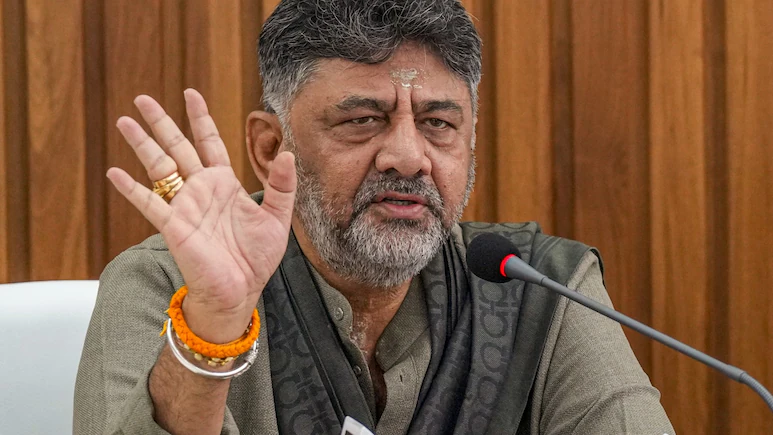
    The Congress won just one of the 28 Legislative Council seats for which elections were held in four states, but Karnataka’s results began “trending” on social media and national television channels because Chief Minister DK Shivakumar had insisted on, and got, the state election body to adopt ballot papers in place of EVMs to highlight his party’s “vote chori” campaign.

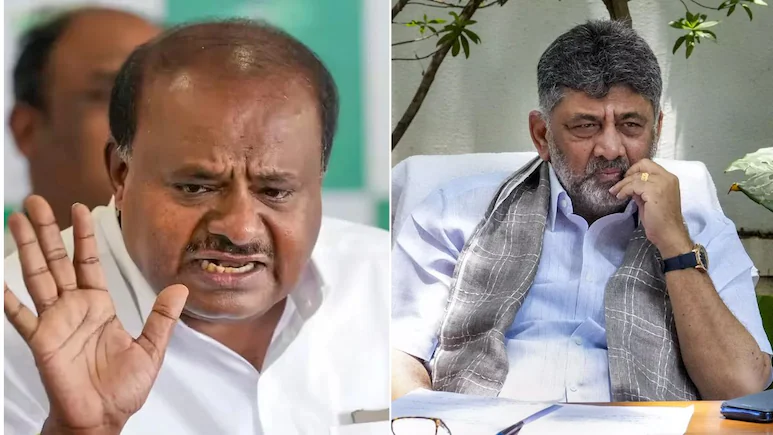
    A hugely disappointed Shivakumar admitted, “We did not expect these results,” adding, “We accept the people’s decision. There are lessons to learn. We will find out what went wrong.” But the two stalwarts of the JD(S) and BJP, HD Kumaraswamy and BS Yediyurappa, were ecstatic. While Kumaraswamy said, “It is the people’s befitting reply to the misrule of the Congress-led government in Karnataka,” Yediyurappa thundered, “In all upcoming elections, we will fight them together. We will do all it takes to oust this corrupt government.”

    Shivakumar’s multiple headaches

    Shivakumar, who replaced Siddaramaiah as Karnataka Chief Minister on June 3 in none-too-happy circumstances, has found the going tough on multiple fronts. Even four months after taking charge, he has neither been able to complete the cabinet formation exercise nor get a firm grip on the administration. The worst drought in over five decades has left the water reservoirs in a precarious state, leading to poor cultivation and farmers in distress, besides low energy levels that threaten to disrupt power supply and economic activities. The state is also faced with constant directions from the Supreme Court to release Cauvery water to neighbouring Tamil Nadu “as per the tribunal’s award.”

    Politically, too, Shivakumar is mired in trouble as a rift has developed between him and Siddaramaiah over a mysterious “sting operation” involving the latter. While opposition leaders have been gleefully accusing Shivakumar of having “instigated” the sting operation allegedly involving a woman and targeting Siddaramaiah to keep him in check, Siddaramaiah’s minister-son, Dr Yatindra, has sought an impartial investigation into the “involvement of any Congress party functionaries” in the alleged scam.

    Siddaramaiah, who has been invited to participate in the INDI Alliance’s mega protest rally in New Delhi on Sunday against the Election Commission of India’s “flawed SIR exercise across the country” and to demand the resignation of CEC Gyanesh Kumar, has said that he has sought an appointment with Rahul Gandhi on November 2 to “explain” his position on the allegations made against him. Sources close to him say that he would also express his misgivings to Rahul about Shivakumar’s possible role.

    Season of worries for Congress

    Considering that it was the joint effort of Siddaramaiah and Shivakumar that led to the Congress winning a handsome majority of 136 seats during the 2023 Assembly polls, the growing trust deficit between the two top leaders spells greater worry for the Congress after the “MLC poll debacle”. It is important to note that, though the voting numbers were small compared to those in Assembly constituencies, the four teachers’ and graduates’ MLC seats were spread over 19 districts and 133 Assembly constituencies, including the capital city of Bengaluru – a fairly representative sample of the entire state.

    In 2023, apart from riding on its vigorous campaign against the “corruption and misrule” of the then BJP government led by Basavaraj Bommai, the Congress benefited from a three-way split in votes among the BJP, Congress and JD(S). The BJP and JD(S) joined hands in the Lok Sabha polls held a year later, in 2024, and reaped rich dividends, winning 17 and two seats, respectively, while the Congress had to be satisfied with just nine seats. Significantly, the combined vote share of the BJP and JD(S) had surged to 51.66%, compared with 45.43% for the Congress.

    There are more electoral tests in the offing in the near future, as the much-delayed elections to the enlarged Greater Bengaluru Authority (GBA) are scheduled to be held in December, to be followed by state-wide elections to the district, taluk and gram panchayats, as well as local municipal bodies, in March.

    Scandals rock Shivakumar

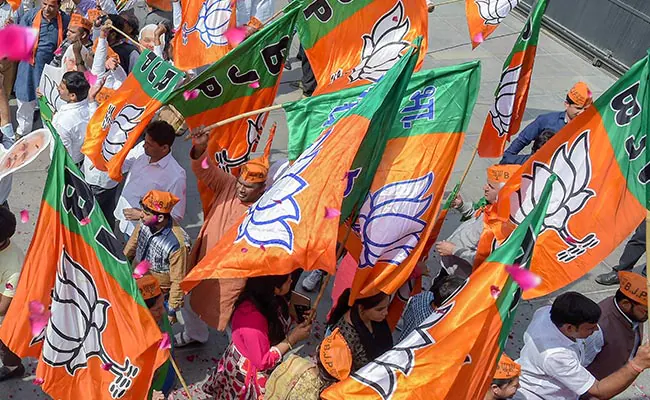
    While the BJP is in a resurgent mood after an impressive response to its 10-day “Ballari Chalo” padayatra, led by its state president, BY Vijayendra, against the KPSC exams scandal and the Rs 187-crore Valmiki ST Development Corporation scandal in September in northern Karnataka, the JD(S), under Kumaraswamy, is also going hammer and tongs, accusing the Shivakumar government of grabbing farmers’ lands in Bidadi and Kanakapura in the name of development projects. He recently released documents claiming that Shivakumar had “acquired” 300 acres of prime land from Ashok Keni, the controversial promoter of the failed Bengaluru-Mysuru highway project, and registered them in his daughter Aishwarya’s name. Shivakumar, commenting later, defended the deal, saying, “My daughter is also a businesswoman. Can she not do business?”

    It appears that the corruption allegations against the BJP that unseated its government in the 2023 Assembly polls are coming full circle to haunt the Shivakumar government well ahead of the Assembly elections, which are less than two years away.
  • Dalit Vote In Uttar Pradesh: From BSP Monopoly To A Three-Way Fight

    Dalit Vote In Uttar Pradesh: From BSP Monopoly To A Three-Way Fight

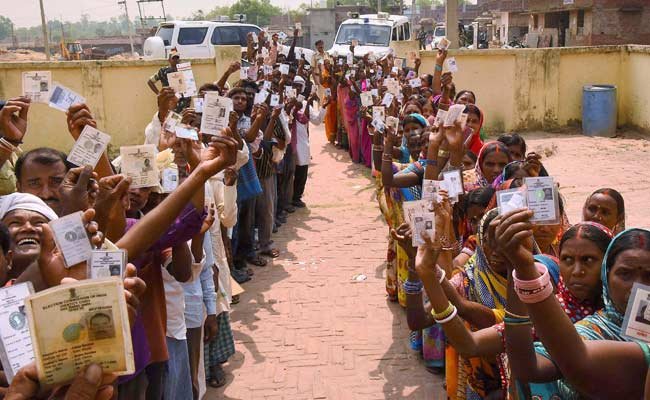
    As the 2027 election approaches, Dalits, who make up about one in five voters, could decide who governs India’s most populous state. Uttar Pradesh’s politics has long run on caste arithmetic, and no bloc has been more consequential or more contested in recent years than the Dalits. Scheduled Castes (SCs) account for about 21% of the state’s population. For decades, they were seen as the private preserve of Mayawati’s Bahujan Samaj Party (BSP). That is no longer true. Ahead of the 2027 assembly election, the BJP, the Samajwadi Party (SP)-Congress alliance, and newer outfits like Azad Samaj Party are all courting Dalit voters, and their outcome could shape the next government.
    A vote that reaches far

    The Dalit population is not evenly spread. Kaushambi, Sitapur, Hardoi, Rae Bareli, and Unnao districts each have SC populations above 30%. At the other end, Shamli, Baghpat, Moradabad, Bareilly, and Balrampur districts sit between 11% and 13%.

    Eight assembly seats have an SC population above 40%, while 144 seats have less than 10%. It matters most in the 122 seats where SCs make up 20-30% of the population. Across 148 of the state’s 403 seats, the Dalit share exceeds the state average, and these are the seats where the community can most influence the result.

    Two communities, not one

    The Dalit electorate is not monolithic. Jatavs, about 12% of voters, are the BSP’s traditional core. Non-Jatav SCs, about 9%, are a more fragmented group, and the BSP was never as dominant among them. Its support there ran between 44% and 54% through 2017. Jatavs stayed loyal for two decades. BSP support in the community ranged from 60% to 87%, and it held firm even in 2022, when the party won a single seat. The break came only in 2024, when the BSP’s Jatav share fell to 44%.

    Non-Jatavs moved first

    The non-Jatavs left first. The BJP’s share among them jumped from 7% to 33% in 2017, a gain of 26 points, and reached 40% in 2022. This “non-Jatav SC consolidation” was central to the party’s 2017 sweep. The BJP exploited the differences between the two Dalit groups and built a coalition of upper castes, non-Yadav OBCs, and non-Jatav SCs that accounted for roughly 60% of the population.

    Meanwhile, the BSP’s non-Jatav support fell to 27% in 2022 and 15% in 2024. The BJP’s Jatav numbers stayed in single digits until 2017, then rose to 20% in 2022 and 24% in 2024.

    2024: the reversal

    The 2024 general election broke the pattern. Non-Jatav SC support for the SP and its ally, the Congress, together constituents of the “INDIA bloc”, rose from 23% in 2022 to 56%. The BJP’s share among non-Jatavs dropped from 40% to 29%. The presence of the Congress in the alliance helped, as did the campaign warning that the Constitution and reservations were in danger.

    Jatavs moved too. Their support for the SP+ nearly tripled from 9% to 25%, matching the BJP among the community for the first time. The BSP’s lost votes did not go to one place. Non-Jatavs went mostly to the SP+, while Jatavs split between the SP+ and the BJP. The loss of the non-Jatav bloc cost the BJP a crucial 9% support gained by the SP+. Projected onto assembly segments, the SP+ led in about 225 seats and the BJP+ in 174, against a simple majority mark of 202 largely on account of this movement.

    The seat-level story

    The shifts show up clearly in the 148 seats with above-average Dalit populations:

    • 2012: The SP dominated with 91 seats, the BSP had 34 and the BJP just 8.
    • 2017: The BJP won 118 of the 148, and the SP fell to 14.
    • 2022: The BJP held 93, the SP recovered to 43 and the BSP won none.
    • 2024 (assembly segments): The SP+ led in about 94 segments, a gain of 51, while the BJP led in 44, a loss of 49.

    The BSP has gone from 34 seats in these constituencies to zero. Even where its base is most concentrated, it is no longer the force it was, and it may not even play spoiler.

    A weakened Mayawati, a growing challenger

    The BSP’s decline has hurt the party’s standing beyond arithmetic. Mayawati is seen as less active and less forceful than in her prime, and the “B-team of the BJP” label has stuck to her, feeding the perception that the BSP splits opposition votes to the ruling party’s benefit.

    New players are trying to fill the space. Chandrashekhar Azad “Ravan” of the Azad Samaj Party (ASP) is gaining some traction among Dalit youth, having won the Nagina Lok Sabha seat, though his party’s reach is still limited.

    Aakash Anand, Mayawati’s nephew, who was reappointed as national coordinator on October 5, just 25 days after being expelled on September 10, is trying to revive the BSP vote base.

    The parties’ strategies

    Each major party is tailoring its pitch.

    The SP is planning to field SC candidates even in general, unreserved seats. The tactic worked in 2024, when the party won Faizabad (Ayodhya) with a Dalit candidate. It is also reportedly adopting blue, the colour associated with Dalit identity and Ambedkarite politics, for the dress of its student wing, the Samajwadi Chhatra Sabha.

    The BJP faces a more delicate task. It hopes to win back non-Jatavs through welfare schemes and to attract Jatavs through political representation. Having built its rise on non-Jatav support, it cannot afford to lose that base for good.

    The BSP is attempting to revive its SC votebank through Aakash, who is decently popular amongst youth and is Mayawati’s counter to Ravan. He addressed his first post-reinstatement public rally in Bulandshahr on October 28, pledging his loyalty to Mayawati and urging workers to prepare for the elections.

    Who benefits from the BSP’s fall?

    The BSP’s decline has so far helped the SP more than the BJP, in both 2022 and 2024. That matters for 2027. If the remaining Jatav loyalists drift toward the SP+, the BJP’s prospects could be dented further. Every party is thus eyeing the Jatav bloc, the last large piece of the old BSP base still up for grabs.

    The road to 2027

    The Dalit vote in Uttar Pradesh has moved from a BSP monopoly to a genuine three-way contest. Non-Jatavs are the swing group. They powered the BJP’s gains in 2017 and 2022 and the SP+’s lead in 2024. The question for 2027 is whether the SP+ can hold on to its non-Jatav gains while continuing to draw Jatavs, or whether the BJP can win them back. It’s also important to see whether BSP holds onto its last support base of Jatavs and gets back a slice of non-Jatav votes. With Dalits potentially deciding the outcome in more than a third of the state’s seats, the answer may determine who governs Lucknow.

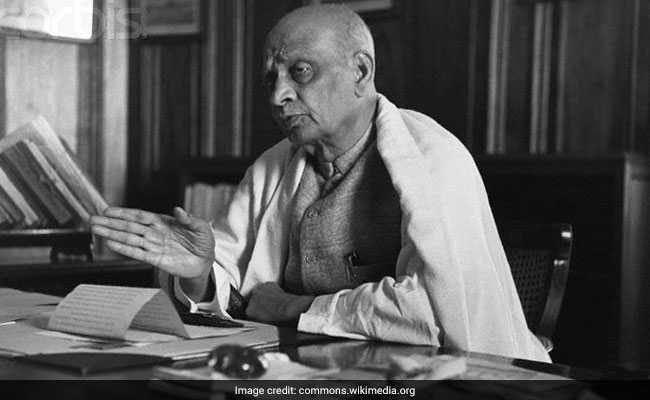
  • Sardar Patel, And The Art Of Holding A Nation Together

    Sardar Patel, And The Art Of Holding A Nation Together

    When the legendary jurist Nani Palkhivala delivered the 1992 All-India Radio Patel Memorial Lecture, he made a comparison that cuts straight to the core of modern Indian history: questioning the enduring relevance of Sardar Vallabhbhai Patel to India, he said, is like questioning the relevance of the sun to the solar system. You cannot conceive of a solar system without the sun, and you cannot conceive of modern, unified India without the Iron Man. As the nation marks the 151st birthday of Sardar Patel today (October 31), there can be no more appropriate tribute.

    While history often celebrates the visionary idealism of Jawaharlal Nehru and the moral leadership of Mahatma Gandhi, it was Vallabhbhai Patel who possessed the administrative genius, unwavering resolve, and pragmatic courage required to build a functioning, sovereign state out of a fractured subcontinent. Exploring the central pillars of Patel’s legacy reveals why his leadership remains the bedrock of Indian statehood.

    The Making Of The ‘Indian Union’

    In August 1947, as the British departed, India faced an existential threat far greater than the challenges faced by any other newly-free nation. The subcontinent was fragmented into British India and over 550 princely states, covering two-thirds of the newly-independent nation’s geographical area. Some sovereign rulers harboured ambitions of independence, threatening to turn the country into a chaotic chessboard of warring territories. Sardar Patel, serving as India’s first Home Minister and Minister of States, accomplished a political feat unprecedented in human history. Through a masterclass in domestic diplomacy, combining patriotic appeals, patient negotiation, and the firm threat of force (he was noted for his “iron fist in a velvet glove”), Patel integrated 554 princely states into the Indian Union within months. International observers noted that Sardar Patel’s unification of India rivalled and likely surpassed Otto von Bismarck’s unification of Germany or Mazzini’s of Italy. Soviet leader Nikita Khrushchev later expressed astonishment that India had managed to liquidate the princely states without liquidating the princes themselves.

    Patel recognised that territorial integration meant little without a strong administrative apparatus to hold the nation together. While many nationalist leaders viewed the British-era Indian Civil Service (ICS) with hostility as an instrument of colonial repression, Patel understood its operational necessity. He conceived and built the modern Indian Administrative Service (IAS) and Indian Police Service (IPS) on the ICS model. Patel famously referred to the permanent civil services as the “steel frame” of India, institutions that would preserve rule of law, administrative continuity, and national stability regardless of political shifts. Crucially, Patel governed his officers with trust and respect. He shielded bureaucrats who acted in good faith from political interference, establishing a precedent that administrative integrity must never be sacrificed at the altar of political convenience.

    Patel’s political philosophy was rooted in firm, uncompromising pragmatism. He was deeply devoted to national unity and fiercely opposed to religious extremism of any kind. When communal tensions ran high during Partition, Patel took decisive action: he banned the Rashtriya Swayamsevak Sangh (RSS) following Gandhiji’s assassination to curb fanatical violence, while simultaneously protecting law-abiding citizens across communities.

    The Partition Days

    As Home Minister, Patel dealt with the communal disturbances that accompanied Partition firmly and even-handedly. Concerned that the local security forces might be inflamed by the prevailing communal passions, he transferred army units from Poona and Madras to restore order in Delhi. When violence and rioting still broke out against the Muslims in Delhi in 1947, Patel immediately and effectively moved to ensure their protection, herding 10,000 in the most vulnerable areas to the security of the Red Fort. Patel also made it a point to send a reassuring signal to the Muslim community by attending prayers at the famous Nizamuddin Dargah to convey a clear message that Muslims and their faith belonged unquestionably on the soil of India. Patel went to the border town of Amritsar, where there were attacks on Muslims fleeing to the new Islamic state of Pakistan, and pleaded with Hindu and Sikh mobs to stop victimizing Muslim refugees. In each of these cases, Patel succeeded – and there are literally tens of thousands of people who are alive today because of his interventions.

    Patel firmly rejected all forms of religious and regional separatism. When factions advocated for sectarian states or separate electorates, Patel warned that dividing the nation along communal lines would transform India into a “Pagalistan”, a land of lunatics. Similarly, he strongly opposed the creation of linguistic states during his lifetime, warning that regional chauvinism would erode the shared identity of being, above all else, Indians.

    Economics For The People

    In economic matters, Patel stood out among his contemporaries for his grounded realism. While the prevailing ideological current leaned toward European-style state socialism and sweeping nationalisation, Patel advocated for productivity and wealth creation first. He famously remarked to a socialist leader seeking the immediate redistribution of wealth that if a tycoon’s fortune were split among India’s entire population, each citizen would receive just a few coins, an empty gesture that would solve nothing. Patel argued: “The maxim should be: produce and then distribute equitably”. Patel understood that state control without capacity breeds inefficiency: “how are we to run nationalised industries”, he asked presciently, “if we cannot run our ordinary administration?”. To protect labour rights while safeguarding industrial output, he helped establish the Indian National Trade Union Congress (INTUC), channelling union power into constructive negotiation rather than economically destructive strikes.

    For Patel, a government’s moral authority rested on its trustworthiness. He believed that a sovereign state must honour its solemn promises. When negotiating the accession of the princely states, he guaranteed privy purses under Article 291 of the Constitution and assured service pensions under Article 314. During the Constituent Assembly debates, Patel passionately defended these guarantees against politicians who wanted to renege on promises once power was consolidated: “Learn to stand upon your plighted word… Have morals no place in a new parliament? Is that how we are going to begin our new freedom?” Though subsequent governments deleted these constitutional articles decades after his death, Patel’s defence of legal ethics remains a timeless reminder that constitutionalism demands honour and good faith.

    Perhaps the rarest trait Patel possessed was his willingness to tell the public hard truths. He refused to flatter the masses or trade in populist promises. In the final months of his life in 1950, Patel expressed deep disillusionment with the moral decline entering Indian politics, warning that internal jealousy, power-hunting, and factionalism posed a greater threat to India than any external enemy. A true Gandhian, he reminded his countrymen that gaining freedom from foreign rule was merely the first step; true internal Swaraj required self-discipline, social reform, the eradication of untouchability, and a shared moral commitment to the nation.

    Sardar Vallabhbhai Patel was that rare historical figure, a revolutionary who transitioned seamlessly into a master statesman. He combined the iron willpower of an organisational commander with the emotional restraint of a true Karma Yogi. Today, as India navigates complex global challenges, Patel’s core principles – unwavering national unity, administrative excellence, economic realism, and principled governance – stand as an enduring blueprint for the republic. It is a combination that few political leaders in our land even come close to embodying.

  • US Has No ‘Election Commission’. Trump Is Testing What That Can Mean

    US Has No ‘Election Commission’. Trump Is Testing What That Can Mean

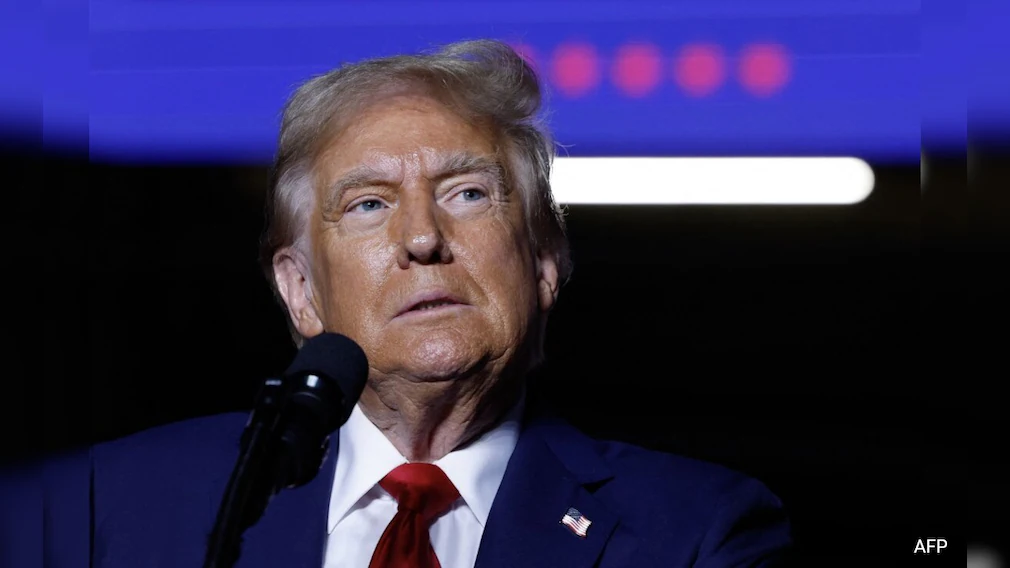
    On October 23, a federal court ruled that President Trump broke the law by taking control of California’s National Guard, despite Governor Gavin Newsom’s objections. As the midterm elections on November 3 approach, the ongoing conflict between the two has escalated towards Voting Day. “I expect the worst with Trump because he’s done the worst,” Newsom said in May. He attacked the President as he signed the first of several laws aimed at keeping the federal government out of California’s elections. This dispute is part of a larger battle: the Trump administration has tried to change voting rules, with Republican-led states mostly supporting these moves and Democratic-led states opposing them.

    How America Runs Its Elections

    India has a single Election Commission that oversees all elections, prepares voter lists, and announces results. In contrast, the United States does not have a central election authority that centrally undertakes these critical functions. Each of the 50 states sets its own election laws, even for Congressional elections. States decide who can register, what identification is needed, how postal ballots are counted, and how voting districts (electoral constituencies) are formed. In India, a Delimitation Commission sets constituency boundaries, but in most American states, the party in control of the state assembly draws them.

    The party that controls a state also controls its voting rules, and there is no national authority to ensure uniform rules. On November 3, Americans will essentially vote in fifty different elections, each with its own set of rules.

    When Trump Praised India

    The first move was an executive order in March 2025. Its aims: require voters to prove their citizenship with a passport or birth certificate when registering; stop states from counting postal ballots that arrive after election day; and permit the federal government more access to state voter lists. Trump’s order praised India, saying, “India and Brazil are tying voter identification to a biometric database”, while Americans only declare their citizenship. Federal judges struck down most of the order, ruling that the President cannot change rules that belong to Congress and the states.

    The second step demanded every state’s full electoral roll, including voters’ private details, so the Justice Department could check it against federal records for non-citizens. Indian readers will recognise the idea from the Special Intensive Revision of electoral rolls. Some states complied, while roughly two dozen refused and were taken to court.

    Washington has also tried to change how electoral districts are formed. Usually, American states redraw district boundaries every ten years after the census. But in 2025, Mr Trump urged Texas Republicans to redraw their districts early to gain five more seats in the House of Representatives.

    Federal investigators have also stepped in. Earlier this year, the FBI seized the 2020 ballots from Fulton County, Georgia, the county at the centre of Mr Trump’s claim that the 2020 election was stolen, and the responsible election staff have come under pressure. And in July, the administration linked certain federal security grants to conditions requiring states to verify voters’ citizenship.

    How Republican States Joined In

    Texas, Alabama, and Mississippi are among the states that agreed to share their voter lists with the Justice Department. South Dakota and Utah now require documentary proof of citizenship to register for state elections. The biggest change, however, comes from redrawing constituencies. Florida, Ohio, North Carolina, Tennessee, and Louisiana followed Texas, and by Ballotpedia’s estimate, the new boundaries give Republicans a net advantage of about nine seats before polling day.

    Why A Voter ID Is Contested In America

    For most Indians, asking voters to prove their identity seems reasonable. Every Indian voter has an Election Commission identity card, and almost everyone has Aadhaar. So why do many Americans see these as checks stopping people from voting?

    The first reason is who carries the burden. In India, the state does the work: booth-level officers go from house to house to enrol voters, and the voter identity card is issued free. America has no national identity card and no document like Aadhaar. Registering is the voter’s responsibility. Proving citizenship means producing a passport costing over $160, or a birth certificate ordered from the state of one’s birth. A woman who took her husband’s surname often holds a birth certificate in a name that no longer matches her other papers. A 2023 Brennan Centre survey found that about 2.13 crore voting-age citizens, more than 9 per cent, lack ready access to such documents, and citizens of colour are more likely to lack them.

    The second reason is history. For almost a hundred years after the Civil War, southern states used literacy tests and poll taxes to stop Black citizens from voting, until the Voting Rights Act of 1965 banned these practices. Any new obstacle to voting is seen in light of that history.

    The third reason is evidence. Voting by non-citizens is a crime and is very rare. A 2024 Georgia audit found 20 non-citizens among 82 lakh registered voters. When Kansas required proof of citizenship from 2013 to 2018, it blocked more than 31,000 eligible citizens. The state could show only 39 non-citizens registered over the previous 13 years, and federal courts struck the law down.

    The fourth reason is politics. Citizens least likely to hold these papers, the poor, the young, and minorities, lean Democratic, so Democrats see a partisan agenda. Republicans respond that the rules protect the integrity of the vote. And polls show that large majorities of Americans support photo identification at polling booths.

    How Democratic States Have Pushed Back

    California has gone furthest in opposing these measures. A law signed in May prevents anyone, including federal agents, from accessing voter lists or voting machines without a court order. In September, Mr Newsom signed two more. The first made it a felony to seize ballots, election records, or voting machines before results are certified. The other mandated local officials to alert the state within a day of any warrant for election records, so that it can be challenged in court.

    The seizure law came after a February case in which Riverside County Republican sheriff Chad Bianco seized about 6.5 lakh ballots, citing claims of irregularities. The election officials called it unfounded, and in September, the California Supreme Court unanimously ruled the seizure unlawful and ordered the ballots returned.

    California also responded to Texas through a referendum. In November 2025, its voters approved new constituency boundaries, known as Proposition 50, which are expected to give the Democrats five more seats. Elsewhere, Democratic states have relied on the courts and so far, won their battles over voter lists. In Michigan, a judge appointed by Mr Trump himself ruled that no federal law required the state to share its lists.

    What It Means For Voters

    Now, an American’s experience of the same election depends on where she lives. A first-time voter in Utah must show a birth certificate or passport to register for state elections. At the same time, a voter in California is protected by a law that makes seizing her ballot a felony. Control of the next House could depend on districts redrawn by a few state assemblies. For Mr Newsom, who leaves office in January and has said he may run for president, this fight has made him the main Democratic voice against Mr Trump on election issues.

    In India, these kinds of disputes can be decided by the Election Commission centrally for the entire country. In America, they are being decided state by state and court by court, a process that is likely to be mired in confusion, controversy, and condemnation.

  • Why Saudi Arabia Can’t Control Houthis, Despite Its Billions In Arms

    Why Saudi Arabia Can’t Control Houthis, Despite Its Billions In Arms

    Money and muscle cannot always compete with geography – that seems to be the message coming out of Riyadh as the Saudis grapple with the proper response to the Houthi attacks on their territory. The numerous reports filtering in reflect a diverse array of initiatives and steps the kingdom is taking. This, on one hand, may mirror a multipronged approach, or, on the other, reflect confusion.

    The report that the Saudis have offered $1 billion to the Houthis to stop the attacks they began launching since July this year on the Kingdom has made headlines. According to reports that appeared in the Israeli media, Saudi Defence Minister Prince Khalid bin Salman travelled to Tehran for talks about a possible ceasefire with the Houthis. This proposal apparently involves the transfer of $1 billion to the group through Iran. Of course, Saudi authorities have not confirmed it.

    The Mecca Pact

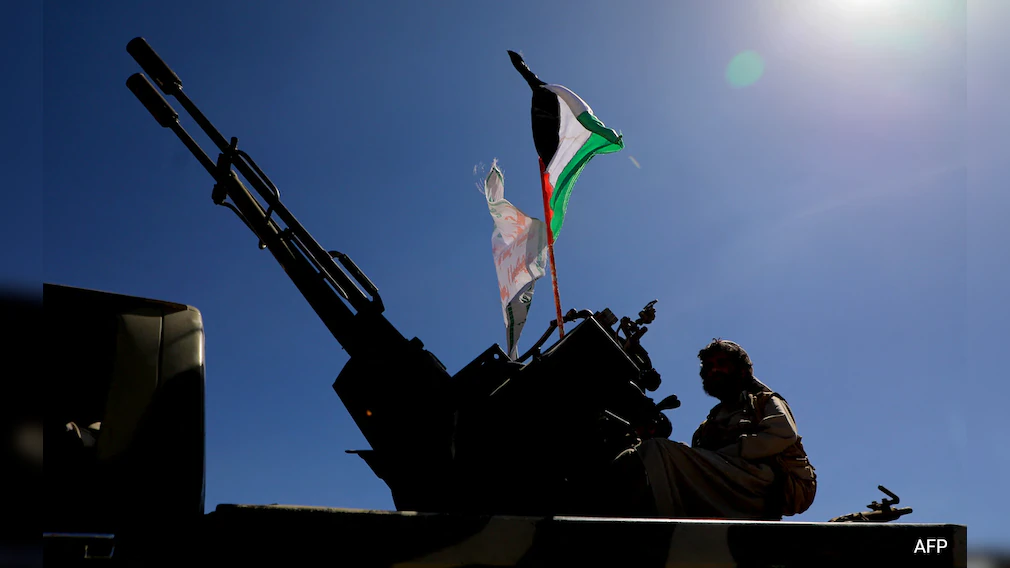
    The first step, however, in a coordinated policy to counter the Houthis came some months ago, when the Mecca Pact was signed in Islam’s holiest city, as the nomenclature reflects, between Saudi Arabia, Turkey, and Pakistan. With much fanfare on Friday, the three announced the signing of the pact. The import was not lost. Saudi Arabia, the leader of the Muslim world by virtue of being home to Islam’s two holiest sites, had just teamed up with two of the Sunni world’s most powerful militaries. Deterrence, as all three parties to the pact took pains to point out, was the agreement’s main aim. There was no doubt about whom the pact was aimed at. The Houthis have caused more damage to the Kingdom in recent times than any other group. Yet, the pact failed to deter the group, which has been almost on a rampage, striking airports, oil pipelines, and other critical infrastructure. And none of the Mecca Pact members fulfilled their obligations, as the pact still requires domestic ratification. While Pakistan has now ratified it, there is much domestic opposition to it; Turkey, on the other hand, has refused to ratify combat operations against the Houthis, which would make it a party to the war with them. And Saudi Arabia seems incapable of taking on the Houthis on its own, despite investing billions in sophisticated, western-made arms.

    In fact, this inability is not something new, and, therefore, the Saudi decision to start a fresh war with the Houthis remains something of a mystery. In 2015, when Houthi rebels overtook the Yemeni capital of Sanaa and forced the internationally recognised government to flee to the South, the Saudis, together with the UAE, intervened militarily to restore the government to power. It was a brutal intervention, killing hundreds in the already impoverished country, displacing thousands, and triggering a humanitarian crisis. But almost a decade later – by which time the UAE had withdrawn from the war – the Houthis could not be completely defeated, and a UN-brokered ceasefire took place. The fragile calm had been in place even after the US-Israel war on Iran broke out and Iran-supported “resistance ” groups such as Hezbollah and the Iraqi militias joined in. The Houthis remained aloof, though they issued periodic threats.

    But Saudi-backed attacks on aircraft carrying Houthi members returning to Yemen after attending Ayatollah Ali Khamenei’s funeral in Iran in July were one of the triggers for this round of fighting. While the Houthis have intensified the attacks, the Saudis see incapable of stopping them.

    The Undoing Of ‘Saudi Security’

    The Houthis, operating from just across the border, represent one of the most serious threats to the Saudi kingdom. They have demonstrated their ability to strike deep within Saudi territory, have the potential to close off the Bab al-Mandeb, a major chokepoint near the Red Sea and the main alternative sea lane for Saudi energy exports after the closure of the Strait of Hormuz, and have announced a blockade on Saudi shipping. They have busted the myth of Saudi security; several Indians have also lost their lives in these attacks. Security and stability are something the Kingdom needs more than ever as it works on the diversification of its economy, something that is hinged on the ambitious projects such as NEOM, which Crown Prince Mohammed bin Salman has launched. These have already been put on hold.

    Therefore, it might not be illogical for the Saudis to try a different approach to stop the attacks.

    As reports of money being offered trickled in, so did news that the Mecca Pact members were meeting Iran for discussions. Iranian Foreign Minister has on a number of occasions offered to mediate between the Saudis and the Houthis. Given that neither Pakistan nor Turkey is keen to actively enter the Saudi-Houthi war, reluctant to pick sides and to become a party to the war against the Houthis, they have also called for mediation to bring about a ceasefire, while condemning the Houthi attacks.

    The NYT Piece

    However, yet another perspective reflected in a New York Times Opinion piece written by Saudi diplomat Princess Reema bint Bandar bin Sultan in Washington DC, who called for a “coordinated international response” to the Houthis, nudging the international community to take action against the Houthis, something akin to international action against ISIS.

    This may seem to be a carrot-and-sticks policy by the Saudis. While President Donald Trump has threatened to renew military action after the midterms in the US are over and warned of similar action against the Houthis, this is still in the realm of speculation. Much of the world has displayed reluctance in becoming a party to the war. Post-election dynamics in Israel will also need to be factored in. If incumbent Prime Minister Benjamin Netanyahu is able to form the government, we may see war return to the region.

    So, it remains to be seen how the Houthis will respond to such threats. The group may use this window to intensify its attacks and force the Saudis to come to the negotiating table before the US midterms and the government formation in Israel, where they can then negotiate from a position of strength. They have nothing to lose and everything to gain. For the Houthis, the objective is no longer a ceasefire but a settlement in Yemen, where they would push for an end to Saudi backing of the Yemen government and to consolidate their hold on the country.

    On the other hand, Iran, too, would like to use Houthi leverage to negotiate with both the Saudis and the US. Voices in the Gulf have repeatedly called for a regional security architecture and settlement. This would be in the best interest of the region. But it would require Iran, too, to participate in the process. Whether it will, remains anyone’s guess.

  • Uttar Pradesh 2027: Can The BJP’s Winning Machine Deliver For A Third Time?

    Uttar Pradesh 2027: Can The BJP’s Winning Machine Deliver For A Third Time?

    The results of Uttar Pradesh’s Legislative Council polls for five graduates’ and six teachers’ seats, declared on October 29, held few shocks. Both parties finished roughly where the pre-poll chatter had placed them. The BJP kept its tally of six. The SP grew from three to five. It wrested the Lucknow graduates’ seat from the BJP, took the Agra teachers’ seat from an independent, and held both Varanasi seats in the Prime Minister’s own constituency. The BJP, in turn, captured the Gorakhpur-Faizabad teachers’ seat on the CM’s home turf.

    A Two-Horse Race?

    One thing is obvious from these polls: Uttar Pradesh is settling into a straight fight. In ten of the eleven seats, the BJP and the SP finished first and second. In the eleventh, Gorakhpur-Faizabad, an independent pushed the BJP close. The BSP and the Congress did not field candidates at all.

    The results also suggest that 2024 was no accident. When the SP-led alliance won 43 of the state’s 80 Lok Sabha seats, many in the ruling camp wrote it off as a passing storm: anxiety over the Constitution, tired candidates, a listless cadre. Two years on, the SP’s revival looks rooted.

    But one thing is obvious from MLC polls: neither BJP nor SP has a clear lead. The fight is still on.

    Plus, we should not read too much into these results: Only about 14.8 lakh people were eligible to vote, around one in a hundred of the state’s voters. They are a particular kind of voter, too: registered graduates and teachers, largely urban and salaried. No assembly forecast can be built on this. What it can show is the drift of an alert, opinion-forming slice of the electorate, and that slice leaned a little further towards the SP.

    Yogi, Still The Trump Card

    For the BJP, Chief Minister Yogi Adityanath campaigned for the party’s candidates in every one of the eleven seats, while the SP relied largely on local leaders. Nearly a decade into the job, the Chief Minister remains the BJP’s most recognisable face in the state. His pitch on law and order, welfare delivery, and Hindutva is clear, and no one inside the party comes close to challenging him.

    Combine Yogi’s appeal with the BJP’s election machinery, and we may have a winning formula. BJP seldom loses for lack of effort. No party in India fights elections quite like it: booth committees, panna pramukhs, caste equations reworked seat by seat, and a readiness to change candidates or messaging the moment the ground shifts.

    Akhilesh’s Two Questions, And Mayawati’s Silence

    The SP has earned its celebrations, but the real battle begins now. The first is the Congress. The partnership paid off in 2024, when the Congress turned its share of tickets into six seats. Now the bargaining has turned sour. Congress wants well over 150 seats. The SP is said to be weighing an offer of 60 to 70. Posters claiming 200 seats have already caused embarrassment.

    Akhilesh Yadav has to decide what the Congress really is for him. It can be an asset that helps consolidate Muslim votes, adds slivers of upper-caste and Dalit support, and lends national weight. Or it can be a drag that is adamant on fighting on seats it cannot win, as happened in Bihar. Akhilesh faces the risk of conceding too much to Congress.

    But the most crucial question for SP is: can Akhilesh really expand his PDA coalition? Will Pandits really vote for him? Can he offer enough seats to new PDA constituents to make SP overcome its Yadav-Muslim handicap? It’s a tough balancing act.

    Then there is the BSP. Mayawati says she will contest alone, has revived talk of Brahmin outreach, and has reviewed preparations across all 75 districts. But a party that won 206 seats in 2007 was reduced to one in 2022, with its vote share below 13%. Sitting out these polls fits a long pattern of absence. If she can stir even part of her Jatav base, she may hurt the SP more than the BJP. If she cannot, the two-horse race only hardens.

    Winning Is A Habit

    The assembly election is still a few months away. In Uttar Pradesh, that is a long time. Ticket distribution, a seat-sharing spat, a fresh welfare scheme, or a single event or comment can each reset the mood.

    Then, SIR is the other unknown factor this time. Will the “vote chori” campaign find resonance at the hustings? Does the SP-Congress alliance end up spending too much energy and time on an issue that may not matter much in the end? We don’t know who is likely to benefit from it: the BJP or the SP?

    Like sports, winning is a habit in politics, too. Last week, Brazil’s Lula da Silva, now 80, trailed in the first round and still won a fourth term in the run-off. In Israel, Benjamin Netanyahu’s Likud again emerged as the largest party, and his rivals cannot reach a majority without partners they have so far shunned. Established leaders backed by a disciplined organisation are hard to dislodge.

    That is the BJP’s edge in Uttar Pradesh. The SP’s task is to prove that 2024 marked the beginning of a trend rather than its high point. The council results say it has a case. They do not say it has won it.

  • Karnataka’s Sting Operation Saga – Political Rivalry Or A Battle Of Allegations?

    Karnataka’s Sting Operation Saga – Political Rivalry Or A Battle Of Allegations?

    Karnataka’s latest political controversy has all the ingredients of a political thriller – an alleged sting operation, a former Chief Minister fighting to protect his reputation, allegations of an intra-party conspiracy, an expelled Congress functionary, a serving chief minister facing questions about internal factionalism. And, then came the entry of a former chief minister from the opposition – bringing an entirely new dimension to the whole saga.

    What began as an apparent attempt to target former Karnataka chief minister Siddaramaiah has evolved into a complicated political contest involving the Congress, the JD(S), and Union Minister H D Kumaraswamy. More importantly, it has once again raised uncomfortable questions about the methods politicians in Karnataka employ to weaken opponents, settle internal scores, and gain political leverage. Sensational allegations, leaked videos, and competing narratives rather than political debate have become the order of the day.

    Also, with this diversion masterstroke, the Karnataka Congress has been able to divert attention from its own intra-party feud.

    Change In Political Narrative

    Until November 1, the principal question was whether the alleged sting operation was connected to the Congress’s own internal power struggle. The emergence of Kumaraswamy’s alleged connection has shifted attention towards the opposition and the possible political networks behind the circulation of the video.

    The political significance of the development lies in the fact that the police investigation has now brought Kumaraswamy’s political circle into the picture. Bengaluru Police Commissioner Seemant Kumar Singh recently said an accused had told investigators that a mobile phone allegedly used to upload the video was handed over to an associate at Kumaraswamy’s official residence in New Delhi.

    The police also said that this is an investigative lead, not proof of Kumaraswamy’s involvement.

    Kumaraswamy, predictably, has rejected the allegations and accused the Congress government of manipulating the investigation to divert attention from the alleged masterminds.

    His response has been to turn the spotlight back on Chief Minister D K Shivakumar, questioning his alleged role in the political developments surrounding the circulation of videos involving his nephew Prajwal Revanna.

    A purported sting, whether genuine or fabricated, can damage reputations long before the truth is established. The political consequences can be immediate, while the legal process takes months or years. The individual targeted is forced into damage control, party colleagues are compelled to take sides, and opponents gain an opportunity to exploit the resulting uncertainty.

    Karnataka has witnessed several such controversies. The 2021 video controversy involving then BJP minister Ramesh Jarkiholi resulted in his resignation. Jarkiholi subsequently accused Shivakumar of orchestrating the operation, an allegation Shivakumar denied. The parallels are difficult to ignore.

    Diversionary Tactics

    The Siddaramaiah-Shivakumar relationship has been a subject of political speculation since the Congress returned to power in Karnataka in 2023. The leadership arrangement and subsequent transition have kept questions of power-sharing, political influence, and succession alive. Siddaramaiah’s supporters have expressed concerns about his diminishing position since he relinquished the CM’s post in May 2026. While Shivakumar may have fulfilled his ambition of becoming the CM, he still has to navigate the expectations of a powerful faction within his own party.

    The sting controversy threatened to turn these differences into an open confrontation. Siddaramaiah took the matter to the Congress high command and even met Rahul Gandhi during his November 1 visit to Delhi. His demand was for a fair investigation, but the political subtext was equally significant – he wanted the national leadership to recognise the implications of what he perceived as an attempt to undermine him.

    His son and Karnataka minister Yathindra Siddaramaiah had also alleged the involvement of Congress leaders in the controversy.

    These allegations, combined with the expulsion of former Karnataka Pradesh Congress Committee general secretary Krupa Alva (for her alleged involvement in sting operations targeting Congress leaders) on October 27, had made the affair increasingly uncomfortable for the state Congress leadership. Alva was expelled for six years after reportedly failing to respond to a show-cause notice. Then came the Kumaraswamy development.

    For the moment, the focus may have shifted from the visible intra-party feud, but it is sure to haunt the Congress again soon.

    For the Congress, this is undoubtedly a more convenient political terrain. It can now argue that the controversy needs to be examined as a possible politically motivated operation rather than merely an internal party dispute. Shivakumar’s government can point to the police investigation, while Siddaramaiah’s supporters wait for the alleged conspiracy to be exposed.

    However, there is an important distinction between a change in the political narrative and a resolution of the underlying problem.

    Kumaraswamy has denied wrongdoing, the police investigation is incomplete, and the allegations against various political figures remain subject to verification. If subsequent evidence does not establish the suggested links, the Congress could find itself confronting the original questions all over again.

    There is also a danger in treating the controversy as an opportunity to settle political scores. If the investigation becomes an instrument for targeting political adversaries, its credibility will suffer irrespective of which party benefits from the immediate headlines.

    Ultimately, Karnataka’s political class needs to introspect about political competition stooping so low. Recordings, counter-recordings, anonymous disclosures, and allegations of clandestine operations is not real politics.

    Political parties need to draw a line between legitimate political scrutiny and the deliberate manufacture or circulation of damaging narratives to secure an advantage.

  • China May Be Turning Pak Into A Military Nightmare For India

    China May Be Turning Pak Into A Military Nightmare For India

    The China-Pakistan military partnership is no longer confined to arms sales or diplomatic support. It is evolving into a multi-domain strategic arrangement spanning air power, missiles, naval warfare, electronic warfare, intelligence, cyber, and space-based surveillance.

    For India, the challenge is not simply how to defend two geographical fronts, but how to confront an increasingly integrated military system. India’s security debate has often approached the China-Pakistan threat through the lens of a possible two-front war. The focus has largely been on military preparedness along the Line of Actual Control (LAC) with China and the Line of Control (LoC) with Pakistan. This geographical understanding is important, but increasingly inadequate now. What is taking shape is a strategic alignment in which China’s technological, industrial, and intelligence capabilities complement Pakistan’s geographical position, military infrastructure, and operational objectives.

    This is more vicious as Pakistan’s ability to purchase weapons has dramatically increased despite its crumbling financial state. The relationship is not merely about Beijing supplying weapons to Islamabad. It is about building military capabilities, improving interoperability, and creating the conditions for coordinated pressure on India across multiple domains.

    Supplier To Partner

    The scale of China’s military assistance to Pakistan is central to understanding this evolving threat. Beijing has steadily become Islamabad’s principal defence supplier, providing combat aircraft, submarines, frigates, tanks, artillery, missiles, radars, unmanned aerial vehicles, and air-defence systems. More significantly, the relationship increasingly involves technology transfer, joint production, maintenance support, and the development of indigenous Pakistani defence-industrial capabilities.

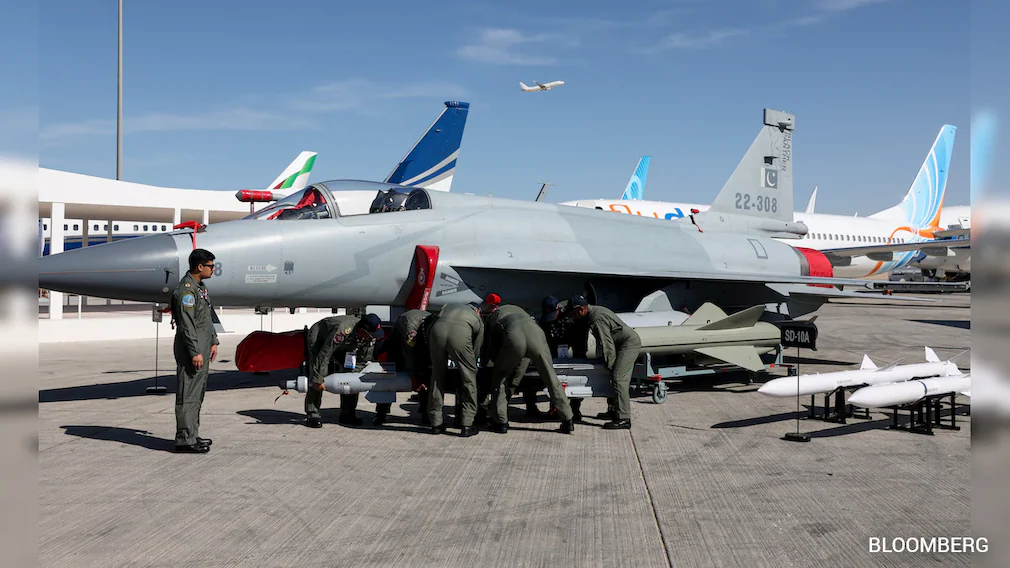
    China’s approach allows Pakistan to modernise several branches of its armed forces using a relatively common technological ecosystem, reducing dependence on multiple suppliers and improving the potential for interoperability. The JF-17 Thunder is perhaps the clearest example. Jointly developed by China and Pakistan, the fighter represents a defence-industrial partnership rather than a conventional arms transaction. Its newer Block III variant, together with China’s J-10CE fighters and long-range PL-15E air-to-air missiles, gives the Pakistan Air Force additional options in beyond-visual-range engagements. The reported interest of Oman’s Royal Air Force in the JF-17 also shows Islamabad’s ambition to turn the aircraft into an export platform.

    The next step could be even more consequential. Pakistan has publicly announced a Chinese offer involving 40 Shenyang J-35 fifth-generation stealth fighters, KJ-500 airborne early-warning and control aircraft, and HQ-19 missile-defence systems. However, an offer should not be confused with a completed acquisition or operational induction. The proposed package nevertheless indicates the direction in which Beijing is prepared to take Pakistan’s military modernisation.

    The Army Aviation Corps is also receiving attention. Pakistan inducted Chinese Z-10ME attack helicopters in August 2025. A report published by the South China Morning Post on November 2, citing an image circulated on Chinese social media, put the reported contract at 30 helicopters. These helicopters are intended to strengthen precision-strike and battlefield support capabilities.

    At sea, the eight Hangor-class submarines represent one of the most important elements of the partnership. The agreement, in 2015, estimated at $4-5 billion, provides for four submarines to be built in China and four at Karachi Shipyard under a technology-transfer arrangement. Equipped with air-independent propulsion (AIP), the boats will improve Pakistan’s underwater endurance, seeking to complicate the Indian Navy’s anti-submarine warfare calculations. The first submarine, PNS Hangor, was commissioned on April 30 in China. The wider naval relationship also includes Chinese-origin Type 054A/P frigates and other missile-equipped platforms.

    A Networked Battlefield

    Yet the most important aspect of the China-Pakistan relationship may not be the weapons themselves. It is the network connecting sensors, surveillance platforms, command systems, communications, and weapons.

    Pakistan already operates Chinese-origin ZDK-03 airborne early-warning aircraft, alongside Swedish Saab Erieye platforms. It has also acquired Chinese J-10CE fighters, HQ-9P long-range air-defence systems, and LY-80 medium-range surface-to-air missile systems. These capabilities contribute to a layered air-defence architecture, although the extent of integration and its operational effectiveness is questionable without evidence.

    The proposed acquisition of KJ-500 aircraft would represent a further upgrade of airborne surveillance. The platform is particularly relevant for its ability to coordinate fighter operations, monitor airspace, and extend surveillance beyond the limitations of ground-based radars.

    The reported appearance of Chinese SLC-14 radar installations in Pakistan in October 2026 has also attracted attention. While the identification is based on satellite imagery and visual comparisons, analysts have linked the deployment to a future HQ-19 ballistic missile-defence architecture. It would be premature to describe this as an operational missile shield, but the possibility deserves scrutiny.

    Electronic warfare adds another dimension. The ability to detect and analyse radar emissions and access to the electromagnetic spectrum is sort of an engagement before a missile is fired. China’s rapid growth in electronic warfare, combined with Pakistan’s growing inventory of Chinese-origin aircraft, radars, and missile systems, creates the potential for greater coordination in this domain.

    The same applies to unmanned systems. China’s defence industry is supplying bulk UAVs, loitering munitions, and sensors to Pakistan, integrating them into operational planning. Some of them are definitely to be assessed, as China’s desperation to look into this aspect of its military equipment is largely untested.
    The 2025 India-Pakistan confrontation brought this issue into sharper focus.

    In July 2025, India’s Deputy Army Chief, Lt Gen Rahul Singh, alleged that China had provided Pakistan with live inputs, satellite coverage, and the reorganisation of radar and air-defence systems.

    Joint Exercises

    The relationship has also expanded beyond equipment and technology into military training, joint exercises, and strategic coordination.

    The October 2026 Karakoram joint army training exercise is particularly relevant. Conducted in China’s Xinjiang region, it focused on operations in high-altitude areas and included UAVs, target acquisition, live-force exercises, and joint command activities. China’s Ministry of National Defence described it as the first joint army training of its kind between the two countries, intended to check interoperability.

    The geography of the exercise is not incidental. Joint training in high-altitude conditions provides opportunities for surveillance and battlefield coordination. The February 2025 China-Pakistan joint statement had already emphasised military technology, joint training, exercises, and space cooperation. Their May 2026 joint statement went further, calling for a China-Pakistan Security Partnership and advanced military-to-military cooperation.

    However, interoperability should not be confused with an established integrated China-Pakistan military command. There is no publicly established evidence of a permanent joint operational command structure or an automatic Chinese military commitment to fight alongside Pakistan in a conflict with India.

    Nevertheless, common equipment, training, communications standards, intelligence exchanges, and defence supply chains can lower the barriers to coordination during a crisis. That is a serious strategic consideration.

    A ‘Grey-zone’ Dimension

    Perhaps the most difficult aspect of this alignment for India is the expansion of competition into the grey zone – the space between peace and open conflict. Pakistan’s use of proxy terror networks, cross-border terrorism, and information operations has long been a major component of India’s security concerns. China, meanwhile, has demonstrated its ability to employ economic pressure, cyber capabilities, tech, and military signalling to advance its strategic interests without necessarily crossing the threshold of conventional war.

    The convergence of these approaches creates a more complicated security environment. Intelligence and counterintelligence must therefore become central elements of India’s military planning.

    What India Needs To Do

    India’s response should be based on five interconnected priorities.

    First, establish a genuine multi-domain operational architecture. The Army, Navy and Air Force must be able to share intelligence and operational information in real time. Space-based surveillance, airborne early warning, ground radars, electronic intelligence and unmanned systems should contribute to a common operational picture.

    Second, China’s advantage in the relationship with Pakistan is not simply its ability to export weapons. It can supply equipment, technology, components, upgrades and maintenance support within an interconnected industrial ecosystem. India needs a comparable degree of integration and particular attention must go to engines, advanced sensors, electronic warfare, secure communications, drones and hypersonic missile technologies.

    Third, develop an integrated intelligence and counterintelligence mechanism. The objective should be early identification of coordinated activity rather than reacting after a threat materialises.

    Fourth, strengthen India’s maritime strategy. China’s growing footprint in the Indian Ocean, coupled with Pakistan’s submarine modernisation and Chinese-origin naval platforms requires sustained maritime investment. Here, some key projects need urgent go-ahead, including P-75 (I) submarine. There is also a need to examine the financial dimension. So, the investment must be guided by operational requirements, technological advantages and the ability to impose costs on an adversary.

    Here, India must recognise that the challenge is not necessarily a simultaneous conventional war on two fronts. It is the possibility of coordinated pressure across multiple domains, with each country using its comparative advantages to complicate India’s military and strategic choices.

  • The Great AI Rift: Why Meta, Palantir Are Fighting Against OpenAI, Anthropic, Google

    The Great AI Rift: Why Meta, Palantir Are Fighting Against OpenAI, Anthropic, Google

    Silicon Valley’s sharpest quarrel this year is about who gets to hold the weights, the billions of trained numbers that make a model work. One camp rents intelligence through cloud APIs and keeps its frontier models sealed: OpenAI, Anthropic, and Google. The other wants weights published, so anyone can download a model, run it on their own servers, and change it at will.

    The line hardened on July 24, when 25 companies, among them Nvidia, Microsoft, Meta, IBM, and Palantir, signed an open letter titled “Open Weights and American AI Leadership”, urging Washington not to restrict open-weight models. Google, OpenAI, and Anthropic did not sign. Sam Altman later posted that he wanted America to win in both open and proprietary AI. The hedge was telling: OpenAI released open-weight models in 2025, alarmed by China’s progress, but keeps its best systems behind an API.

    Jensen Huang’s case blends principle with arithmetic. Every downloaded model still needs a GPU to run, and most GPUs are Nvidia’s. When Nvidia released the Nemotron 3.5 Lightning model that runs on a single GPU in August this year, he said that “Free AI should be great for chips. In March, Nvidia had assembled the Nemotron Coalition, eight labs including Mistral and Perplexity, to build frontier-grade open models. At CES in January, Huang claimed that 80% of startups build on open models.

    Mark Zuckerberg’s path has been more erratic. Meta built developer goodwill on Llama, then debuted Muse Spark in April as a closed flagship. On August 10, it swung back, releasing the 30-billion-parameter open-weight Muse Glimmer and promising Spark’s weights too. His accompanying 6,500-word essay argued that concentrating AI in a few companies is itself a danger, and cast OpenAI and Anthropic as the foils.

    Neither man is a pure idealist. Nvidia sells the hardware open models run on. Meta earns from advertising, not from selling model access, so giving weights away costs it little and undercuts rivals who do charge.

    The closed labs’ case is not frivolous. Altman put the core problem plainly in 2025: once weights are out, they cannot be pulled back. Neither can the safety guardrails a downloader strips away. A closed model can be patched, monitored, and switched off; an open one, once copied, cannot.

    Geopolitics sharpens the worry. Washington fears that Chinese labs distil expensive American closed models into cheap open ones. Chinese open models from DeepSeek, Alibaba, and Moonshot have grown fastest in adoption, and Moonshot’s Kimi K3 helped push Huang into the policy fight this summer. Notably, the White House’s new framework for pre-release review of advanced models reportedly covers only the most powerful closed systems.

    There is the commerce angle, too. Closed labs sell access to their models; publishing weights would give away the product. Their frontier models still lead on the hardest reasoning and agentic tasks, and that lead is what customers pay for.

    The schism is reshaping how AI gets built. The capability gap that once settled the debate has narrowed sharply: by one widely cited estimate, the best open models now trail the closed frontier by about four months, and cost roughly a third as much per unit of capability. Yet enterprise use of open models has reportedly fallen, as large companies pay a premium for managed services, support, and the very best performance.

    The result is a two-tier economy. Startups and researchers build on open weights because they can inspect, fine-tune, and run them cheaply; open models featured in 44% of single-model-family research papers this year, according to one August study. Large enterprises increasingly do both, routing routine, high-volume work to cheap open models and sending only the hardest tasks to a closed API.

    That hybrid pattern is the quiet winner. It also means developers’ loyalties are fluid, which is why both camps are fighting so hard to set the defaults now.
    For the global community of users, the stakes go well beyond Silicon Valley’s balance sheets. Open weights lower the price of entry. A hospital, a small business, or a government outside America can run a capable model on its own hardware, keep sensitive data at home, and adapt the model to local languages and laws. Countries without frontier labs gain a way to build rather than merely rent.

    Openness also spreads scrutiny. Independent researchers can probe open models for bias and flaws in ways closed systems do not allow. When Hugging Face was hacked this year, it reportedly had to defend itself with a Chinese open model because closed models’ guardrails blocked the security work.

    The costs are real, too. The same freedom lets bad actors remove safeguards, and no one can recall a harmful model once it spreads. Users also face a geopolitical choice: if American policy restricts open weights, much of the world may default to Chinese models, along with whatever values and censorship they carry.

    The open-versus-closed fight will not end in a knockout. Closed labs will keep the frontier for as long as they can afford to; open models will keep closing the gap a few months behind. The real question is who sets the rules in between: whether governments treat weights as dangerous exports or as shared infrastructure. Huang and Zuckerberg are betting on openness partly for profit, and the closed labs are guarding their models partly for the same reason. For the world’s users, the healthiest outcome is a market where both survive, and no single company or country holds all the keys.

  • Israel’s Arab Parties Have Never Had This Much Power. And Netanyahu Isn’t Liking It

    Israel’s Arab Parties Have Never Had This Much Power. And Netanyahu Isn’t Liking It

    In the just-concluded historic Israeli Knesset elections, allegations of ‘vote theft’ against Israeli Arab parties and interference by foreign countries are growing louder, even though the evidence is thin.
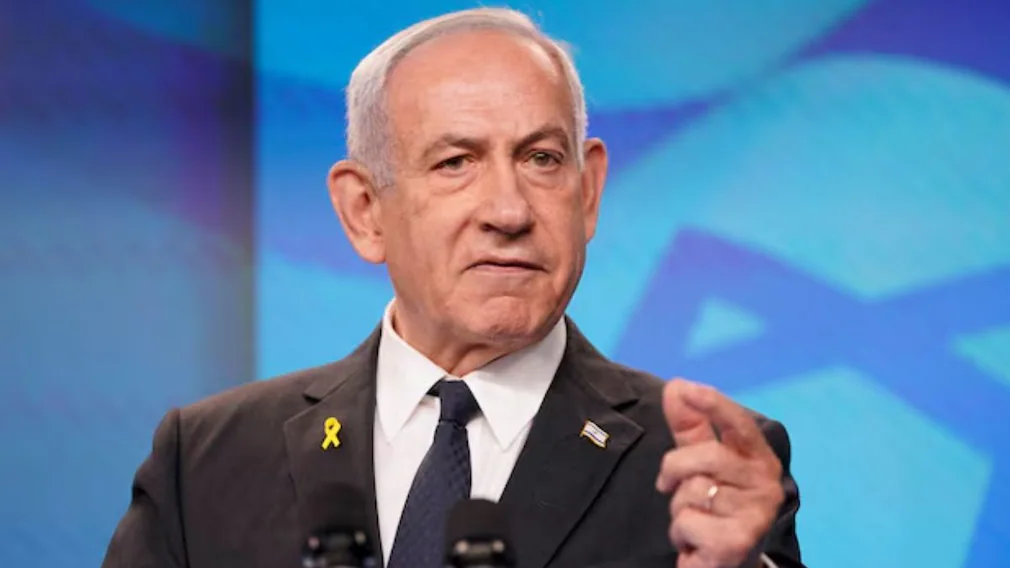
    Israel’s two main Arab-led political groups registered an unprecedented victory in the elections with 19 seats between them, thus nearly doubling their combined tally from the 2022 elections. They are now being seen as potential kingmakers. With their support, either of the two main political blocs could potentially form the next government. But will Israel’s political establishment let them wield power? The reluctance of both major political camps to work with them reveals a deeper contradiction in Israeli democracy.

    First, let’s see what the allegations are: 1)PM Benjamin Netanyahu and his Likud Party’s claims that the election was stolen and that Arab parties should consequently be excluded from government formation; 2) they alleged that Arab parties benefited from illegal foreign funding and 3) Arab Party leaders should be arrested

    So, instead of focusing on how to accommodate this new parliamentary reality, the political debate in Israel shifted towards questioning the legitimacy of the Arab-led parties’ electoral success.

    The ‘Foreign Funds’ Allegations

    The election committee has denied the allegations, saying it found no evidence of vote theft or foreign funding. Now, Israel’s security agencies have stepped in by launching an investigation. But despite Benjamin Netanyahu amplifying the vote theft theory, the scope of the investigation only includes allegations of foreign funding. The Shin Bet and Mossad opened the inquiry after Central Elections Committee chairman, Supreme Court Justice Noam Sohlberg, asked it to examine allegations of improper influence by foreign entities. Qatar is a central focus of the suspicion, and it has outrightly rejected the allegations.

    The separate police case involving three Ra’am activists arrested on suspicion of election bribery is unconnected to the wider foreign-interference investigation, with investigators finding no evidence of a vote-buying scheme, let alone proof that the election was stolen. They have subsequently been released and put under house arrest

    So, it may be disappointing for Mr Netanyahu that the foreign funding will only examine if foreign funds influenced the mobilisation of voters, not the voting itself. It must be made clear here that no public evidence has established that any foreign government succeeded in changing votes or the election outcome. The election committee and security agencies have clearly indicated that the investigation will not affect the certified declared results, which are due to be presented to President Isaac Herzog on November 4.

    The harsh reality appears to be that Israel’s Arab citizens (just over 20% of the population) have delivered their strongest electoral performance in history. Winning 19 seats in the 120-member Knesset has catapulted them to a position where they could decide the fate of Mr Netanyahu. Former military chief Gadi Eisenkot could become the next Israeli Prime Minister if he reverses his pre-election decision not to form a government with the help of the Arab-led parties.

    A quick reminder of the tally: the final result released by the Central Elections Committee on Friday gives Netanyahu’s bloc 53 seats, against 48 for the opposition. The Arab-led Joint List has secured 11 seats and the United Arab List, known as Ra’am, eight. Neither of the two main camps is anywhere close to the 61 seats required for a parliamentary majority.

    The Four Scenarios

    The Arab parties, which faced unsuccessful attempts to be banned from taking part in the elections, now hold the key to the formation of Israel’s next government. Netanyahu’s bloc is eight seats short of a majority, while the opposition needs 13 more. The first possibility is an opposition government led by Gadi Eisenkot, with the Joint List and Ra’am providing parliamentary support from outside the coalition. In return, they would seek commitments on housing, infrastructure, public security, and other issues affecting Arab communities. A second possibility is a narrower arrangement with Mansour Abbas’s Ra’am, which has previously joined a Jewish-led coalition. Its more pragmatic approach could make it a relatively easy partner, although Eisenkot and Naftali Bennett have resisted formally including Arab parties in their government.

    A third possibility is a political deadlock, forcing another election if neither bloc can secure the 61 seats needed for a majority. This is highly undesirable for all parties concerned, as well as for Israel’s economy, which is reeling from wars on various fronts. A fourth, less discussed scenario is Netanyahu dropping his far-right partners, particularly Itamar Ben-Gvir and Bezalel Smotrich, and attempting to form a broader coalition with centrist and moderate right-wing parties, potentially with Ra’am’s support. This would require additional parliamentary partners and mark a major political reversal for Netanyahu, who has repeatedly opposed Arab parties influencing government formation. Even if they remain outside the government, Arab lawmakers could still play a kingmaking role by influencing the election of the Knesset speaker, parliamentary committees, and legislation. Ultimately, the question is whether Israel’s political establishment is prepared to turn its unprecedented electoral strength into meaningful political power.

    What Arab Parties Stand For

    Israel’s Arab citizens, who make up over 20% of the population, are largely descendants of Palestinians who remained within Israel after its establishment in 1948 and the mass displacement that followed the war. Unlike Palestinians living under Israeli occupation in the West Bank and Gaza, Israeli Arabs hold Israeli citizenship, can vote and contest elections, and have representatives in the Knesset. They are mostly Muslims, but have substantial numbers of Christians and Druze.

    The 19 seats won by Arab parties are divided between two distinct political groups with different visions. The Joint List, with 11 seats, brings together Hadash, Ta’al and Balad. Hadash supports social equality, Palestinian rights and Jewish-Arab cooperation, and includes both Jewish and Arab members. Ta’al, led by Ahmad Tibi, takes a more pragmatic approach to parliamentary politics. Balad has a stronger Palestinian nationalist identity and wants Israel to become a state of all its citizens. The other group, Ra’am, led by Mansour Abbas, has an Islamist identity but follows a more pragmatic approach, focusing on housing, infrastructure, public security and better services for Arab communities. Unlike the Joint List’s more nationalist elements, Ra’am has shown a willingness to work with Jewish parties, including those on the right, if it can secure concrete benefits for its voters.

    Israel is officially both a Jewish state and a democracy, a contradiction that is central to its identity, and non-negotiable. Many Arab parties whose members are native citizens of Israel argue that if the country is democratic, it should be a state where all citizens enjoy equal status, regardless of religion or ethnicity. Of course this challenges the very idea of Israel as the homeland of the Jewish people. The October 7, 2023, Hamas attack and the subsequent war have deepened mistrust among many Jewish Israelis towards Palestinian political movements. Opposition leaders, meanwhile, fear that working with Arab parties could alienate right-wing Jewish voters and cost them support.

    But cooperation is not without precedent. In 2021, Mansour Abbas’s Ra’am party joined the coalition government led by Naftali Bennett and Yair Lapid, becoming the first independent Arab party to do so. It did not receive ministerial positions, but its support helped bring an end to Benjamin Netanyahu’s 12 consecutive years in power. Although the government collapsed in 2022, it demonstrated that an Arab party could play a decisive role in forming an Israeli government.

    The Attempt To Keep Them Out

    One of the most revealing aspects of this election was the attempt to prevent the Arab-led parties from contesting it in the first place. On September 23, Israel’s Central Elections Committee voted 18-5 to disqualify both Ra’am and the Joint List. The petitions, backed by right-wing political forces, alleged that the parties and some of their candidates had violated election laws concerning support for armed struggle against the state. The parties appealed to the Supreme Court, which overturned the decision and allowed them to contest the October 27 election.

    Disqualifying both Arab-led parties would have denied a substantial section of Israel’s population its preferred political representation. During the campaign, Netanyahu and his allies warned Jewish voters about rising Arab turnout. He highlighted queues at Arab polling stations and suggested that Israel could end up with a government dependent on Arab politicians. Arab leaders described the messaging as racist and an attempt to intimidate voters. The election results, however, showed that Arab citizens were increasingly willing to use the ballot box to influence Israel’s political direction.

    Israelis may still be arguing about the legitimacy of the Arab-led parties’ electoral victory at the ballot box, the country’s political establishment quickly needs to decide if it wants another protracted political drama or embrace their elected Arab representatives as legitimate partners in government.