Category: Business

  • Pay 45 Paise At Railway Ticket Counters, Get Rs 10 Lakh Insurance Cover

    Pay 45 Paise At Railway Ticket Counters, Get Rs 10 Lakh Insurance Cover

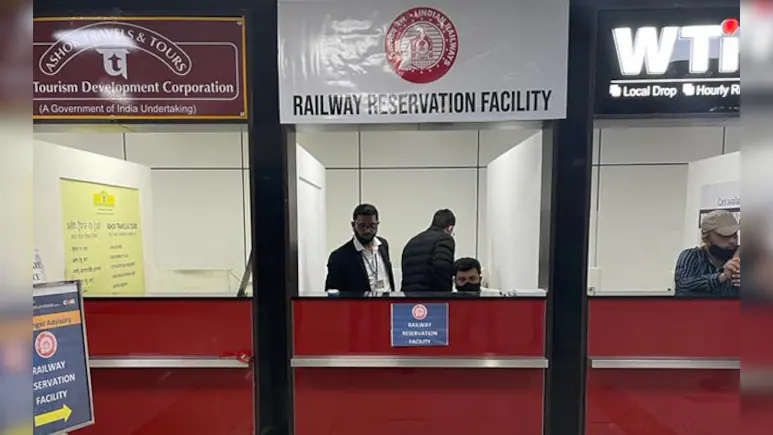
    For just 45 paise, train passengers can get insurance cover of up to Rs 10 lakh. Now, Indian Railways is extending this facility to eligible passengers booking reserved tickets at railway counters. This benefit was previously offered to online ticket buyers..

    The move is significant for millions of passengers who still prefer to buy their tickets at railway stations. Until now, the optional travel insurance facility was associated with online ticket bookings. Extending it to eligible counter bookings widens access to a low-cost safety net.

    “The insurance is optional. Passengers who opt for it can get coverage of up to Rs 10 lakh, subject to the policy’s terms and conditions. The cover is intended to provide financial assistance in the event of specified railway accidents or other covered incidents,” Suraj Pandey, Managing Director, ACME India Industries Limited, told NDTV.

    How To Get Rs 10 Lakh Train Insurance For 45 Paise

    The premium is nominal, but passengers should understand how the facility works before opting for it.

    “Eligible passengers booking reserved tickets at railway counters can access the optional insurance facility. The premium is 45 paise per passenger, and the maximum coverage is Rs 10 lakh, subject to the applicable policy conditions,” added Suraj Pandey.

    However, the actual amount payable depends on the nature of the incident and the terms of the policy. The maximum cover should not be mistaken for a guaranteed payout in every case.

    “Passengers should check the insurance option and the applicable conditions at the time of booking. They should also read the policy details to understand the incidents covered, the benefits available and the process for making a claim,” added Pandey.

    Why Train Insurance Alone Is Not Enough

    Insurance can offer financial support after a covered incident. It cannot prevent an accident or eliminate the risks passengers face during a journey. That requires consistent investment in railway infrastructure, coach design, material quality and maintenance.

    Coach interiors, for instance, face constant use, heavy passenger movement and regular wear and tear. Using fire-safe materials that meet applicable railway standards, durable components and reliable fittings can help reduce certain risks. Regular inspections and timely repairs are equally important to identify damaged components before they become a safety concern.

    Hygiene and functionality also matter. Worn-out fittings, deteriorating interiors and poorly maintained components can affect the passenger experience and, in some cases, create avoidable risks.

    Safety Must Extend To Existing Coaches

    As Indian Railways modernises its fleet, attention must extend beyond introducing new coaches. The maintenance of existing Integral Coach Factory (ICF) and Linke Hofmann Busch (LHB) coaches is equally important.

    Material testing, engineering quality, periodic inspections and planned refurbishment should remain central to railway safety. Replacing damaged parts on time and ensuring that materials meet the required standards can help maintain the reliability of coaches throughout their service life.

    Ultimately, the 45-paise insurance facility offers passengers an affordable way to access financial protection against specified risks. Extending it to eligible counter bookings makes that protection more accessible.

    But the larger goal must be to combine financial safeguards with stronger preventive measures. Insurance can help passengers and their families cope with the financial consequences of a covered incident. Better engineering, rigorous safety checks and regular maintenance are what help make train journeys safer in the first place.

  • Too Many Cars, Too Few Buyers? Why Is China Winning Globally, But Losing Domestically

    Too Many Cars, Too Few Buyers? Why Is China Winning Globally, But Losing Domestically

    China has emerged as a global powerhouse in electric vehicles (EVs). Its carmakers are challenging established brands, introducing advanced battery technology and expanding rapidly into overseas markets. From Europe to Latin America, Chinese electric cars are finding buyers.

    But behind this global success lies a problem at home. China’s car industry is struggling with too many manufacturers, excess production capacity and an increasingly crowded domestic market. Carmakers are fighting for customers through aggressive price cuts, even as their profits come under pressure.

    The contrast is becoming difficult to ignore. Companies that once raced to expand production are now struggling to sell enough vehicles to keep their factories running.

    A recent report by The Wall Street Journal highlighted the troubles facing China’s automotive industry, pointing to manufacturers whose production ambitions have far outpaced actual sales.

    The problem is not a lack of technology or manufacturing capability. China has some of the world’s most advanced EV makers and battery companies. The bigger challenge is that the industry has expanded faster than domestic demand can absorb.

    China’s EV Makers Face A Crowded Home Market

    For years, China’s electric vehicle industry benefited from strong government support, investments and growing consumer demand. Local governments backed manufacturers, hoping to create industrial hubs and generate employment.

    The strategy helped China build a formidable EV ecosystem. Companies such as BYD, NIO, Xiaomi and Geely have become important names in the global automotive industry.

    However, the rush to enter the EV market also resulted in an explosion in the number of manufacturers. Several companies invested heavily in factories and production facilities, expecting demand to keep growing.

    That assumption is now being tested.

    With several manufacturers chasing the same customers, competition has intensified. Companies have increasingly relied on discounts to attract buyers. While this has made electric cars more affordable, it has also put pressure on margins.

    The result is an industry where manufacturing capacity and actual demand are increasingly out of sync.

    Why China’s Car Industry Is Struggling

    China’s automotive market is dealing with a combination of challenges.

    First, there are too many manufacturers competing for a limited pool of buyers. The entry of several EV brands has created intense competition, making it difficult for smaller companies to survive.

    Second, the industry has invested heavily in production capacity. Building factories made sense when sales were growing rapidly. But when demand slows, those same facilities become expensive assets that manufacturers must keep running or risk incurring losses.

    Third, aggressive pricing has made profitability harder to achieve. Carmakers are under pressure to offer attractive prices while continuing to invest in technology, research and development.

    This creates a difficult cycle. Companies cut prices to protect market share, but lower prices squeeze profits. They then need higher sales volumes to compensate, adding to the pressure to expand.

    For manufacturers that lack financial strength or a distinct product advantage, the situation can become particularly difficult.

    Chinese Carmakers Look Overseas For Growth

    With the domestic market becoming increasingly competitive, overseas markets are emerging as an important growth opportunity.

    Chinese manufacturers are taking their products to Europe, Southeast Asia, Latin America and other regions. Their competitive pricing, technology and expanding product portfolios are helping them challenge established automakers.

    However, this expansion is also creating pressure for traditional carmakers.

    European manufacturers, in particular, face competition from Chinese companies that have developed large-scale manufacturing capabilities and can offer technologically advanced vehicles at competitive prices.

    The growing presence of Chinese brands is forcing established automakers to rethink their pricing, product strategies and investments.

    But exporting more vehicles is not necessarily a permanent solution. Overseas markets have their own regulatory requirements, trade barriers and established competitors. Manufacturers also need to build customer trust, distribution networks and after-sales service capabilities.

    What China’s EV Crisis Means For India

    India and China are at different stages of EV adoption. Their infrastructure, consumer demand and automotive ecosystems are also different. Therefore, China’s situation cannot be directly compared with India’s.

    However, the importance of balancing manufacturing capacity with actual demand is relevant to Indian companies looking to expand in the electric mobility space. Naveen Gupta, Founder and CEO of Trev Mobility, told NDTV that China’s automotive market offers an important lesson for the global EV industry.

    “Manufacturing scale and technological innovation alone do not guarantee long-term sustainability. As the market matures, the ability to balance production capacity with actual demand, maintain healthy economics and build lasting customer confidence becomes just as important as launching new products or expanding manufacturing,” Gupta told NDTV.

    He also pointed to the risks of relying on discounts and aggressive expansion to drive growth. “The intense price competition in China also highlights the risks of growth being driven primarily by discounts and aggressive expansion. While competition can accelerate innovation and make electric vehicles more accessible, prolonged price pressure can affect margins and make it difficult for companies to build sustainable businesses,” he said.

    According to Gupta, the companies that emerge stronger will be those that combine cost efficiency and product innovation with a clear understanding of customer needs.

    India’s EV Industry Needs To Avoid The Trap

    India’s electric mobility ecosystem is still evolving. The market has room to grow as charging infrastructure improves, more models become available and consumers become increasingly comfortable with electric vehicles.

    But growth in vehicle sales alone should not be the only measure of success. Manufacturers also need to consider how frequently their vehicles will be used, the cost of ownership, charging availability, battery performance and after-sales support.

  • How To Avoid UPI Fraud? PhonePe Shares 3 Checks Every User Must Follow

    How To Avoid UPI Fraud? PhonePe Shares 3 Checks Every User Must Follow

    UPI has made digital payments quick and convenient. But scammers are finding new ways to exploit users, from fake payment requests to impersonation and remote access scams.

    In an exclusive communication with NDTV, PhonePe shared three basic checks for users to protect their money:-

    1. Never Enter Your UPI PIN To Receive Money

    A UPI PIN is required to authorise payments from your bank account, not to receive money. Fraudsters may send fake payment requests or QR codes, claiming they will transfer money or issue a refund. If a transaction asks for your UPI PIN, check it carefully. Entering the PIN can authorise a debit from your account.

    2. Verify The Recipient’s Name Before Paying

    Before completing a UPI transaction, check the registered bank account name displayed on the payment screen. Scammers may use fake profiles or misleading UPI IDs to impersonate friends, family members or businesses. If the name does not match the intended recipient, stop the transaction and verify the details independently. Be wary of strangers offering to transfer money digitally in exchange for cash. Such offers could be part of a fraud.

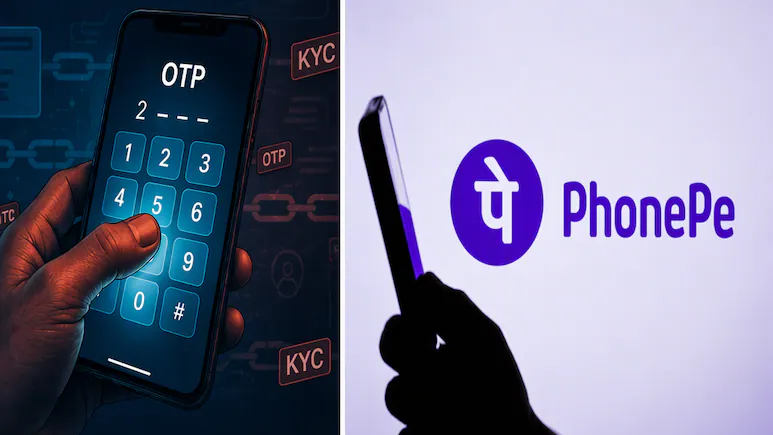
    3. Never Share OTPs Or Click Unknown Links

    Fraudsters often pose as bank officials, telecom representatives or customer support agents to trick users into sharing sensitive information. Never disclose your OTP, UPI PIN or banking details over calls, messages or emails. Do not click suspicious links or install screen-sharing apps at the request of unknown callers. Such apps can give scammers access to your phone and expose sensitive information. PhonePe has also warned users against money mule scams. In these cases, people are tricked into receiving and transferring money linked to illegal activities. Even unknowingly handling suspicious funds can lead to frozen bank accounts and legal complications.

    What To Do If You Fall Victim To UPI Fraud

    Act quickly if you suspect that your account has been compromised or money has been stolen. PhonePe users can raise a complaint through the Help section of the app or contact customer care at 080-68727374 or 022-68727374.

    For further action, report the incident to the national cybercrime helpline at 1930 or file a complaint at the National Cyber Crime Reporting Portal. Suspicious calls, messages and fraudulent WhatsApp or Telegram activity can also be reported through the Chakshu facility on the Sanchar Saathi portal.

    The key is to verify every payment request, protect your authentication details and report suspected fraud without delay.